

Devil’s Throat, also known as “Garganta del Diablo,” is undoubtedly one of the most awe-inspiring wonders of the magnificent Iguazu Falls. What makes it so special? There are countless reasons that will leave you breathless. From its grandeur and stunning natural surroundings to the mesmerizing ambiance, Devil’s Throat is an experience like no other. So, prepare yourself for an unforgettable encounter with the sheer magnificence of Devil’s Throat at Iguazu Falls.
What Is the Devil’s Throat in Iguazu Falls?
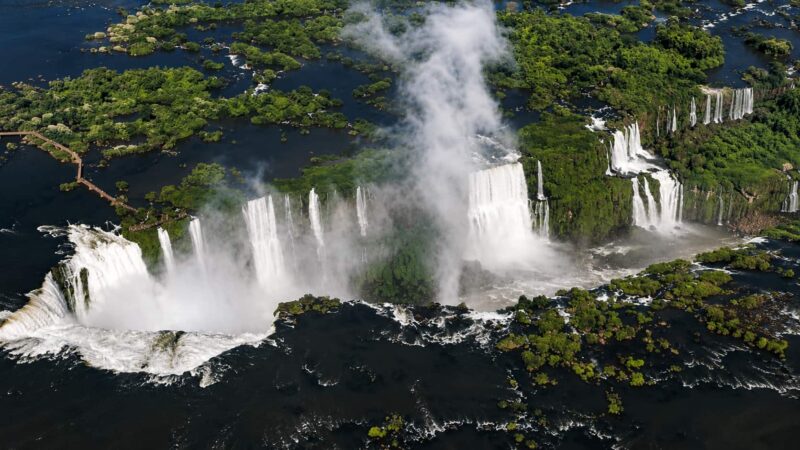
We all know that Devil’s Throat is an iconic and breathtaking destination, but what exactly is it? Let me paint you a picture. Imagine a colossal U-shaped waterfall nestled within the heart of the Iguazu River, where an immense volume of water crashes down into a narrow chasm. This chasm is encircled by towering cliffs and magnificent rock formations, creating a natural amphitheater-like spectacle. The location alone is awe-inspiring, but there’s so much more to it.
The Devil’s Throat stands as the largest and most formidable waterfall within the Iguazu Falls system. It spans a staggering width of approximately 492 feet (150 meters) and an impressive height of 269 feet (82 meters). Just envision the sight! The sheer magnitude of this natural wonder is truly astounding. But size isn’t the only factor that makes it incredible. The relentless rush of water, the perpetual mist that envelopes the surroundings, and the thunderous roar combine to create an experience that transcends the ordinary.
To reach the Devil’s Throat, visitors typically follow a well-marked walking trail or board a specialized train that leads them to a carefully positioned viewing platform. This platform offers an unrivaled vantage point directly above the chasm, granting visitors a front-row seat to witness the astonishing cascade of water. Standing there, one can’t help but be captivated by the raw power and energy exuded by the falls, immersing oneself in an utterly mesmerizing spectacle.
The Devil’s Throat undoubtedly steals the show when it comes to exploring the wonders of the Iguazu Falls. Its immense size, dramatic setting, and captivating sensory experience make it the ultimate highlight of any visit. It serves as an undeniable testament to the extraordinary forces of nature, drawing in travelers from all corners of the globe who yearn to witness its awe-inspiring beauty firsthand.
Devil’s Throat Facts & Features
- Location: Argentine side of Iguazu Falls.
- Circuit length: approximately 2,200 meters round trip.
- Difficulty: low.
- Accessibility: fully accessible for wheelchair users.
- Main access: Tren Ecológico de la Selva to Estación Garganta del Diablo.
- Final section: flat walkway over the upper Iguazu River.
- Park status: subject to weather and operational conditions.
Visitors should allow approximately 90 minutes to 2 hours for the complete experience. This estimate includes waiting for the train, walking to and from the balcony, and spending time at the viewpoint. Actual timing depends on visitor numbers and train operations.
How Was Devil’s Throat Formed?
The Iguazu Falls developed along a vast basalt plateau formed by volcanic activity millions of years ago. Over time, the Iguazu River eroded the layered volcanic rock, creating a complex system of drops, islands, channels, and gorges.
Devil’s Throat developed where several river channels converge along the semicircular basalt edge. The continuous force of the water gradually reshaped the rock and caused the falls to retreat upstream.
This geological process is still active. Water volume, erosion, and seasonal changes continue to influence the shape and appearance of the waterfall system.
The deep chasm, the narrow concentration of several channels, and the vast quantities of mist are what give Devil’s Throat its distinctive character. It is not an isolated waterfall, but the most concentrated section of a much larger formation.
Let’s explore a few reasons why Devil’s Throat is truly an astonishing marvel:
- A Close and Immersive Viewpoint: Unlike panoramic viewpoints where the falls are observed from a distance, the balcony at Devil’s Throat places visitors directly above the main drop. The viewing experience involves more than sight. Visitors feel the moisture in the air, hear the water before reaching the balcony, and often become wet from the spray.
- The Most Forceful Section of Iguazu Falls: The meeting of several river channels creates an especially intense concentration of water. The precise flow changes constantly according to rainfall and river conditions, so the appearance of the chasm is never completely fixed.
- A Walk Across the Upper Iguazu River: The walkway leading to the balcony crosses a broad and comparatively calm section of the river. Small islands, vegetation, birds, and open stretches of water appear along the route. This contrast makes the arrival particularly striking. The river initially appears wide and calm, but at the final viewpoint it suddenly drops into the chasm.
- An Accessible Natural Attraction: The circuit has a low level of difficulty and is listed as fully accessible for wheelchair users. Its flat walkway makes it one of the park’s most important accessible experiences. Conditions may still be affected by heat, humidity, crowds, and wet surfaces, so visitors should move carefully and follow park instructions.
On selected nights each month, visitors can experience Devil’s Throat during the Full Moon Tour to Iguazu Falls. The guided evening experience includes access to the park after regular opening hours, transportation on the Tren Ecológico de la Selva, and a nighttime walk along the upper river walkway to the Devil’s Throat balcony. The activity generally operates on five nights around the full moon, with limited capacity and several scheduled departures each evening. The official experience currently lists three departure times and an approximate total duration of two and a half hours. Moonlight, mist, cloud cover, and weather conditions affect visibility, so a moonbow or fully illuminated view cannot be guaranteed. Advance booking is strongly recommended because capacity is limited and dates depend on the lunar calendar and park operations.
Wildlife and Biodiversity Around Devil’s Throat
Devil’s Throat is surrounded by the Paranaense rainforest, part of the Interior Atlantic Forest. The two neighboring national parks protect an exceptionally diverse ecosystem shaped by dense vegetation, high humidity, rivers, islands, and permanent waterfall spray.
UNESCO records approximately 2,000 plant species and around 400 bird species within Iguazú National Park. The protected area is also home to mammals, reptiles, amphibians, fish, and countless invertebrates.
Visitors commonly encounter:
- Toucans and other forest birds.
- Coatis near visitor areas.
- Butterflies along open walkways.
- Monkeys in forested sectors.
- Caimans, turtles, and other animals near waterways.
Larger mammals such as tapirs, ocelots, giant anteaters, and jaguars inhabit the protected forest, although sightings in the public circuit areas are uncommon.
Wild animals should never be touched or fed. Food can change their behavior and increase the risk of bites, scratches, and conflicts with visitors.
How to Reach the Devil’s Throat by Train

The Devil’s Throat circuit is reached through Iguazú National Park on the Argentine side. Most visitors begin at Estación Central and use the Tren Ecológico de la Selva to travel through the park.
The usual route is:
- Take the Tren Ecológico de la Selva from Estación Central (Central Station).
- Continue to Estación Garganta del Diablo.
- Follow the elevated walkway across the upper Iguazu River.
- Reach the viewing balcony above Devil’s Throat.
The walkway measures approximately 1,100 meters in each direction, making the complete circuit about 2,200 meters round trip. It is flat, has a low level of difficulty, and is fully accessible for wheelchair users.
Train capacity and departure intervals can vary according to visitor numbers and park operations. Visitors may need to obtain an assigned departure time at the ticket office, so it is advisable to organize the Devil’s Throat visit soon after entering the park. The official park map specifically instructs visitors to collect their free train turn at the ticket office. An alternative pedestrian route connects Estación Cataratas with Estación Garganta, but it adds a considerable walk and may not be available under all conditions. Most visitors use the train for at least one section of the journey.
What to Expect at the Viewpoint
The final balcony is positioned directly above the main chasm. Visibility changes constantly as the wind moves large clouds of mist across the viewing area.
Visitors should expect:
- Constant spray near the balcony.
- Wet and potentially slippery surfaces.
- Loud water that can make conversation difficult.
- Limited visibility during periods of especially heavy mist.
- Crowds during the busiest hours of the day.
A lightweight rain jacket or poncho is useful, although it may not keep you completely dry near the edge. Phones, cameras, documents, and other water-sensitive belongings should be protected before reaching the final section.
The experience can look very different depending on the river level. At higher flow, the water and mist may dominate the entire view. At lower flow, more of the rock walls and individual channels may be visible.
The Name’s Origin: Why Is It Called “Devil’s Throat”?
The name Devil’s Throat refers to the deep, narrow chasm into which several channels of the Iguazu River converge. From the viewpoint, the water appears to disappear into a vast opening surrounded by mist. The throat-like shape of the formation, combined with the intense roar of the water, likely contributed to the dramatic name. In Spanish, the site is called Garganta del Diablo. In Portuguese, it is known as Garganta do Diabo. The exact historical origin of the name is not clearly documented. It is best understood as a descriptive name inspired by the shape, sound, and force of the waterfall rather than as a precise historical or geological term.
Planning Your Visit to Iguazu Falls Devil’s Throat
If you’re planning to visit the Iguazu National Park and experience the awe-inspiring Devil’s Throat, there are several important points to consider before your trip. Here are some key factors to keep in mind:
Best Time to Visit Devil’s Throat
Devil’s Throat can be visited throughout the year. Iguazu has a humid subtropical climate, so rain is possible in any month and river levels can change quickly. For fewer crowds, arrive early in the morning. Summer is hot and humid, while autumn and winter generally offer milder temperatures for walking. Higher water levels can make the falls more powerful, but they may also increase the mist and reduce visibility. Extreme river conditions can occasionally cause temporary closures.

Practical Tips
- Arrive early and organize your train access soon after entering the park.
- Wear comfortable footwear, protect phones and cameras from the spray, and carry water, sunscreen, and insect repellent.
- Do not feed or approach wild animals.
- Circuit availability may change because of weather, river levels, maintenance, or safety measures.
Exploring the Surrounding Area
In addition to the breathtaking Devil’s Throat, the Iguazu Falls area offers a multitude of other captivating attractions for you to explore. Let’s delve into some of these remarkable highlights:
- Upper Circuit: The Upper Circuit takes you along the upper part of the falls, providing panoramic views and a different perspective of the cascades. Here, you can witness the beauty and grandeur of the falls from above, allowing you to fully appreciate their vastness and splendor.
- Lower Circuit: The Lower Circuit offers a thrilling and up-close experience as you explore the walkways near the base of the falls. This circuit allows you to immerse yourself in the captivating atmosphere and feel the raw power and refreshing spray of the cascades as you journey along the pathways.
- San Martin Island: Located on the Argentine side, San Martin Island is accessible via a boat service. Once there, you can venture along natural trails that lead to various viewpoints. From this unique vantage point, you can admire the falls from a different angle, reveling in the truly spectacular views.
- Boat Ride under the Falls: For an exhilarating adventure, consider taking a boat ride that brings you close to the falls. These thrilling rides allow you to immerse yourself in the intensity of the cascades, feeling the sheer force of the water and creating memories that will last a lifetime.
Conclusion
There’s no doubt that the Devil’s Throat is the most powerful and recognizable section of Iguazu Falls and an essential part of any visit to the Argentine side.
The circuit combines a journey through the rainforest, a flat walkway across the upper Iguazu River, and a viewing platform directly above the main chasm. It is accessible, relatively easy to walk, and unlike any of the more distant panoramic viewpoints found elsewhere in the park.
Visitors should arrive early, protect their belongings from the spray, allow enough time for the train and walkway, and verify the circuit’s status before traveling.
For the most complete experience, combine Devil’s Throat with the Upper Circuit, the Lower Circuit, and an optional boat activity. Together, these experiences show the scale, diversity, and extraordinary natural setting that make Iguazu Falls one of the world’s most remarkable waterfall destinations.
