

If you are a bird lover and plan to go birdwatching during your visit to Iguazu Falls, you will surely want to know which bird species can be found in the region. Northern Misiones is part of the Atlantic Forest and is home to exceptional biodiversity and an impressive variety of birds. The list below is based on the bird checklist compiled by Jorge Escobar and Sergio Moya for Yacutinga Lodge, which also offers the birdwatching program featured below.
The original Yacutinga Lodge checklist was published in September 2019 and followed the ornithological systematics in use at that time, including genetic evidence. Bird taxonomy has changed since then, so some common and scientific names in this article have been updated where necessary. The original checklist also distinguishes historical records, referring to species observed at the reserve up to 2014, as well as curious or exceptional records. For this reason, the presence of a species on this list does not necessarily mean that it is regularly or currently observed in the Iguazu Falls area.
After direct and unquestionable observations of some species of particular ornithological importance, whether because of their conservation status, vulnerability, or because they represented new records for Argentina, as well as unexpected records possibly related to habitat changes or, in exceptional cases, birds released from captivity, the Yacutinga team decided to include a section called EXTRAORDINARY AND CURIOUS SPECIES. This section records the species observed in the Environmental Reserve, the date of the record, and the location where it occurred.
Before moving on to the list of birds, we would once again like to thank Yacutinga Lodge, Jorge Escobar, and Sergio Moya for their excellent work.

Explore La Lorenza, spot vibrant birds, and enjoy a delicious lunch with expert guides in the Atlantic Forest.
From Price: USD699
Solitary Tinamou (Tinamus solitarius): The Solitary Tinamou is a ground-dwelling bird associated with the Atlantic Forest of South America. It typically inhabits dense, humid forests and is known for its secretive behavior. Its brownish plumage provides excellent camouflage, and it feeds mainly on fruits, seeds, and small invertebrates.
Brown Tinamou (Crypturellus obsoletus): The Brown Tinamou is a forest-dwelling species found in South America. It has predominantly brown plumage and is known for its elusive nature. It feeds on fruits, seeds, and small invertebrates.
Small-billed Tinamou (Crypturellus parvirostris): This tinamou is characterized by its relatively small bill. Unlike several other tinamous on this list, it is more closely associated with open grasslands, scrub, agricultural areas, and forest edges than with dense forest. It feeds on seeds, plant material, and small invertebrates.
Tataupa Tinamou (Crypturellus tataupa): The Tataupa Tinamou is a small tinamou found in South America. It inhabits woodland, forest edges, and dense scrub, where its cryptic plumage helps it remain hidden. It feeds on seeds, fruits, and small invertebrates.
Red-winged Tinamou (Rhynchotus rufescens): The Red-winged Tinamou is a relatively large tinamou associated mainly with grasslands, savannas, and other open habitats. Its rufous wing feathers are particularly noticeable in flight. It feeds on seeds, fruits, plant material, and insects.
Spotted Nothura (Nothura maculosa): The Spotted Nothura is a ground-dwelling bird found in grasslands, pastures, and other open habitats. Its mottled and spotted plumage provides effective camouflage. It feeds on seeds, plant material, and small invertebrates.
Muscovy Duck (Cairina moschata): The Muscovy Duck is a large duck native to tropical and subtropical areas of the Americas. Wild adults have dark plumage, often with white wing patches, while males develop distinctive red facial caruncles. They inhabit rivers, forested wetlands, lakes, and marshes and feed on vegetation, seeds, insects, and other small aquatic organisms.
Comb Duck (Sarkidiornis sylvicola): The Comb Duck is found in tropical freshwater wetlands of South America. Adult males are especially distinctive because of the prominent knob or comb on top of the bill. These ducks feed mainly on aquatic vegetation, seeds, and small invertebrates.

Special outings for bird watching lovers in different environments of the Iguazú National Park, with a Spanish / English ornithologist guide.
From Price: USD299
Brazilian Teal (Amazonetta brasiliensis): The Brazilian Teal is a small duck native to South America. It is typically found around marshes, ponds, rivers, and other freshwater environments. Its diet includes seeds, aquatic vegetation, and small invertebrates.
Rusty-margined Guan (Penelope superciliaris): The Rusty-margined Guan is a forest bird found in South America. It spends much of its time in trees and feeds mainly on fruits, as well as leaves, seeds, and some invertebrates.
Spot-winged Wood-Quail (Odontophorus capueira): The Spot-winged Wood-Quail is a ground-dwelling bird associated with Atlantic Forest habitats. It is usually difficult to see because it remains within dense vegetation and on the forest floor. Its diet includes seeds, fruits, leaves, and small invertebrates.
Least Grebe (Tachybaptus dominicus): The Least Grebe is one of the smallest grebes in the Americas. It inhabits freshwater ponds, lakes, marshes, and slow-moving waters. It feeds mainly on aquatic insects, crustaceans, and small fish.
Pied-billed Grebe (Podilymbus podiceps): The Pied-billed Grebe is a compact freshwater bird found throughout much of the Americas. During the breeding season, adults develop a distinctive dark band across their pale bill. They inhabit ponds, lakes, and marshes and feed on fish, crustaceans, insects, and other aquatic organisms.
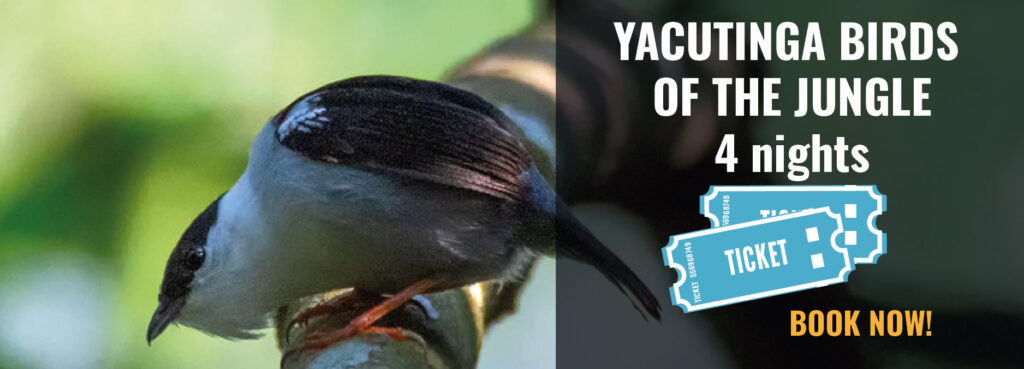
Neotropic Cormorant (Nannopterum brasilianum): The Neotropic Cormorant is a medium-sized aquatic bird found along rivers, lakes, wetlands, and coastal areas throughout much of the Americas. It has mostly dark plumage and a long neck. It dives underwater to catch fish and other aquatic prey.
Anhinga (Anhinga anhinga): The Anhinga is a waterbird commonly found in freshwater habitats throughout the Americas. It is known for its long neck and pointed bill. It often swims with most of its body submerged and uses its sharp bill to capture fish and other aquatic prey.
Rufescent Tiger-Heron (Tigrisoma lineatum): The Rufescent Tiger-Heron is a medium-sized heron found in wetlands, rivers, and forested waterways of Central and South America. Adults have a distinctive rufous head and neck. They feed mainly on fish, amphibians, crustaceans, and other aquatic animals.
Black-crowned Night-Heron (Nycticorax nycticorax): The Black-crowned Night-Heron is a stocky wading bird found in wetlands across much of the world, including the Americas. Adults have a black crown and back, gray wings, and pale underparts. They are particularly active from dusk through the night and feed on fish, frogs, crustaceans, and other small animals.
Striated Heron (Butorides striata): The Striated Heron is a small heron found in a wide variety of wetland habitats. It is often seen standing quietly at the water’s edge before striking at fish, frogs, insects, and other aquatic prey.
Cocoi Heron (Ardea cocoi): The Cocoi Heron is one of the largest herons in South America. It has a long white neck, gray wings, and a dark crown. It is usually found in wetlands, rivers, lakes, and marshes, where it feeds mainly on fish and amphibians.
Great Egret (Ardea alba): The Great Egret is a large white heron found in wetlands, marshes, rivers, and other aquatic habitats throughout the Americas and many other parts of the world. It has a long neck, yellow bill, and dark legs. It hunts mainly fish, amphibians, crustaceans, and other small animals in shallow water.
Snowy Egret (Egretta thula): The Snowy Egret is a small white heron with a slender black bill, black legs, and distinctive yellow feet. It is commonly found in wetlands, marshes, riverbanks, and coastal environments, where it feeds on fish, crustaceans, and aquatic insects.
Whistling Heron (Syrigma sibilatrix): The Whistling Heron is a distinctive South American heron frequently found in open wetlands, flooded grasslands, and pastures. It has a grayish body, buff-colored neck, and striking facial coloration. It feeds on insects, amphibians, and other small animals.
Western Cattle Egret (Ardea ibis): The Western Cattle Egret is a small white heron frequently found in pastures, agricultural areas, and other open habitats. It often follows grazing livestock, catching insects and other small animals disturbed by their movement.
Boat-billed Heron (Cochlearius cochlearius): The Boat-billed Heron is a nocturnal or crepuscular heron named for its unusually broad, boat-shaped bill. It inhabits wooded wetlands, riverbanks, mangroves, and forested waterways in Central and South America. It feeds on fish, crustaceans, insects, and other aquatic animals.
White-faced Ibis (Plegadis chihi): The White-faced Ibis is a wading bird found in wetlands, marshes, and flooded grasslands of the Americas. Adults in breeding plumage show distinctive white feathering around the face. They use their long, curved bills to search for insects, crustaceans, worms, and other small aquatic animals.
Green Ibis (Mesembrinibis cayennensis): The Green Ibis is a medium-sized ibis found in forested wetlands, swamps, rivers, and streams of Central and South America. Its dark plumage can show greenish tones in good light. It feeds on insects, crustaceans, amphibians, and other small aquatic animals.
Roseate Spoonbill (Platalea ajaja): The Roseate Spoonbill is a large wading bird easily recognized by its pink plumage and distinctive spoon-shaped bill. It occurs in wetlands, marshes, lagoons, and coastal areas of the Americas. It feeds by sweeping its bill through shallow water to capture small fish, crustaceans, insects, and other aquatic organisms.
Maguari Stork (Ciconia maguari): The Maguari Stork is a large wading bird native to South America. It has mostly white plumage with contrasting black flight feathers and inhabits wetlands, marshes, and flooded grasslands. It feeds on fish, amphibians, reptiles, insects, and other small animals.
Wood Stork (Mycteria americana): The Wood Stork is a large wading bird found in wetlands and shallow freshwater habitats of the Americas. Adults have a distinctive bare head and a long, heavy bill. They feed mainly on fish and other aquatic animals captured by touch while moving their open bill through shallow water.
Turkey Vulture (Cathartes aura): The Turkey Vulture is a large scavenging bird found throughout much of the Americas. Adults have dark plumage and a bare red head. They feed primarily on carrion and are frequently seen soaring while searching for food.
Black Vulture (Coragyps atratus): The Black Vulture is a medium-sized scavenger found in a wide variety of habitats throughout the Americas. It has black plumage, a bare dark head, and relatively broad wings. It feeds mainly on carrion and often gathers in groups.
King Vulture (Sarcoramphus papa): The King Vulture is a large and striking scavenging bird found in tropical forests of Central and South America. Adults have mostly pale plumage with contrasting black flight feathers and a brightly colored bare head and neck. Like other vultures, it feeds primarily on carrion.
Osprey (Pandion haliaetus): The Osprey is a large fish-eating raptor found across much of the world. It has a distinctive pale head with a dark eye stripe and is usually associated with rivers, lakes, reservoirs, and other bodies of water. Ospreys are specialized hunters that plunge feet-first into the water to catch fish.
Grey-headed Kite (Leptodon cayanensis): The Grey-headed Kite is a forest raptor found in Central and South America. Adults have a gray head and contrasting black-and-white wing and tail patterns. Its diet includes insects, reptiles, amphibians, and other small animals.
Rufous-thighed Kite (Harpagus diodon): The Rufous-thighed Kite is a small forest raptor found in South America. It is named for the rufous coloration of its thighs and is associated mainly with wooded and forested habitats. It feeds largely on insects and small vertebrates.
Bicolored Hawk (Astur bicolor): The Bicolored Hawk is a forest raptor found from Central America into South America. It has relatively short, rounded wings and a long tail, adaptations that help it maneuver through wooded habitats. It feeds mainly on birds, although it may also take other small vertebrates.
Tiny Hawk (Microspizias superciliosus): The Tiny Hawk is one of the smallest raptors in the Americas and inhabits tropical and subtropical forests. Despite its small size, it is an active predator that specializes largely in hunting small birds, although it may also take insects and other small prey.
Sharp-shinned Hawk (Accipiter striatus): The Sharp-shinned Hawk is a small, agile raptor found across much of the Americas. Its relatively short wings and long tail allow it to maneuver quickly through vegetation. It feeds primarily on small birds.
Grey-bellied Hawk (Accipiter poliogaster): The Grey-bellied Hawk is an uncommon forest raptor found in South America. It is associated mainly with mature forest and is less frequently observed than many other regional raptors. Its prey includes birds and small mammals.
Plumbeous Kite (Ictinia plumbea): The Plumbeous Kite is a medium-sized raptor found from Central America through much of South America. Adults are predominantly slate gray and have long, pointed wings. They feed mainly on insects captured in flight, along with small reptiles and other small vertebrates.
Snail Kite (Rostrhamus sociabilis): The Snail Kite is a specialized wetland raptor found in parts of the Americas. Its strongly hooked bill is adapted for extracting freshwater snails from their shells. Apple snails make up a large proportion of its diet.
Great Black Hawk (Buteogallus urubitinga): The Great Black Hawk is a large raptor found in tropical and subtropical areas of Central and South America. Adults have predominantly black plumage with contrasting white markings on the tail. They feed on a wide variety of prey, including reptiles, amphibians, mammals, birds, and large invertebrates.
White-rumped Hawk (Parabuteo leucorrhous): The White-rumped Hawk is a medium-sized forest raptor found in South America. Adults are mainly dark with a conspicuous white rump and white tail markings. They feed on birds, small mammals, reptiles, and other small vertebrates.
Roadside Hawk (Rupornis magnirostris): The Roadside Hawk is one of the most widespread raptors in tropical and subtropical America. It occurs in forest edges, open woodland, agricultural areas, and modified habitats and is often seen perched beside roads. It feeds on insects, reptiles, small mammals, birds, and other small animals.
Swallow-tailed Kite (Elanoides forficatus): The Swallow-tailed Kite is an elegant raptor easily recognized by its long, deeply forked tail and black-and-white plumage. It is frequently seen soaring over forests and forest edges. It feeds mainly on insects and small vertebrates collected from vegetation or captured in flight.
Short-tailed Hawk (Buteo brachyurus): The Short-tailed Hawk is a medium-sized raptor found in the Americas. It has broad wings and a relatively short tail and is often seen soaring above forests and woodland. It feeds largely on birds and occasionally other small vertebrates.
Ornate Hawk-Eagle (Spizaetus ornatus): The Ornate Hawk-Eagle is a large forest raptor found from Central America into South America. Adults have striking patterned plumage and a prominent crest. It hunts birds and mammals within forest habitats.
Black-and-white Hawk-Eagle (Spizaetus melanoleucus): The Black-and-white Hawk-Eagle is a distinctive forest raptor found in tropical Central and South America. Adults have strongly contrasting black-and-white plumage and a short crest. It feeds primarily on birds and small to medium-sized mammals.
Black Hawk-Eagle (Spizaetus tyrannus): The Black Hawk-Eagle is a powerful forest raptor found from Mexico through much of tropical South America. Adults are mostly black with fine pale barring and a prominent crest. They hunt birds, mammals, and other vertebrates in forest habitats.
Harpy Eagle (Harpia harpyja): The Harpy Eagle is one of the largest and most powerful forest raptors in the Americas. It has a massive build, powerful talons, and a distinctive crest. It lives in tropical forest and feeds mainly on arboreal mammals such as sloths and monkeys, as well as other vertebrates.
Limpkin (Aramus guarauna): The Limpkin is a large wading bird found in freshwater wetlands of the Americas. It has brown plumage heavily marked with white and a long, slightly curved bill. Its diet is strongly associated with freshwater snails, although it also consumes other aquatic organisms.
Slaty-breasted Wood-Rail (Aramides saracura): The Slaty-breasted Wood-Rail is a medium-sized rail found mainly in forested wetlands and dense vegetation in southeastern South America. It has a grayish breast, reddish-brown body, and strong legs. It is often detected by its loud calls before it is seen.
Blackish Rail (Pardirallus nigricans): The Blackish Rail is a secretive wetland bird found in South America. It inhabits marshes, swamps, wet grasslands, and dense vegetation near water. Its dark plumage and cautious behavior can make it difficult to observe.
Rufous-sided Crake (Laterallus melanophaius): The Rufous-sided Crake is a small and secretive bird found in marshes, wet grasslands, and vegetation near freshwater habitats in South America. It has rich rufous flanks and usually remains concealed within dense vegetation.
Purple Gallinule (Porphyrio martinica): The Purple Gallinule is a colorful wetland bird found in the Americas. Adults have vivid blue and purple plumage, a red and yellow bill, and long yellow legs and toes. They move across floating vegetation and feed on plant material, insects, and other small animals.
Common Gallinule (Gallinula galeata): The Common Gallinule is a medium-sized wetland bird found throughout much of the Americas. It has dark plumage, a red frontal shield and bill, and a yellow-tipped bill. It swims readily and feeds on aquatic vegetation and small invertebrates.
Sungrebe (Heliornis fulica): The Sungrebe is an unusual aquatic bird found along quiet rivers, streams, and freshwater habitats in Central and South America. It has a slender body and striking head and neck markings. It feeds on aquatic insects, crustaceans, and other small animals.
Southern Lapwing (Vanellus chilensis): The Southern Lapwing is a conspicuous bird found in grasslands, fields, pastures, and wetlands throughout much of South America. It is well known for its loud calls and highly defensive behavior around nesting areas.
Spotted Sandpiper (Actitis macularius): The Spotted Sandpiper is a small shorebird found along rivers, streams, lakeshores, and other wetland edges throughout the Americas. Breeding adults develop spotted underparts, and the species is well known for its characteristic teetering movement while walking. It feeds mainly on aquatic and terrestrial invertebrates.
Wattled Jacana (Jacana jacana): The Wattled Jacana is a distinctive wetland bird with extremely long toes adapted for walking across floating vegetation. It is found in freshwater marshes and wetlands throughout much of South America. It feeds mainly on insects, other invertebrates, and seeds.
Black Skimmer (Rynchops niger): The Black Skimmer is an unmistakable waterbird found along rivers, lagoons, wetlands, and coastal environments in the Americas. Its lower mandible extends beyond the upper one, allowing it to skim the water’s surface while flying to capture fish.
Ruddy Ground-Dove (Columbina talpacoti): The Ruddy Ground-Dove is a small dove commonly found in open habitats, farmland, gardens, and forest edges throughout tropical America. Males show richer reddish-brown coloration than females. The species feeds mainly on seeds and grains gathered from the ground.
Scaled Dove (Columbina squammata): The Scaled Dove is a small South American dove recognized by the scaled pattern across its plumage. It inhabits open woodland, scrub, agricultural areas, and other relatively open habitats. It feeds mainly on seeds and grains.
Picuí Ground-Dove (Columbina picui): The Picuí Ground-Dove is a small dove found in grasslands, open woodland, agricultural areas, and other open habitats of South America. It has pale gray-brown plumage and feeds primarily on seeds gathered from the ground.
Picazuro Pigeon (Patagioenas picazuro): The Picazuro Pigeon is a large South American pigeon commonly found in woodland, forest edges, agricultural areas, parks, and other open environments. It has grayish plumage and a distinctive scaled pattern on the neck. It feeds on fruits, seeds, and other plant material.
Pale-vented Pigeon (Patagioenas cayennensis): The Pale-vented Pigeon is a medium-sized pigeon distributed through tropical Central and South America. It occurs in forest edges, woodland, and other tree-covered habitats and feeds largely on fruits, as well as seeds and other plant material.
Eared Dove (Zenaida auriculata): The Eared Dove is a common South American dove found in grasslands, farmland, towns, and many other open habitats. It is named for the dark marking behind the eye. It feeds mainly on seeds and grains.
White-tipped Dove (Leptotila verreauxi): The White-tipped Dove is a medium-sized dove found in forests, woodland, scrub, and gardens throughout much of the Americas. It usually forages on or near the ground, feeding on fruits, seeds, and other plant material.
Grey-fronted Dove (Leptotila rufaxilla): The Grey-fronted Dove is a forest dove found in Central and South America. It usually remains in dense vegetation and forages on the ground for fruits, seeds, and other plant material.
Violaceous Quail-Dove (Geotrygon violacea): The Violaceous Quail-Dove is a shy forest bird found in parts of Central and South America. Its plumage shows rich reddish-brown and purplish tones. It spends much of its time on the forest floor, where it feeds mainly on fallen fruits and seeds.
Ruddy Quail-Dove (Geotrygon montana): The Ruddy Quail-Dove is a medium-sized forest dove found from Central America through much of South America. It has rich reddish-brown plumage and is usually seen walking quietly on the forest floor. It feeds mainly on fruits and seeds.
Squirrel Cuckoo (Piaya cayana): The Squirrel Cuckoo is a large, long-tailed cuckoo found in wooded habitats throughout much of the Americas. It has rich rufous-brown plumage and a long graduated tail with contrasting pale tips. It moves actively through vegetation in search of insects and other small prey and may also eat fruit.
Dark-billed Cuckoo (Coccyzus melacoryphus): The Dark-billed Cuckoo is a medium-sized South American cuckoo found in forests, woodland, scrub, and other vegetated habitats. It has a dark bill and brownish upperparts with pale underparts. Its diet consists mainly of insects, including caterpillars.
Pearly-breasted Cuckoo (Coccyzus euleri): The Pearly-breasted Cuckoo is a relatively uncommon cuckoo found in forested habitats of South America. It has brown upperparts and pale underparts and feeds mainly on insects, particularly caterpillars.
Yellow-billed Cuckoo (Coccyzus americanus): The Yellow-billed Cuckoo is a migratory cuckoo found across the Americas. It has brown upperparts, white underparts, and a bill with a yellowish lower mandible. It feeds largely on insects, especially caterpillars.
Greater Ani (Crotophaga major): The Greater Ani is a large black cuckoo found mainly around forest edges, wooded wetlands, rivers, and other humid habitats of Central and South America. It has a long tail and a large, curved bill. Greater Anis are social birds that feed on insects, small vertebrates, and fruit.
Smooth-billed Ani (Crotophaga ani): The Smooth-billed Ani is a social black cuckoo found in grasslands, agricultural areas, pastures, scrub, and other open habitats throughout tropical America. It has a distinctive deep, smooth-sided bill and often forages in groups for insects and other small prey.
Guira Cuckoo (Guira guira): The Guira Cuckoo is a highly social South American cuckoo found mainly in open country, savannas, farmland, and scrub. It has a shaggy crest, long tail, and distinctive orange-yellow bill. It feeds on insects and a variety of small vertebrates.
Striped Cuckoo (Tapera naevia): The Striped Cuckoo is found in open woodland, grasslands, scrub, and agricultural areas throughout much of the Americas. It has brown and buff patterned plumage that provides good camouflage. Its diet consists mainly of insects, particularly caterpillars.
Pavonine Cuckoo (Dromococcyx pavoninus): The Pavonine Cuckoo is a secretive forest cuckoo found in South America. It has brown upperparts, paler underparts, and a long graduated tail. It is often easier to detect by its distinctive call than by sight and feeds mainly on insects and other small invertebrates.
American Barn Owl (Tyto furcata): The American Barn Owl is a medium-sized nocturnal owl found throughout much of the Americas. It has a distinctive heart-shaped facial disc and pale plumage. It hunts mainly small mammals, particularly rodents, in open and semi-open habitats.
Tropical Screech-Owl (Megascops choliba): The Tropical Screech-Owl is a small nocturnal owl widespread through Central and South America. Its plumage varies from grayish to brown or rufous and provides excellent camouflage. It feeds on insects and other small animals, including rodents, birds, and reptiles.
Black-capped Screech-Owl (Megascops atricapilla): The Black-capped Screech-Owl is a forest owl associated particularly with the Atlantic Forest of southeastern South America. It has a dark crown, patterned plumage, and prominent ear tufts. Its diet includes insects and other small vertebrates.
Rusty-barred Owl (Strix hylophila): The Rusty-barred Owl is a medium-sized forest owl associated with the Atlantic Forest of southeastern South America. Its plumage is marked with reddish-brown and pale barring. It is nocturnal and feeds on small mammals, birds, and other vertebrates.
Mottled Owl (Strix virgata): The Mottled Owl is a medium-sized nocturnal owl found from Mexico through much of tropical South America. It inhabits forests, woodland, and forest edges and has heavily patterned brown plumage. Its diet includes small mammals, birds, reptiles, amphibians, and large insects.
Black-banded Owl (Strix huhula): The Black-banded Owl is a striking nocturnal owl of tropical South American forests. It has predominantly dark plumage crossed by fine pale barring. It feeds on small mammals, birds, bats, and other vertebrates.
Buff-fronted Owl (Aegolius harrisii): The Buff-fronted Owl is a small and poorly known South American owl. It inhabits forested and wooded environments and is recognized by its buff-colored forehead and patterned facial disc. It feeds mainly on insects and small vertebrates.
Tawny-browed Owl (Pulsatrix koeniswaldiana): The Tawny-browed Owl is a medium-sized owl associated with the Atlantic Forest of southeastern South America. It has a dark facial pattern, warm brown tones, and prominent pale eyebrows. It is nocturnal and feeds on mammals, birds, and other small vertebrates.
Ferruginous Pygmy-Owl (Glaucidium brasilianum): The Ferruginous Pygmy-Owl is a small owl widely distributed through the Americas. Its plumage varies from gray-brown to rich rufous, and it is often active around dawn and dusk as well as during daylight. It feeds on insects, birds, reptiles, and small mammals.
Burrowing Owl (Athene cunicularia): The Burrowing Owl is a small, long-legged owl found in grasslands, pastures, agricultural areas, and other open habitats throughout the Americas. Unlike most owls, it nests and shelters in burrows. It feeds on insects, rodents, reptiles, and other small vertebrates.
Common Potoo (Nyctibius griseus): The Common Potoo is a nocturnal bird found in Central and South America. Its cryptic gray and brown plumage closely resembles tree bark, making it extremely difficult to spot while resting during the day. At night, it catches large flying insects from exposed perches.
Rufous Nightjar (Antrostomus rufus): The Rufous Nightjar is a nocturnal bird found in tropical and subtropical South America. Its reddish-brown patterned plumage provides excellent camouflage among leaf litter and vegetation. It feeds on flying insects captured during nocturnal flights.
Short-tailed Nighthawk (Lurocalis semitorquatus): The Short-tailed Nighthawk is a nocturnal and crepuscular bird found from Central America through much of South America. It has long wings, a notably short tail, and dark cryptic plumage. It catches flying insects in the air, particularly around dusk and dawn.
Pauraque (Nyctidromus albicollis): The Pauraque is a widespread nocturnal bird of tropical and subtropical America. Its intricate brown and gray plumage provides excellent camouflage when it rests on the ground during the day. It feeds mainly on flying insects, which it captures during short flights from the ground or low perches.
Little Nightjar (Setopagis parvula): The Little Nightjar is a small nocturnal bird found in South America. Its cryptic plumage helps it blend into leaf litter and other ground cover. It feeds mainly on flying insects captured during the evening and at night.
Scissor-tailed Nightjar (Hydropsalis torquata): The Scissor-tailed Nightjar is a South American nightjar notable for the greatly elongated outer tail feathers of adult males. It inhabits open woodland, grasslands, scrub, and forest edges and feeds on flying insects caught in the air.
Great Dusky Swift (Cypseloides senex): The Great Dusky Swift is a large, dark swift found in South America. It is particularly associated with waterfalls, cliffs, and humid forested landscapes and famously occurs around major waterfall systems. Like other swifts, it spends much of its time in flight catching airborne insects.
Sick’s Swift (Chaetura meridionalis): Sick’s Swift is a migratory South American swift with dark plumage and a slightly paler rump and undertail area. It is an agile aerial feeder that catches insects in flight and is present in southern parts of its range mainly during the warmer months.
Grey-rumped Swift (Chaetura cinereiventris): The Grey-rumped Swift is a small, fast-flying swift found in tropical Central and South America. It has dark plumage with a contrasting grayish rump. It feeds entirely on airborne arthropods captured while flying.
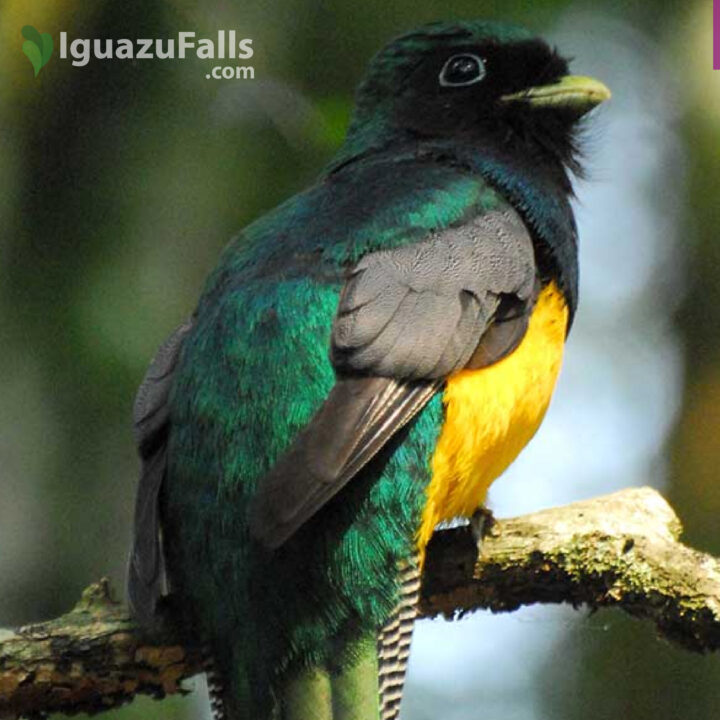
Surucuá Común / Atlantic Black-throated Trogon (Trogon chrysochloros): The Atlantic Black-throated Trogon is a forest bird of the Atlantic Forest region. Males have green upperparts and breast, a dark face and throat, and a yellow belly, while females are more brownish. The species feeds on both fruit and insects.
Martín Pescador Grande / Ringed Kingfisher (Megaceryle torquata): The Ringed Kingfisher is the largest kingfisher in the Americas. It has slate-blue upperparts, a shaggy crest, and extensive rufous coloration on the underparts, particularly in males. It is commonly found along rivers, lakes, and wetlands, where it dives from elevated perches to catch fish.
Martín Pescador Mediano / Amazon Kingfisher (Chloroceryle amazona): The Amazon Kingfisher is a medium-sized kingfisher found from Mexico through much of South America. It has dark green upperparts and pale underparts, with males showing a broad chestnut breast band. It lives along rivers, streams, lakes, and wetlands and feeds mainly on fish.
Martín Pescador Chico / Green Kingfisher (Chloroceryle americana): The Green Kingfisher is a relatively small kingfisher found throughout much of the Americas. It has dark green upperparts and whitish underparts, with males showing a chestnut breast band. It usually hunts from low perches along streams and rivers, diving for small fish and aquatic animals.
Martín Pescador Enano / American Pygmy Kingfisher (Chloroceryle aenea): The American Pygmy Kingfisher is the smallest kingfisher in the Americas. It has vivid green upperparts and rich rufous underparts and is associated with densely vegetated streams, ponds, lagoons, and forested wetlands. It feeds on very small fish, aquatic insects, and other small prey.
Yeruvá / Rufous-capped Motmot (Baryphthengus ruficapillus): The Rufous-capped Motmot is a colorful Atlantic Forest bird with a rufous head and underparts, green wings, and a long tail ending in distinctive racket-shaped tips. It inhabits forested areas and feeds on insects, other small animals, and fruit.
Chacurú Grande / Buff-bellied Puffbird (Notharchus swainsoni): The Buff-bellied Puffbird is a large puffbird associated with the Atlantic Forest of southeastern South America. It has a heavy bill, contrasting black-and-white head markings, and buff-toned underparts. It feeds mainly on large insects and occasionally small vertebrates.
Chacurú Cara Negra / White-eared Puffbird (Nystalus chacuru): The White-eared Puffbird is a South American puffbird found in woodland, forest edges, and other semi-open habitats. It has a distinctive dark facial mask and prominent pale ear patch. It hunts insects and other small animals from exposed perches.
Chacurú Chico / Rusty-breasted Nunlet (Nonnula rubecula): The Rusty-breasted Nunlet is a small, inconspicuous puffbird found in forests of Central and South America. It has brown upperparts and warm rusty coloration on the breast. It feeds mainly on insects and other small arthropods.
