
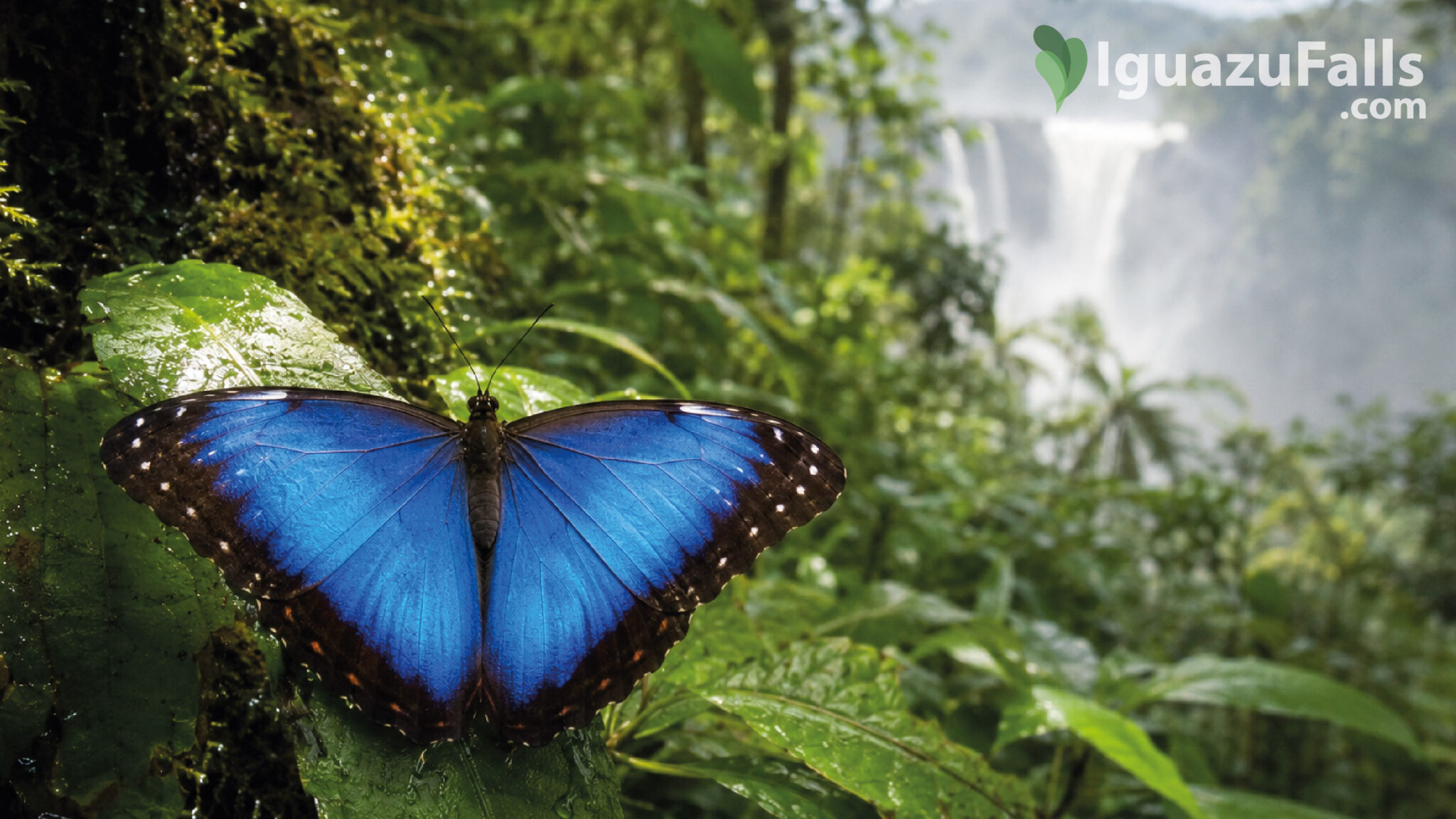
Iguazú Falls is famous for its immense volume of water, tropical vegetation and charismatic wildlife. Most visitors arrive hoping to see toucans, monkeys, coatis or, with extraordinary luck, a jaguar. Yet the animals that perform much of the rainforest’s essential ecological work are considerably smaller.
The forest surrounding Iguazú Falls contains an astonishing diversity of butterflies, moths, ants, beetles, bees, wasps, cicadas, dragonflies, mantises, termites, flies and true bugs. Some pollinate flowers, others recycle dead vegetation, control populations of other organisms or provide food for birds, amphibians, reptiles and mammals.
Without insects, the Iguazú rainforest could not function as it does today.
Iguazú National Park protects more than 67,000 hectares of the Upper Paraná Atlantic Forest in the Argentine province of Misiones. Across the Iguazú River, Brazil’s Iguaçu National Park preserves another approximately 170,000 hectares.
Together, these parks form one of the largest protected remnants of the Interior Atlantic Forest. UNESCO describes the region as exceptionally rich in species, with more than 2,000 plant species, around 400 bird species, as many as 80 mammals and an enormous, still incompletely documented diversity of invertebrates.
Several characteristics make Iguazú especially suitable for insects:
The spray from the falls creates a particularly humid microclimate. Mosses, ferns and other moisture-loving plants grow near the cascades, creating specialized habitats for insects and other small organisms.
DISCOVER A WONDERFUL PLACE TO ENJOY BIRDWATCHING. BE READY WITH YOUR BINOCULARS.

There is no single, complete count of every insect species in Iguazú National Park. Insects are extremely diverse, many are tiny or nocturnal, and a large part of the forest is difficult to survey.
However, studies of individual groups demonstrate the scale of this diversity.
A major survey published in 2009 listed 653 species of daytime butterflies in Iguazú National Park and its surroundings. That number represents roughly half of all butterfly species known in Argentina at the time.
A separate study of true bugs documented 225 species from 18 families, including 13 species that had not previously been recorded in Argentina.
Researchers have also catalogued 69 species of hawk moths in the national park and its surrounding area.
These figures cover only a few insect families. Beetles, ants, flies, wasps and many other groups are considerably less familiar to the public and have not all been comprehensively inventoried. The park’s complete insect fauna is therefore likely far larger than the published lists suggest.
Butterflies are the insects visitors are most likely to notice. On warm, sunny days, dozens may gather beside walkways, around puddles or in patches of light.
Iguazú’s butterflies appear in blue, orange, yellow, white, red, metallic green and almost transparent patterns. Some are large and slow-flying, while others are so small and fast that they disappear almost immediately into the vegetation.
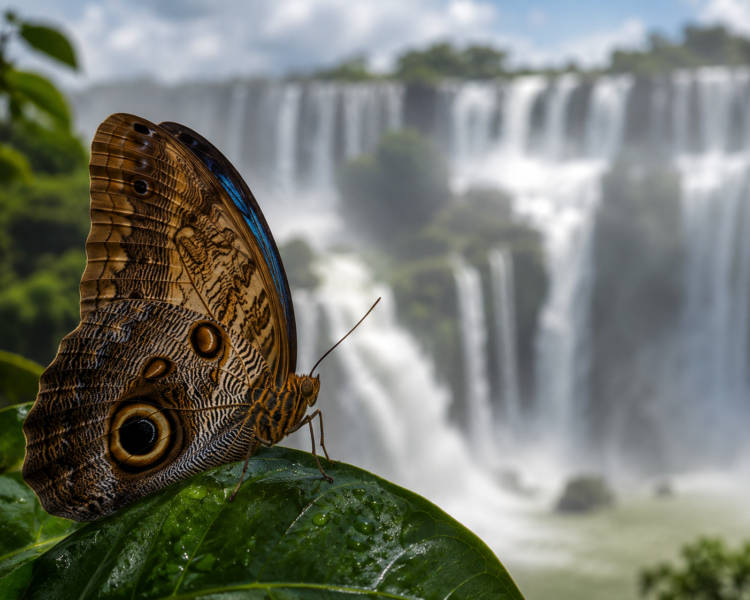
One of the forest’s most memorable butterflies is the blue morpho, represented in the region by Morpho helenor achillides and related taxa.
Its wings produce flashes of brilliant blue as it flies through areas of alternating sun and shade. When the butterfly lands and closes its wings, the brown underside helps it blend into leaves and tree bark.
This change between bright blue and dark brown makes the butterfly appear to vanish and reappear as it moves through the forest.
Butterflies of the genus Diaethria are famous for markings on the underside of their wings that resemble the number 88. Diaethria clymena janeira and Diaethria eluina have been documented in the Iguazú area.
They are usually much smaller than morphos but are among the park’s most distinctive insects. They may be found near damp ground, forest edges and places where minerals are available.
Butterflies of the genus Hamadryas often rest with their wings spread flat against tree trunks. Their mottled colors provide excellent camouflage against bark.
Some males produce clicking or crackling sounds during flight, which explains their English name: cracker butterflies. Hamadryas epinome and other members of the genus occur in the region.
Swallowtails are generally large butterflies with strong flight. Many have elongated projections on their hindwings resembling a bird’s tail.
Species in the Iguazú region include dark swallowtails with red or pink markings, as well as yellow-and-black forms. They are frequently observed visiting flowers or searching for minerals along damp trails.
Some forest butterflies have partially transparent wings. Instead of relying only on bright colors, they use transparency and delicate patterns to become difficult for predators to follow through the shaded understory.
These butterflies are usually associated with humid, well-vegetated forest environments.
Owl butterflies are large, mostly crepuscular butterflies whose hindwings have enormous eyespots. When resting, these markings may resemble the eyes of an owl or another large animal.
They are more likely to be active during the early morning, late afternoon or in deeply shaded areas than under intense midday sunlight.

Experience the awe of Iguazu Falls on a 3-day tour from Buenos Aires. Book now for an unforgettable adventure!
From Price: USD190
Visitors often see groups of butterflies concentrated on wet soil, rocks, paths or the edges of puddles. This behavior is known as puddling.
The butterflies are collecting minerals—especially sodium—and other nutrients that are scarce in nectar. Males are particularly frequent participants in this behavior.
At Iguazú, the combination of spray, mud, animal activity and persistent moisture creates ideal puddling sites.
Butterflies may occasionally land on visitors because human perspiration also contains salts. This is generally harmless. The best response is to remain still and allow the butterfly to leave on its own.
Never hold a butterfly by its wings. The scales covering the wings are delicate and can be damaged by handling.
It is tempting to imagine every butterfly feeding peacefully on flowers, but adult butterflies use a wide range of food sources.
Depending on the species, they may feed on:
A Brazilian study in Iguaçu National Park used fermented fruit bait to document 1,127 individual butterflies from 69 fruit-feeding species. Thirty-eight represented new records for the Brazilian park.
These feeding habits may seem less attractive than nectar feeding, but they are normal components of butterfly ecology.
One single amazing destination, three different countries!
Every butterfly begins as a caterpillar. This stage is devoted primarily to eating and growth.
Most caterpillar species depend on particular host plants. An adult female must identify the correct plant before laying her eggs. If that plant disappears from the forest, the butterfly may also disappear even when nectar-producing flowers remain abundant.
Caterpillars vary enormously in appearance. Some resemble leaves, twigs or bird droppings. Others have bright warning colors, false eyes, spines or hair-like structures.
Visitors should avoid touching unfamiliar caterpillars. Some species have defensive hairs or spines that can cause skin irritation, burning or allergic reactions. This does not mean caterpillars are aggressive; their defenses work only when they are disturbed or handled.
Butterflies dominate the daytime landscape, but moths become more active after sunset.
The number of moth species in the Atlantic Forest is enormous. Many have never been studied in detail, and new regional records continue to be discovered.
Hawk moths, or sphinx moths, are powerful insects with long, narrow wings and thick bodies. Many can hover in front of a flower and drink nectar through a long proboscis, much like a hummingbird.
A 2022 scientific catalogue documented 69 hawk-moth species in Iguazú National Park and the surrounding area. The list included a species of Xylophanes newly recorded for Argentina.
Hawk moths are important nocturnal pollinators. Flowers adapted to them often open or produce their strongest fragrance at night.
The Atlantic Forest is also home to large silk moths in the family Saturniidae. They may have broad patterned wings, eyespots or long tails.
Adults of many silk-moth species do not feed. They survive on energy stored during the caterpillar stage and dedicate their brief adult lives to reproduction.
Many rainforest moths resemble dry leaves, bark, moss or lichens. Others imitate wasps or display large eyespots when threatened.
These adaptations help moths avoid birds, bats, reptiles and predatory insects. For visitors, they also mean that a motionless moth can remain almost invisible even when resting nearby.
Experience the awe of Iguazu Falls on a 3-day tour from Buenos Aires. Book now for an unforgettable adventure!
From Price: USD190
Ants are among the most abundant and influential animals in the Iguazú rainforest.
They move seeds, consume dead organisms, turn the soil, prey on other insects and create underground structures that change drainage and nutrient distribution.
Leafcutter ants are among the most fascinating insects visitors may encounter. Long lines of workers carry pieces of leaves across the forest floor, sometimes forming clearly visible trails.
Contrary to a common assumption, the ants do not eat the leaves directly. They transport the plant material into underground chambers and use it to cultivate a specialized fungus. The colony feeds on this fungus.
Leafcutters are therefore farmers. Their society includes queens, soldiers and several sizes of worker, each adapted to different tasks such as cutting, carrying, defending the trail or caring for the fungus.
Visitors should avoid standing on their paths or blocking their routes. Some larger workers can bite defensively, although they do not normally seek contact with people.
Other ants hunt termites, caterpillars, insect eggs and small arthropods. They help regulate populations and provide food for anteaters, birds, frogs and other animals.
Some colonies relocate periodically, producing large moving groups. These temporary swarms may flush other insects from the leaf litter, creating feeding opportunities for birds.
One single amazing destination, three different countries!
Termites are often considered destructive household pests, but in a natural forest they are essential decomposers.
They consume dead wood, leaf litter and other plant material that many animals cannot digest. Their activity returns nutrients to the soil and creates habitat for fungi, microorganisms and other invertebrates.
Termite tunnels and nests also change soil structure, helping air and water move through the ground.
In the forest, a fallen tree is not waste. Termites, beetles, fungi and other organisms transform it into the raw materials from which new vegetation can grow.
Beetles occupy almost every habitat in Iguazú National Park.
They can be found beneath bark, inside decaying wood, on flowers, in fungi, under stones, in leaf litter and near streams. Their ecological roles are just as varied.
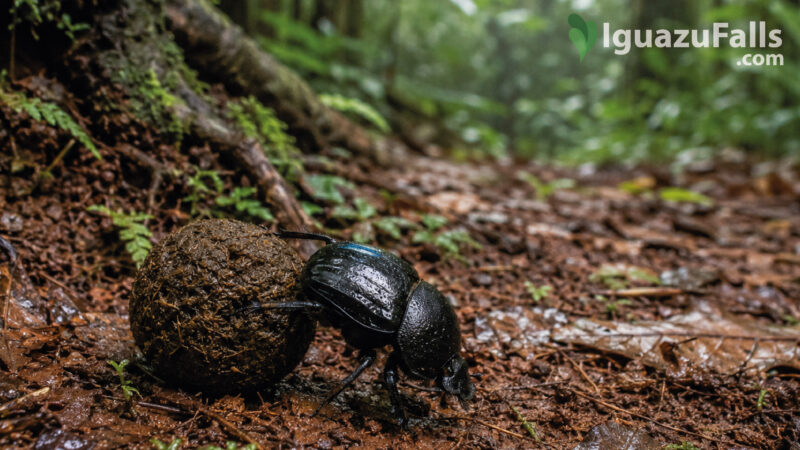
Dung beetles bury or consume animal droppings. In doing so, they recycle nutrients, reduce parasites, aerate the soil and disperse seeds contained in the dung of mammals.
Because their communities respond to habitat disturbance, scientists also use dung beetles as indicators of forest health.
Longhorn beetles have exceptionally long antennae. Their larvae usually develop inside wood, contributing to the decomposition of dead or weakened trees.
Many scarab beetles feed on plant material, fruit, fungi or decomposing organic matter. Other beetles visit flowers and can act as pollinators.
Fireflies are beetles, not flies. They use chemical light, or bioluminescence, to communicate and find mates.
They are easiest to observe in dark, humid places away from artificial lighting. Because light pollution interferes with their signals, preserving natural darkness is important for their reproduction.
The Iguazú forest depends on many different pollinators.
Native bees transfer pollen between flowers while collecting nectar or pollen for themselves and their young. Some live in large social colonies, while many others are solitary and nest in soil, hollow stems or small cavities.
The region also supports stingless bees, an important group in tropical and subtropical America. Although they cannot deliver the type of sting associated with honeybees, some species defend their nests by biting or using sticky plant resins.
Wasps are also valuable. Adult wasps may visit flowers, while many species hunt caterpillars, flies and other insects to feed their larvae. Parasitoid wasps lay eggs in or on other arthropods and are major natural regulators of insect populations.
Visitors should never disturb a nest. Most bee and wasp stings occur in defense of a colony rather than as an unprovoked attack.
The insect order Hemiptera includes cicadas, leafhoppers, treehoppers, assassin bugs, shield bugs and many other insects commonly known as true bugs.
A scientific inventory from Iguazú National Park recorded 225 species across 18 families. These included:
Thirteen of the recorded species were new national records for Argentina.
Some true bugs feed on plants or seeds, while others are predators. Assassin bugs use a piercing mouthpart to capture other insects. They contribute to natural biological control, although they should not be handled because some can deliver a painful defensive bite.
DISCOVER A WONDERFUL PLACE TO ENJOY BIRDWATCHING. BE READY WITH YOUR BINOCULARS.
The loud pulsing or buzzing calls heard in the forest during warm weather often come from cicadas.
Male cicadas produce sound using specialized structures called tymbals. Their calls attract females and can become extraordinarily loud when many individuals are active at once.
Cicada larvae live underground, where they feed on fluids from plant roots. After months or years, depending on the species, they emerge, climb a tree or another vertical surface and shed their final juvenile skin.
The empty shells frequently remain attached to trunks, leaves and wooden structures. These shells are harmless and are evidence of the insect’s transformation into its winged adult form.
Dragonflies and damselflies are closely associated with the park’s rivers, streams, pools and wetlands.
Their immature stages, called nymphs, live underwater and prey on other aquatic organisms. Adults hunt mosquitoes, flies and other small insects in the air.
Dragonflies usually have stronger bodies and hold their wings open when resting. Damselflies tend to be more delicate and often fold their wings above the body.
Because their larvae depend on freshwater habitats, changes in water quality, sediment or stream vegetation can affect their populations. The presence of a varied community of aquatic insects is often a sign of a functioning freshwater ecosystem.
Praying mantises are ambush predators. They remain still among vegetation and use their powerful front legs to seize flies, moths, butterflies and other prey.
Stick insects avoid predators through an entirely different strategy. Their bodies resemble twigs, stems or leaves. Some even sway gently to imitate vegetation moving in the wind.
Katydids also blend into foliage. Many resemble green leaves, complete with patterns that look like leaf veins or damage.
These insects demonstrate why patient observation is so rewarding in Iguazú. Looking carefully at a branch or leaf may reveal an animal that was invisible only moments earlier.
The word “fly” often makes people think only of mosquitoes or houseflies, but flies are extraordinarily diverse.
In the rainforest, different fly species act as:
Hoverflies can resemble bees or wasps but do not sting. Many are important pollinators, while their larvae may prey on aphids or consume decomposing matter.
Other flies develop in water, wet soil, fungi, fallen fruit or dead vegetation, helping recycle nutrients.
Experience the awe of Iguazu Falls on a 3-day tour from Buenos Aires. Book now for an unforgettable adventure!
From Price: USD190
Mosquitoes occur throughout the Iguazú region, especially during warm and humid periods. Their abundance can vary dramatically according to rainfall, temperature, location and time of day.
Many forest mosquitoes are most active around dawn and dusk. However, Aedes mosquitoes capable of transmitting dengue, chikungunya and Zika frequently bite during the daytime.
Not every mosquito carries disease, and the presence of mosquitoes does not mean that every visitor will experience heavy insect activity. Nevertheless, travelers should use protection consistently rather than waiting until they notice bites.
Recommended precautions include:
Current CDC guidance recommends yellow-fever vaccination for eligible travelers aged nine months or older visiting Misiones Province. It is also recommended for travelers visiting Iguaçu Falls on the Brazilian side, although it is not generally an entry requirement for Argentina or Brazil. Individual medical advice is important because vaccination decisions depend on age and health.
Enjoy a unique 3-night birdwatching tour in rainforest lodge
The overwhelming majority of insects encountered during a normal visit are harmless.
Butterflies, moths, dragonflies, cicadas, stick insects and most beetles have no interest in attacking people. Even predatory insects generally avoid humans.
The main practical concerns are:
Visitors can minimize these risks by using repellent, wearing closed shoes, remaining on trails and not touching unfamiliar insects.
Anyone with a known severe allergy to insect stings should carry the medication recommended by their physician. Difficulty breathing, facial swelling or a rapidly worsening reaction after a sting requires urgent medical attention.
It is also worth remembering that spiders, ticks, scorpions and centipedes are not insects, even though they are often included in everyday discussions about “bugs.”

Enhance your visit to Iguaçu National Park in Brazil and experience a breathtaking sunset at Iguazu Falls with a delightful drink in hand.
From Price: USD139
Insect activity changes throughout the year.
Rising temperatures, new foliage and flowering plants increase butterfly, bee and beetle activity. Rainfall can produce sudden increases in mosquitoes and other insects.
Summer is generally the most active season. Conditions are hot, humid and frequently rainy. Butterflies can be abundant during sunny intervals, while mosquitoes, cicadas, beetles and moths are especially noticeable.
Many insects remain active, but temperatures become more comfortable for visitors. Warm, sunny days can still provide excellent butterfly observations.
Cooler conditions reduce the activity of many species, particularly early in the morning. Nevertheless, insects remain present, and butterflies may become active when the sun warms open areas.
Rainfall and temperature during a particular week can matter as much as the season. A sunny morning after rain may produce dramatically different activity from a cool, overcast day.
Unveiling the Wonders of Argentina: Explore Buenos Aires and Iguazu Falls on a 6-Night Journey

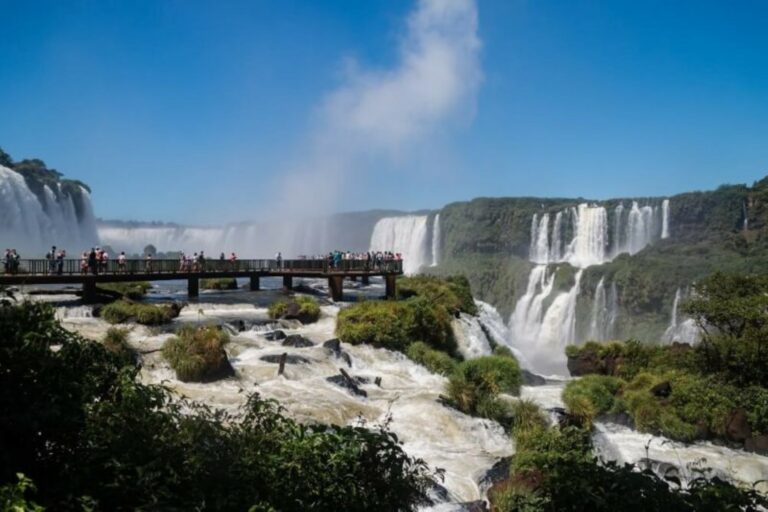
The combination of forest, sunlight, water spray and open viewpoints makes these circuits excellent for butterflies and dragonflies.
The walkway crosses river channels, islands and wet vegetation. Visitors may observe dragonflies, damselflies, butterflies and aquatic insects, although the waterfall remains the principal attraction.
This forest trail provides a quieter environment than the main waterfall circuits. Its leaf litter, shaded understory and small clearings create opportunities to observe ants, butterflies, beetles, true bugs and camouflaged insects.
Edges between forest and open areas frequently attract butterflies. Stations can also provide good observations because of planted vegetation, damp soil and small sunny clearings.
Lodges surrounded by native forest can be particularly interesting after dark, when moths and beetles approach exterior lights. Lights should not be left operating unnecessarily, as excessive artificial illumination can disrupt nocturnal insects.
Enjoy the amazing Iguazu Falls, visiting both sides and include a birdwatching activity with our specialized guides in La Lorenza
Insect photography requires patience more than expensive equipment.
The best images usually come from observing the insect’s natural behavior.
Enjoy a wonderful 4-night tour to visit Iguazu Falls and discover the atlantic rainforest
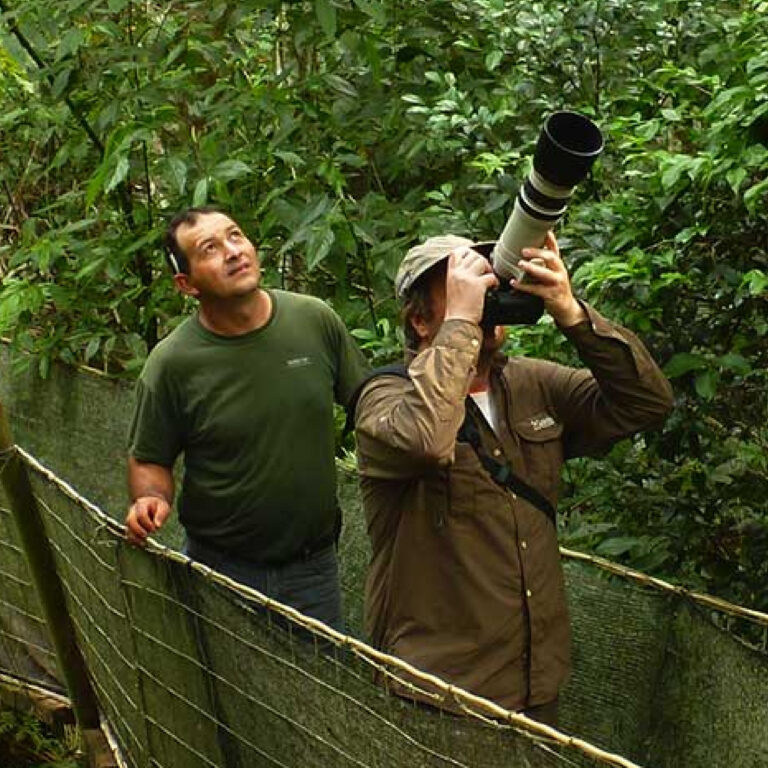
Insects are not merely decorative elements of the forest. They maintain its fundamental processes.
Bees, butterflies, moths, beetles and flies transfer pollen between flowers, allowing plants to produce seeds and fruit.
Termites, beetles, ants and fly larvae break down wood, leaves, dung and dead organisms.
Burrowing ants, termites and beetles mix and aerate the soil.
Mantises, dragonflies, assassin bugs, wasps and predatory beetles consume other insects.
Ants carry seeds, while dung beetles bury seeds contained in mammal droppings.
Insects support birds, bats, amphibians, reptiles, fish and small mammals. Even animals that do not primarily eat insects may depend on them during part of their lives.
Butterflies, dung beetles and aquatic insects respond relatively quickly to habitat disturbance. Changes in their communities can reveal forest degradation or declining water quality before the effects become obvious to people.
Discover the Brazilian side of Iguazu Falls in a half-day tour! English-speaking guide, hotel pick-up and drop-off included. Book now!
From Price: USD59
The national parks provide essential protection, but insects remain vulnerable to changes inside and outside their boundaries.
Many insects depend on specific forest conditions or individual host plants. Isolated forest patches may be too small to maintain their populations.
Pesticides used in surrounding agricultural landscapes can affect pollinators, predators and aquatic insects as well as the intended crop pests.
Changes in temperature and rainfall can disrupt flowering periods, insect emergence and relationships between caterpillars and their host plants. Droughts, fires and extreme floods can eliminate localized populations.
Bright nighttime lighting attracts and disorients moths, beetles and other nocturnal insects. It can interfere with feeding, reproduction and navigation.
Aquatic insect larvae are affected by sediment, chemical pollution and changes in river flow.
Trampling, litter, unnecessary pesticide use and disturbance of vegetation can damage small but important habitats.
One single amazing destination, three different countries!
Visitors can help protect the park’s invertebrate life by following simple principles:
Citizen-science platforms can make photographs useful to researchers, but observations should include an accurate location only when sharing it does not place a rare species at risk.
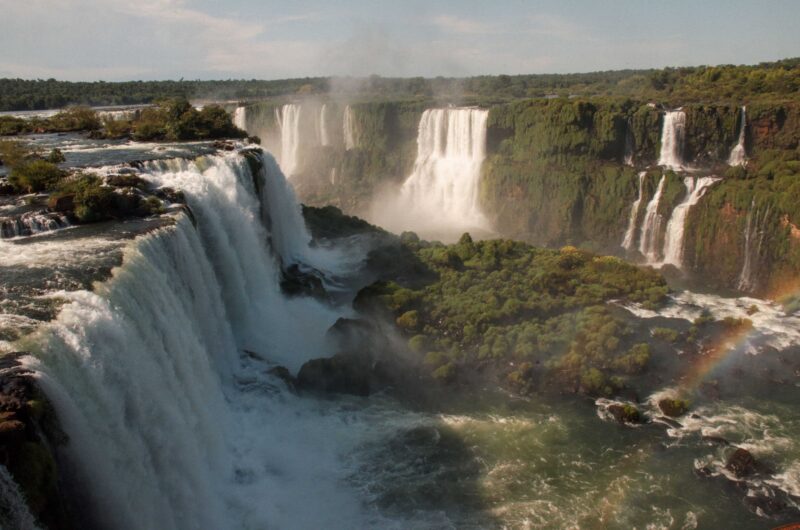
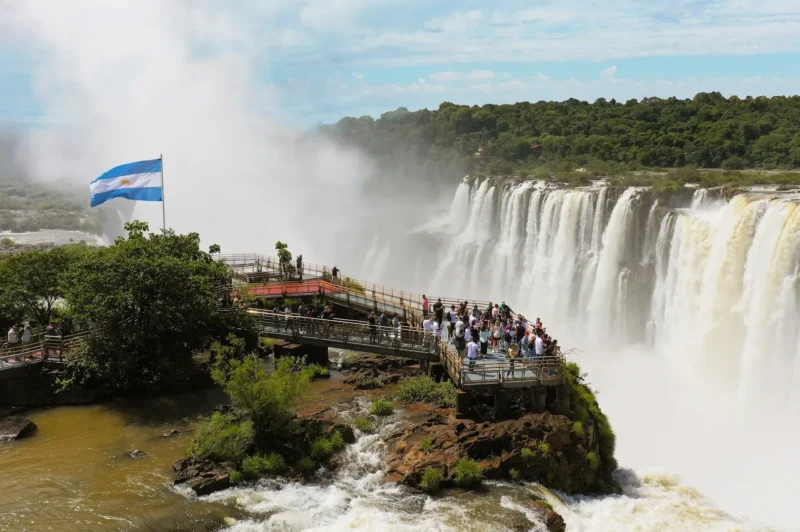
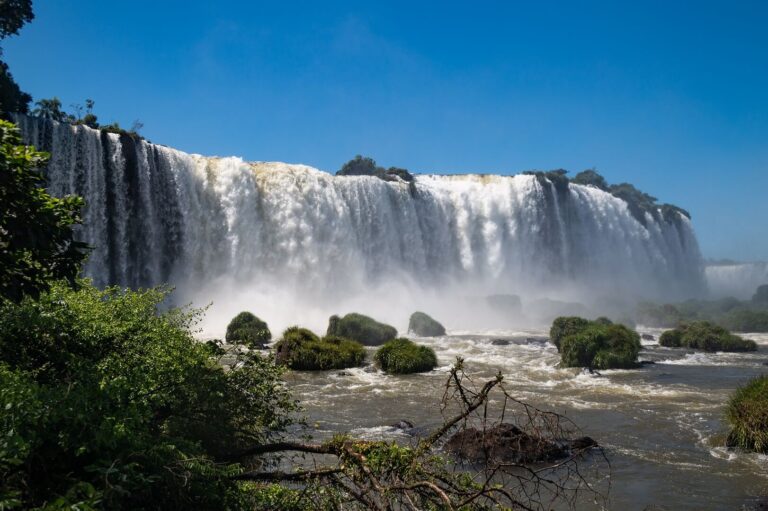
The waterfalls naturally dominate every visit to Iguazú. Their scale, sound and power are impossible to ignore. Yet slowing down to observe the insects reveals an entirely different dimension of the national park.
A line of leafcutter ants is cultivating an underground fungus garden. A butterfly drinking from wet soil is collecting minerals. A dung beetle is returning nutrients to the forest. A moth visiting a flower after dark is pollinating a plant that may depend on it. A dragonfly patrolling a stream is both predator and evidence of a functioning aquatic habitat.
These small encounters show that Iguazú is not simply a spectacular waterfall surrounded by vegetation. It is a complex living system in which countless organisms are connected.
The jaguar may be the symbol of the Misiones rainforest, but insects are among its most numerous workers. Protecting them means protecting the pollination, decomposition, soil formation and food webs upon which the entire Iguazú ecosystem depends.
One single amazing destination, three different countries!
DISCOVER A WONDERFUL PLACE TO ENJOY BIRDWATCHING. BE READY WITH YOUR BINOCULARS.
