
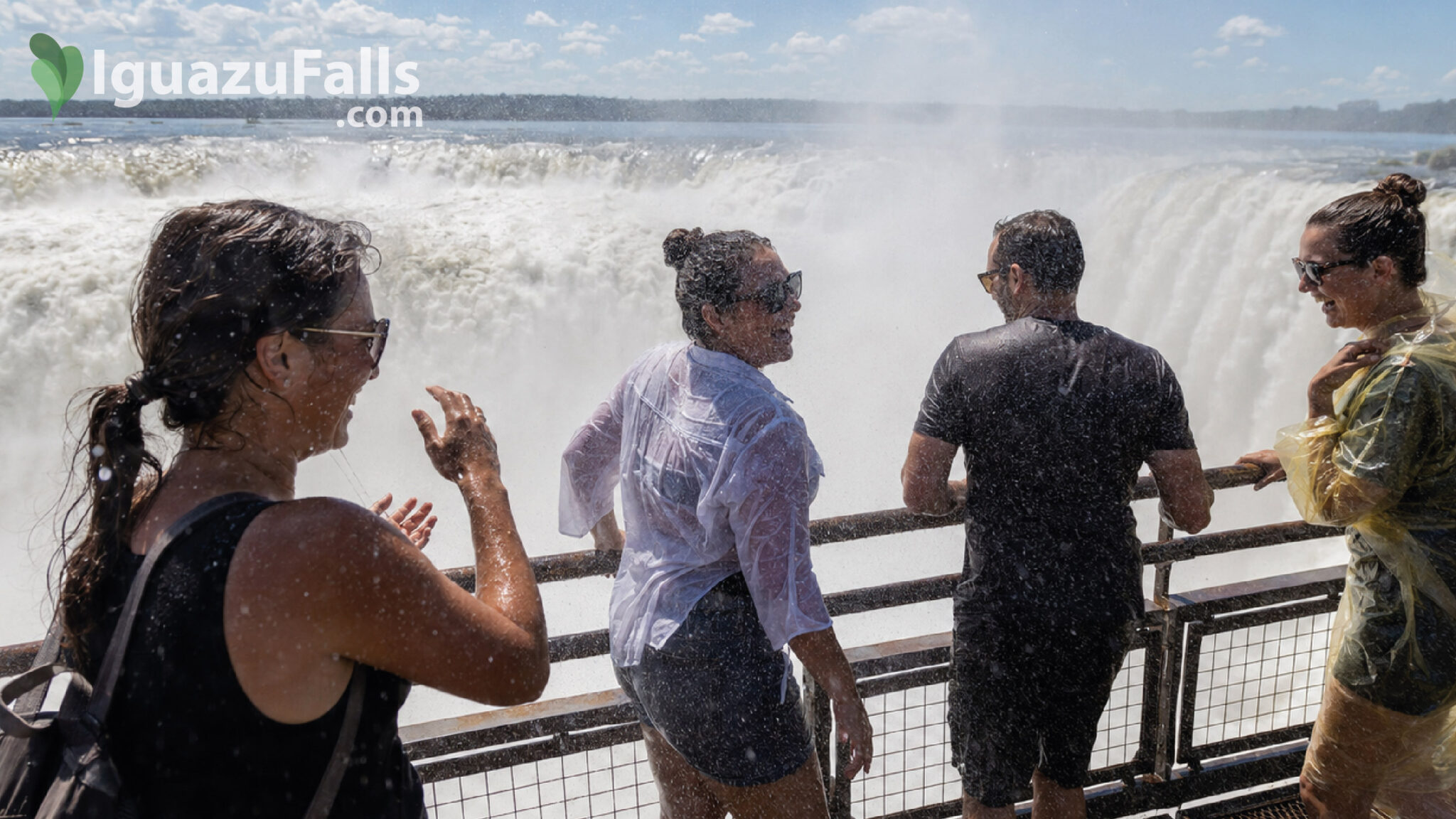
Visitors to Iguazu Falls often use the words mist, spray and rain interchangeably. Although all three involve water droplets, they are produced differently and affect your visit in different ways.
You can experience intense mist and spray at Iguazu Falls even when the weather forecast predicts a completely sunny day.
Spray produces much of the mist surrounding Iguazu Falls. Rain, by contrast, is a weather event.
Spray is created when enormous volumes of water crash against rocks and the river below. The impact breaks part of the water into droplets and sends them upward and outward.
Wind can carry this spray toward viewpoints and walkways.
Visitors normally encounter the strongest spray:
Spray can soak your clothing quickly, even under blue skies.
One single amazing destination, three different countries!
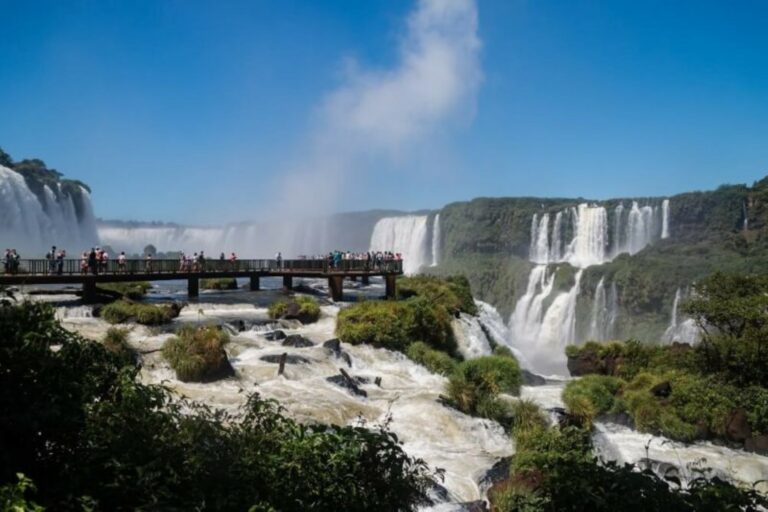
Mist is the visible cloud of extremely small water droplets suspended in the air. Around Iguazu Falls, much of it originates from waterfall spray.
The powerful impact of the cascades fills the lower gorge with fine droplets. Rising air currents and wind keep these droplets suspended, forming the white veil frequently seen above the falls.
Not exactly, although they overlap.
Spray describes how the droplets are projected from the water, while mist describes the fine cloud those droplets create in the air.
Close to a waterfall, you may feel larger drops of spray. From a distant viewpoint, the same process appears as a cloud of mist.
Yes. Dense mist can temporarily obscure individual waterfalls, especially around Devil’s Throat.
Visibility can change within seconds as the wind moves the suspended droplets. A waterfall hidden by mist may become completely visible moments later.

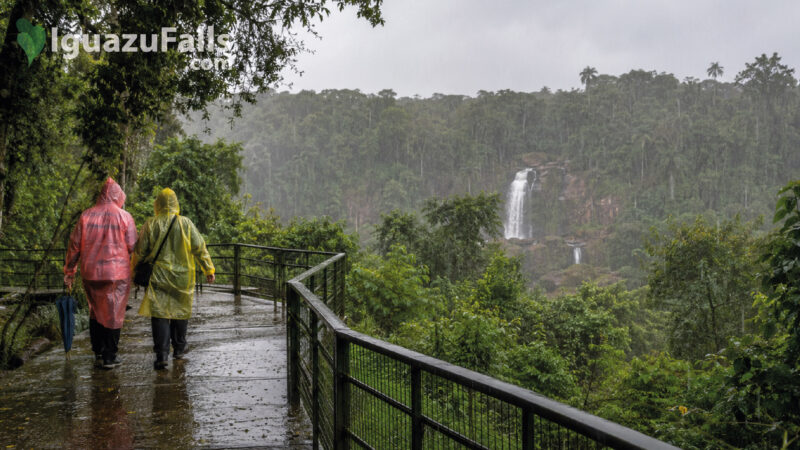
Rain is atmospheric precipitation. It forms in clouds and falls over the park and surrounding rainforest.
Unlike waterfall spray, rain can affect large areas simultaneously, including:
Rain intensity can range from a brief tropical shower to a prolonged storm.
If drops are falling beneath dark or rain-filled clouds throughout the park, it is probably rain.
If the sky is clear but you become wet only near the waterfalls, you are experiencing spray.
Spray and mist are strongest near major cascades and usually decrease as you move away from them.
Rain continues across trails, parking areas and forest sections located far from the waterfalls.
Waterfall spray often arrives in sudden gusts. One section of a walkway may be wet while another nearby area remains relatively dry.
Rain tends to fall more consistently over a broader area, although tropical showers can also be highly localized.

Yes. Iguazu Falls can produce mist and spray while rain falls from the clouds above.
When all three occur together, visibility may be limited and visitors can become soaked very quickly. Walkways may also become slippery.
No. A weather forecast predicts atmospheric conditions such as rain, temperature, humidity and wind.
It does not indicate how wet you will become from the waterfalls. A forecast showing zero probability of rain does not mean you will remain dry near Devil’s Throat or during a boat ride.
Wind direction and river volume influence how far waterfall spray travels.
Experience the awe of Iguazu Falls on a 3-day tour from Buenos Aires. Book now for an unforgettable adventure!
From Price: USD190
Both sides can be wet, but the experience differs.
The Argentine circuits place visitors above and close to numerous cascades. The Devil’s Throat walkway can receive considerable spray, depending on wind direction and river conditions.
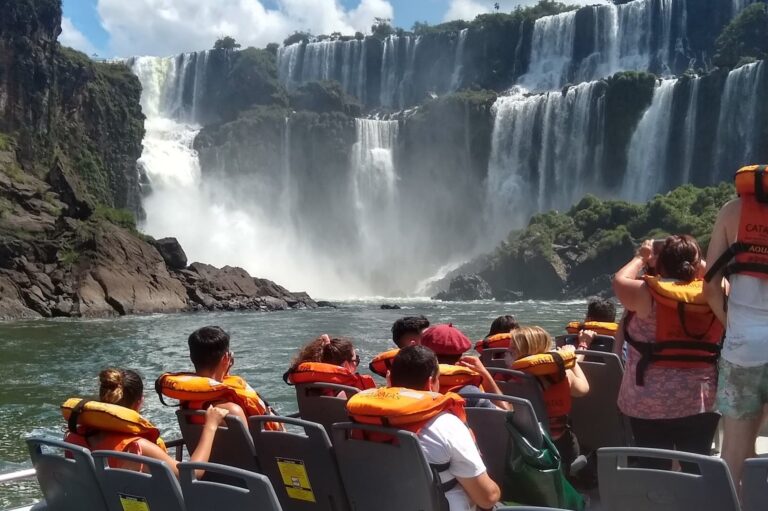
Boat excursions produce the most intense soaking.
The Brazilian trail offers panoramic views from across the gorge. Its final walkway approaches the main waterfall system and can be extremely wet because of strong spray.
Earlier viewpoints along the trail are generally drier.
Prepare for water even on a sunny day.
Recommended items include:
Avoid heavy cotton clothing, which takes longer to dry in humid conditions.

A poncho provides useful protection from light rain and waterfall spray, but it may not keep you completely dry near the strongest cascades.
During boat rides, assume that your clothes and footwear will become wet regardless of the protection you wear.
Store passports, medication, electronics and other sensitive belongings inside sealed waterproof bags.
Use a waterproof cover or keep the camera inside a dry bag when approaching high-spray areas.
Before taking a photograph:
Changing lenses near heavy spray is not recommended because moisture can enter the camera body.
Not necessarily, but strong spray can indicate powerful water flow and create dramatic conditions.
Mist also produces rainbows when sunlight reaches the droplets at the correct angle. For photographers, a combination of sunshine, airborne mist and proper positioning can create spectacular images.
Excessive mist, however, may temporarily hide portions of the waterfalls.
One single amazing destination, three different countries!
Light or moderate rain is not usually a reason to cancel. Iguazu Falls remains impressive in wet weather, and the rainforest colours can appear especially vivid.
Activities or circuits may be suspended during:
Always follow park instructions and check current alerts before departure.
The simplest way to remember the distinction is:
At Iguazu Falls, mist and spray are part of the attraction—not signs of bad weather. Prepare to get slightly wet on any day and considerably wetter near Devil’s Throat or during a boat excursion.

Experience the wonder of Iguazu Falls on a private 2 day tour from Buenos Aires. Easily reserve accommodations and optional activities. Book now!
From Price: USD150
Experience the awe of Iguazu Falls on a 3-day tour from Buenos Aires. Book now for an unforgettable adventure!
From Price: USD190
