
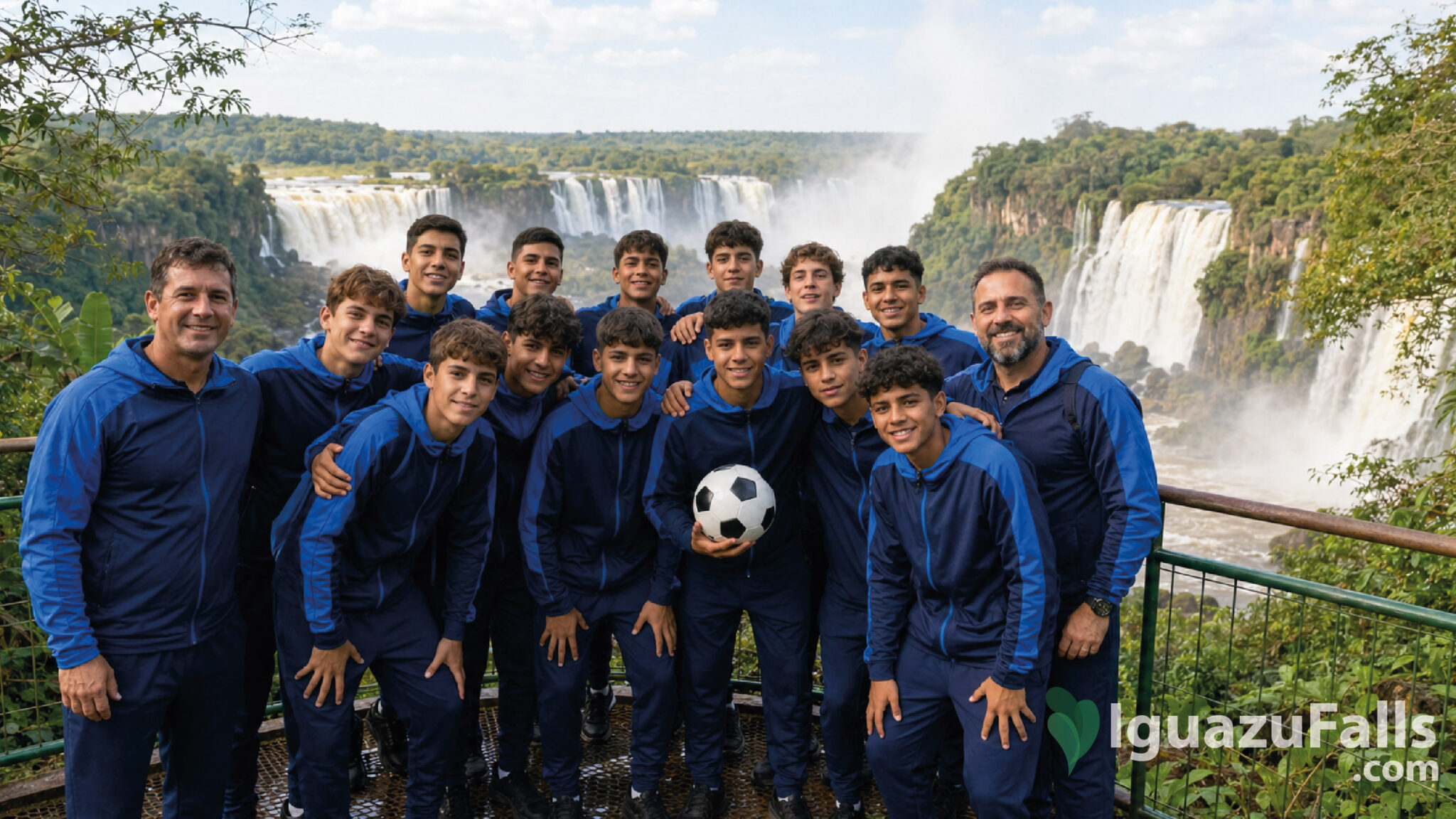
Iguazu Falls can provide an unforgettable natural and cultural component within a sports tour to Argentina, Brazil or the wider Southern Cone.
The destination is not primarily a high-performance training center. Its greatest value lies in team bonding, recovery, cultural exchange and the opportunity to experience Argentina and Brazil during the same journey.
A well-designed sports itinerary can combine friendly matches, school or club exchanges and visits to both national parks without exhausting athletes before competition.
The destination can be included in tours for:
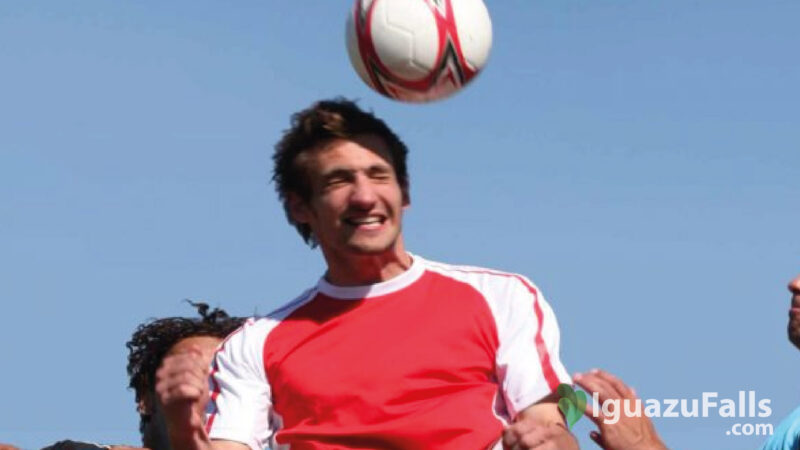
Football has the broadest local participation, but exchanges in other sports may be possible through schools, clubs and regional organizations.
Sports tours should balance competition with cultural experience.
Iguazu offers:
The waterfalls can also provide a shared experience for players, coaches, parents and supporters with different sporting roles.
Iguazu works best in combination with cities that offer a deeper pool of clubs and facilities.
Possible programs include:
Major competitive matches are generally easier to arrange in larger cities. Iguazu can then provide a lighter final phase.
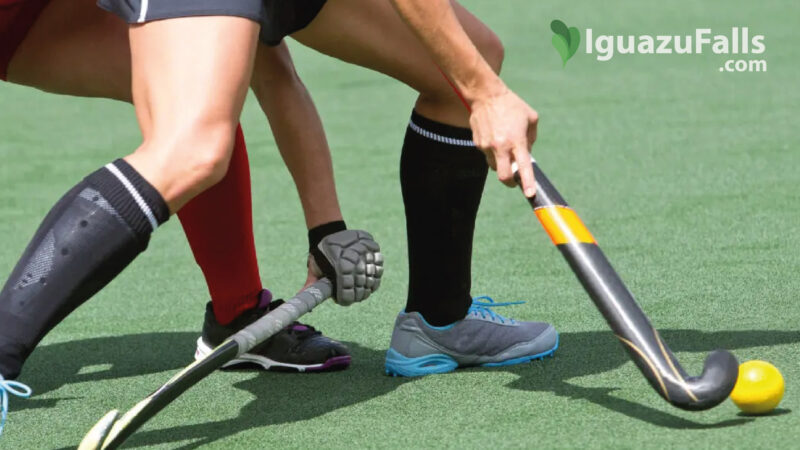
A local match should be organized according to:
Never arrange a match based only on the participants’ ages. Two under-17 teams may have very different technical and physical levels.
Provide the local partner with:
This improves the chances of creating an evenly matched and enjoyable fixture.
Experience Argentina’s Icons with Comfort and Style

A sports exchange can include much more than a game:
Mixed training can create more meaningful interaction than two teams remaining separate until kickoff.
Unveiling the Wonders of Argentina: Explore Buenos Aires and Iguazu Falls on a 6-Night Journey

The academic year in Argentina and Brazil generally runs from approximately February or March through November or December.
School exchanges can be harder to arrange during:
Club availability may differ from school availability. Confirm calendars before selecting tour dates.
Iguazu can be extremely hot and humid, particularly from December through February.
Training or playing at midday can increase the risk of:
The competitive schedule should reflect local conditions rather than copying the team’s routine at home.
Experience Argentina’s diversity on a 10-day adventure through vibrant cities, remote mountain landscapes, and one of the world’s greatest natural wonders.

A full Argentine park visit is not ideal on the same day as an important fixture. Players may spend hours walking in heat and humidity.
If sightseeing must occur before competition, choose:
A park visit can work well as a recovery-day activity if the walking pace remains moderate.
The day after competition is often the best moment for the Brazilian side. The Argentine side may require a full day and should be planned according to players’ fatigue.
The Argentine park offers a more extensive visit and can involve significant walking.
Team managers should consider:
Players should wear proper walking shoes rather than sliders or flip-flops.
One single amazing destination, three different countries!
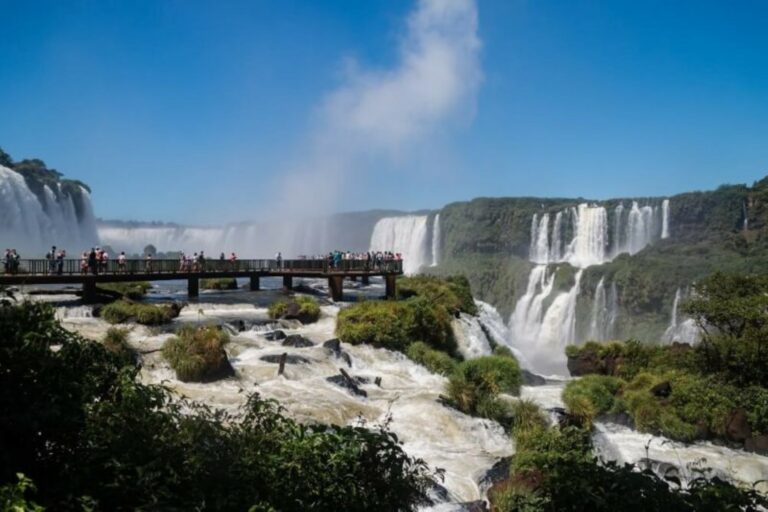
The Brazilian side is shorter and easier to integrate into a competition schedule.
The official ticket includes internal bus transportation, the principal trail, elevators, the waterfall walkway and major viewpoints. Tickets are limited and require an online date and time reservation.
Gran Aventura and Macuco Safari are popular with sports teams, but athletic ability does not automatically make every participant eligible.
Restrictions may apply to people with:
Minimum-age or other boarding rules may also apply.
A player recovering from:
should obtain medical guidance before joining a high-speed boat.
Participation should be optional, and a separate supervised activity should be arranged for nonparticipants.
Visit Three Beautiful Destinations in 9 Nights

Training facilities vary in quality and availability.
Before confirming a session, verify:
Photographs should be recent. A venue that looks suitable on a map may not meet the team’s technical requirements.
Sports groups may carry:
Airlines may classify some items as oversize or sporting baggage. Confirm allowances before issuing tickets.
Maintain a master inventory and distribute essential equipment across multiple bags so one delayed suitcase does not cancel training.
Heat and humidity make laundry planning important.
The hotel should confirm:
Do not assume that uniforms washed after an evening match will be ready the next morning.
Buenos Aires, Iguazu, & Rio de Janeiro: A Triad of South American Splendor

Team meals should reflect performance needs while introducing local food safely.
Discuss:
A traditional Argentine or Brazilian barbecue may be an enjoyable social dinner, but it is not necessarily appropriate immediately before competition.
Every team should have:
Travel insurance must cover sporting participation. Some ordinary policies exclude organized matches or training.
Youth sports groups require clear rules covering:
Local opponents and host families should be included only within a formally supervised safeguarding structure.
Buenos Aires, Iguazu Falls, and the End of the World

Teams visiting both parks must cross between Argentina and Brazil.
Prepare:
The group should cross together in prearranged transportation. Players should never leave passports at the hotel on a cross-border day.
Schools, universities, sports clubs and amateur teams can organize a customized South American sports tour with RipioTurismo. Its specialized programs combine friendly matches or training sessions with local teams, cultural exchanges and visits to destinations such as Buenos Aires and Iguazu Falls. Itineraries can be adapted to football, field hockey, rugby, basketball and other disciplines, including suitable accommodation, private transportation, sightseeing activities and complete assistance throughout the journey. Visiting Iguazu after competing in Buenos Aires is an excellent way for players, coaches and accompanying families to relax, strengthen team spirit and conclude their tour at one of South America’s most impressive natural attractions.
Transfer to the hotel, hold an orientation and schedule a gentle training session.
Visit a local school or club, conduct a clinic and play the friendly match. Finish with a shared meal.
Visit the Argentine or Brazilian side according to energy levels. Make adventure activities optional.
Complete the shorter Brazilian visit before departure if flight time permits.
Arrive after matches in Buenos Aires, Montevideo or another city.
Visit the Brazilian side and enjoy hotel recovery time.
Visit the Argentine side at a relaxed pace.
Depart for home or continue the tour.
This version treats Iguazu as the finale rather than another competitive stop.
An amazing 6-night tour to combine Iguazu Falls and the incredible Ibera Wetlands staying at the Posada de la Labuna. Enjoy the nature!

Look for:
The hotel should understand the difference between a leisure group and a sports team with precise timing and nutritional requirements.
Yes, subject to suitable local opposition, facilities and calendar availability. Foz do Iguaçu generally offers a larger selection than Puerto Iguazú.
It can provide heat adaptation and team bonding, but the destination should not be selected without confirming appropriate fields, medical support and opponents.
Only eligible and medically suitable participants should join. The excursion should never be compulsory.
It is technically possible but unnecessarily tiring for most sports groups. Separate days produce a better experience and reduce border-related pressure.
Iguazu is most valuable to a sports tour as a place for connection, recovery and cultural exchange.
Successful planning requires:
The objective should not be to fill every hour. A strong Iguazu program gives athletes time to recover, interact with local teams and appreciate a natural wonder together.
