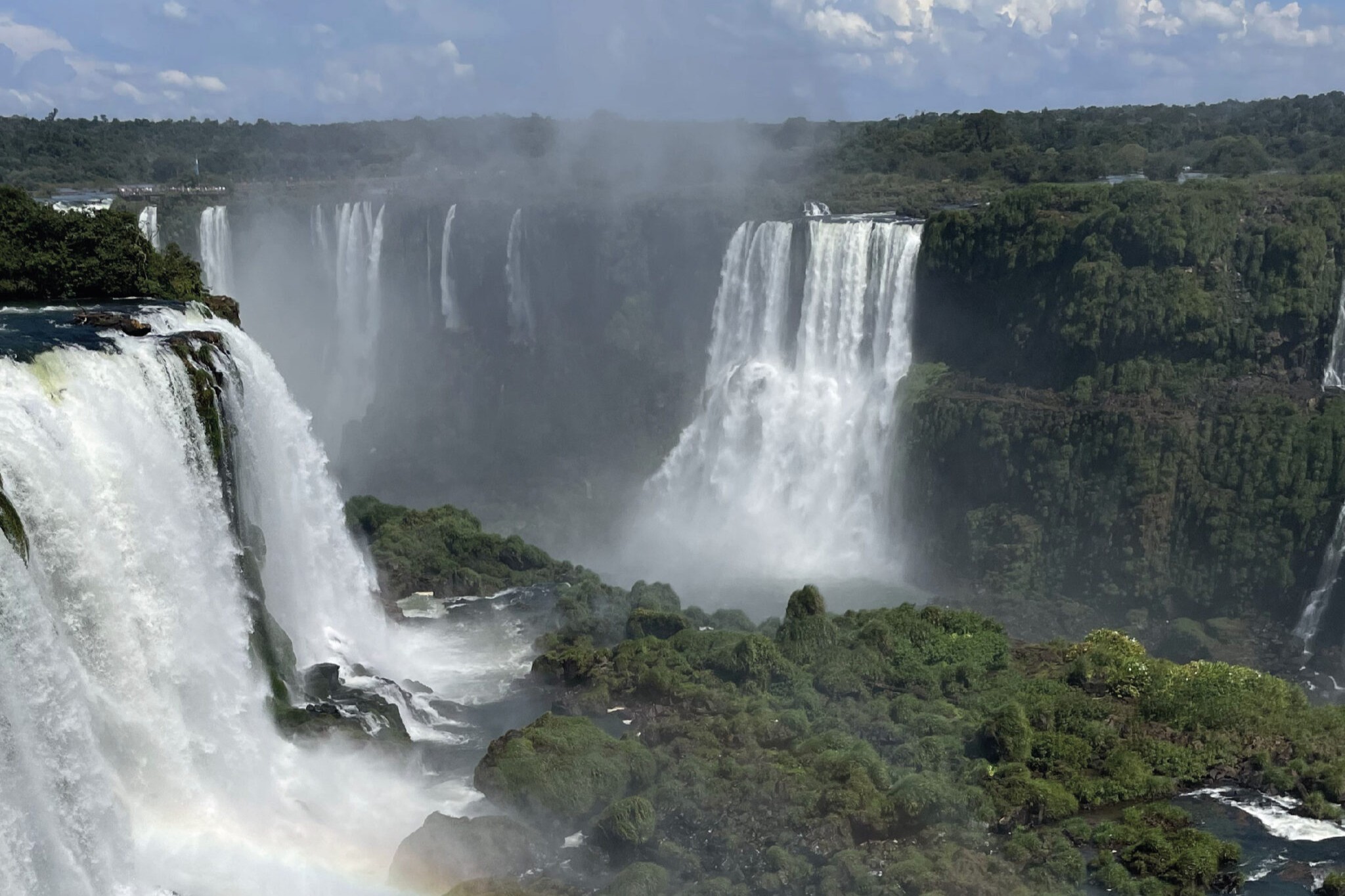
Iguazu Falls is located on the border between Argentina and Brazil, surrounded by a protected subtropical rainforest. Paraguay forms part of the nearby Triple Frontier region, but the waterfalls themselves are not located in Paraguayan territory and cannot be seen from there.
The falls are protected by Iguazú National Park in Argentina and Iguaçu National Park in Brazil, both recognized as UNESCO World Heritage Sites. These protected areas preserve an important ecosystem with a remarkable variety of native plants and wildlife.
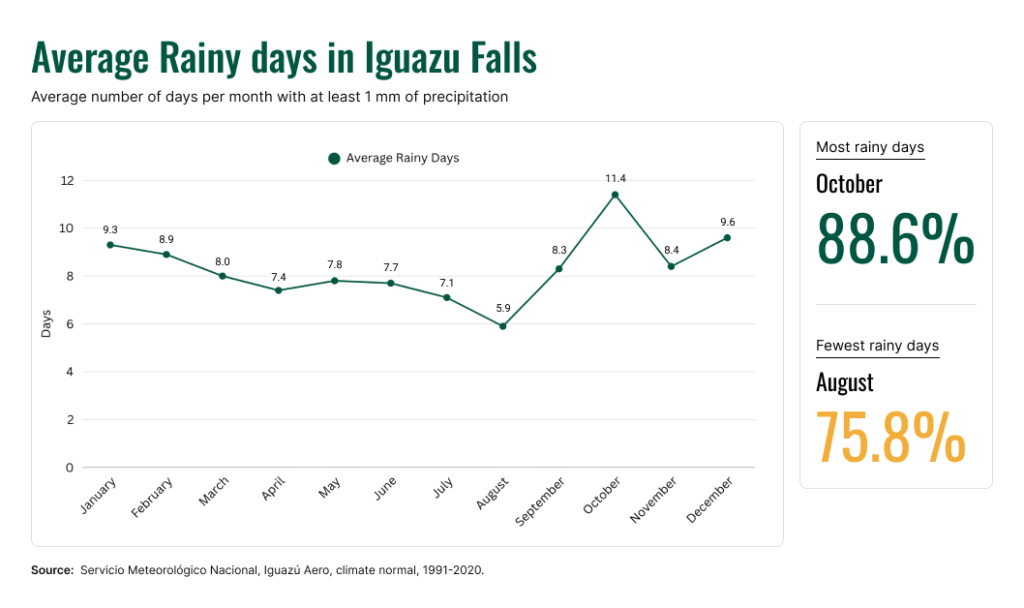
When planning your trip, weather is an important factor to consider. Iguazu has a warm and humid subtropical climate, with rainfall possible throughout the year and no clearly defined dry season.
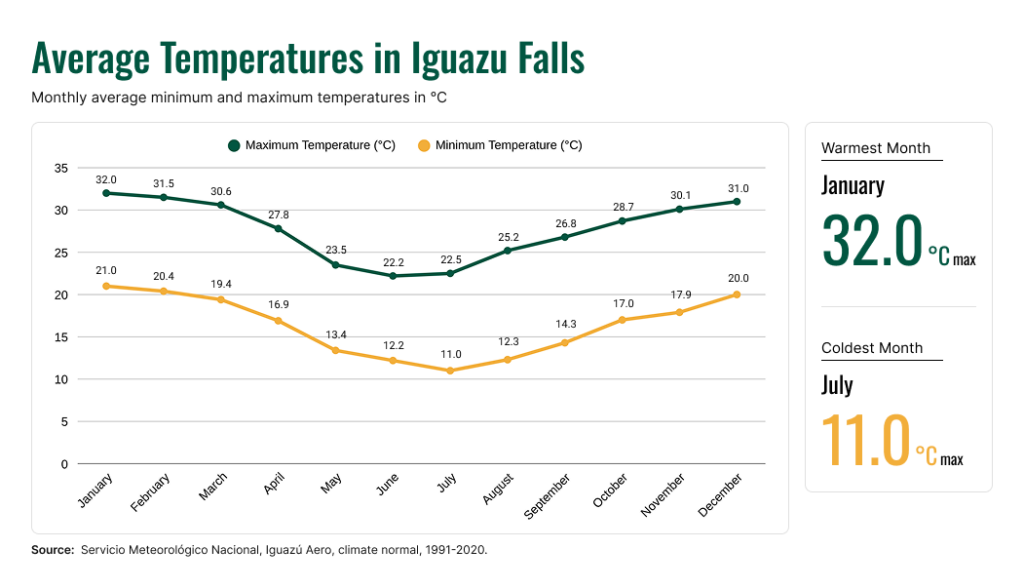
Average daytime temperatures vary from approximately 22°C to 32°C (72°F to 90°F) throughout the year. Average nighttime temperatures range from around 11°C to 21°C (52°F to 70°F), depending on the season.
The warmest months are generally from December to March, while cooler conditions are more common from April to August. However, weather can change quickly, and rain may occur during any month.

Experience the wonder of Iguazu Falls on a private 2 day tour from Buenos Aires. Easily reserve accommodations and optional activities. Book now!
From Price: USD150
Summer extends from December to February and is the hottest and most humid season.
Average daytime temperatures are usually around 31°C to 32°C (88°F to 90°F), while average nighttime temperatures remain close to 20°C to 21°C (68°F to 70°F).
January is generally the hottest month, with an average minimum of approximately 21°C (70°F) and an average maximum of around 32°C (90°F). February has similar conditions, with average temperatures ranging from approximately 20°C to 32°C (68°F to 90°F).
Rainfall, high humidity, and afternoon thunderstorms are common during summer. Showers may be intense, but they do not necessarily last all day, and periods of rain can be followed by sunshine.
The combination of heat, humidity, and waterfall spray can make the temperature feel warmer. Visitors should wear lightweight and breathable clothing, carry rain protection, drink plenty of water, and use sunscreen and insect repellent.
January and February also coincide with the summer holiday period in Argentina and Brazil, so visitor numbers may be higher.
Autumn runs from March to May and brings a gradual reduction in temperature.
March remains warm and humid, with average temperatures ranging from approximately 19°C to 31°C (66°F to 88°F). Conditions can still feel similar to summer, although temperatures begin to decrease.
April is generally milder, with an average minimum of around 17°C (63°F) and an average maximum of approximately 28°C (82°F).
By May, average temperatures fall to approximately 13°C to 24°C (55°F to 75°F). Days are usually mild, while mornings and evenings can feel noticeably cooler.
Autumn often provides comfortable conditions for walking through the national parks. However, Easter and long weekends may attract larger numbers of visitors.
Light clothing is usually suitable during the day, but a light jacket or sweater may be useful during the morning and evening.
Yes. Iguazu Falls is located in a subtropical rainforest region and receives rainfall throughout the year.
There is no clearly defined dry season. Rain is possible during every month, although wetter and more humid conditions are generally more common during the warmer part of the year.
Rainfall supports the dense vegetation and contributes to the powerful flow of the waterfalls. It is an essential part of the local ecosystem and does not necessarily prevent visitors from exploring the national parks.
Short showers may be followed by sunshine on the same day. However, heavy rainfall can raise river levels, strengthen currents, and affect certain activities, including boat rides and access to particular walkways.
Trails and paths can also become wet or slippery. Visitors should bring waterproof protection, wear comfortable shoes with good grip, and follow the instructions provided by park staff.
The availability of circuits and activities may change according to rainfall, river levels, maintenance, and other operational conditions.
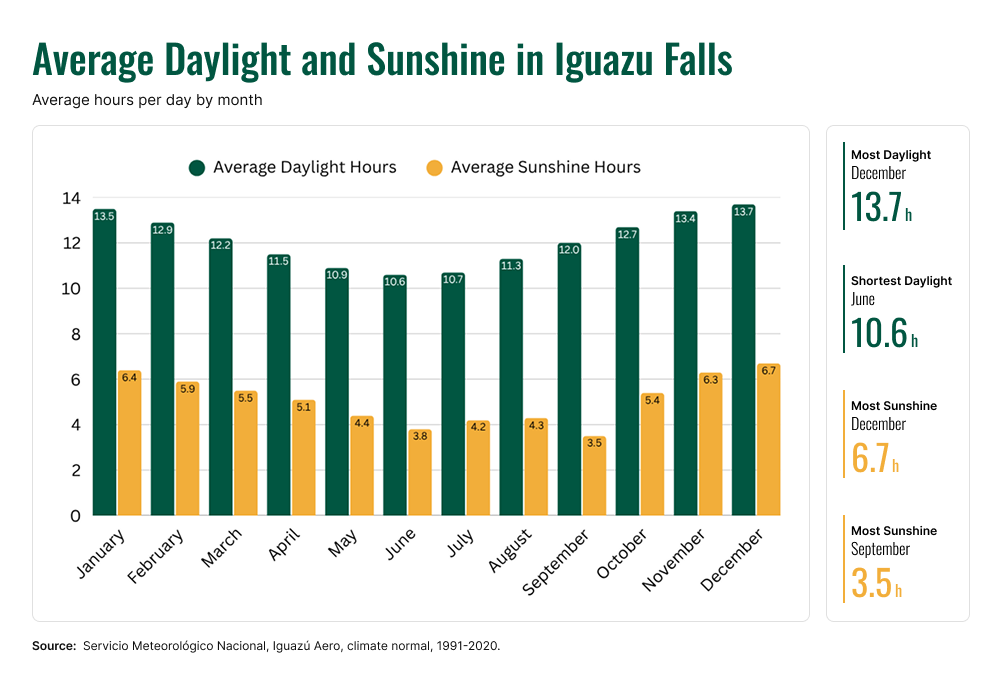
Iguazu experiences moderate seasonal variations in daylight because of its subtropical location.
The longest days occur during December and January, while the shortest occur during June and July. The region receives approximately 11 to 14 hours of daylight, depending on the season.
Summer provides longer days for outdoor activities, while winter days are shorter. Even during winter, there is normally enough daylight to visit the national parks during their regular operating hours.
The amount of visible sunshine varies according to cloud cover and rainfall. Weather conditions can change several times during the same day, particularly during the warmer months.
Iguazu Falls can be visited throughout the year. There is no single best month for every traveler, as each season offers different conditions.
Summer brings hot temperatures, high humidity, frequent rainfall, and generally powerful water flow. Walking may feel more demanding during the hottest hours, and the summer holiday period can attract more visitors.
Autumn offers gradually milder temperatures. April and May are often comfortable for walking, although Easter and long weekends may be busy.
Winter has cooler mornings and mild afternoons, making it a comfortable season for exploring the trails. July may receive more visitors because of school holidays in Argentina and Brazil.
Spring combines pleasant temperatures at the beginning of the season with increasingly warm and humid conditions toward November.
Weather is not the only factor to consider. Visitor numbers, public holidays, river levels, accommodation availability, and your preferred type of experience can also influence the best time for your trip.
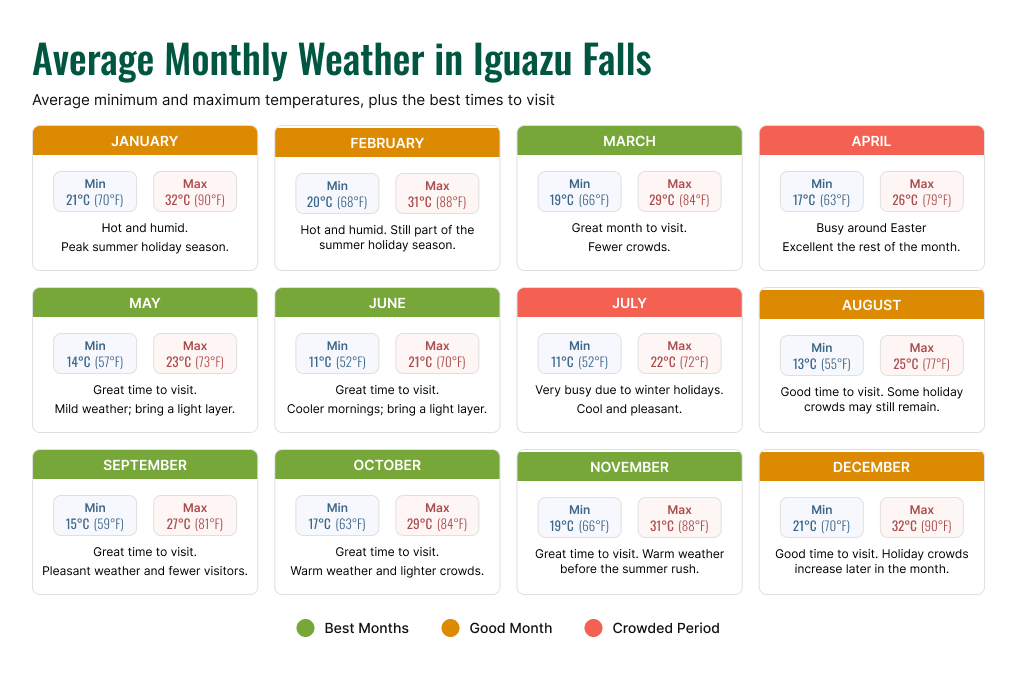
The following graphic provides a month-by-month overview of the average temperatures and general conditions to expect when planning your visit to Iguazu Falls.
One single amazing destination, three different countries!
Buenos Aires, Iguazu, & Rio de Janeiro: A Triad of South American Splendor

An amazing adventure program to enjoy Iguazu Falls with some extreme activities