
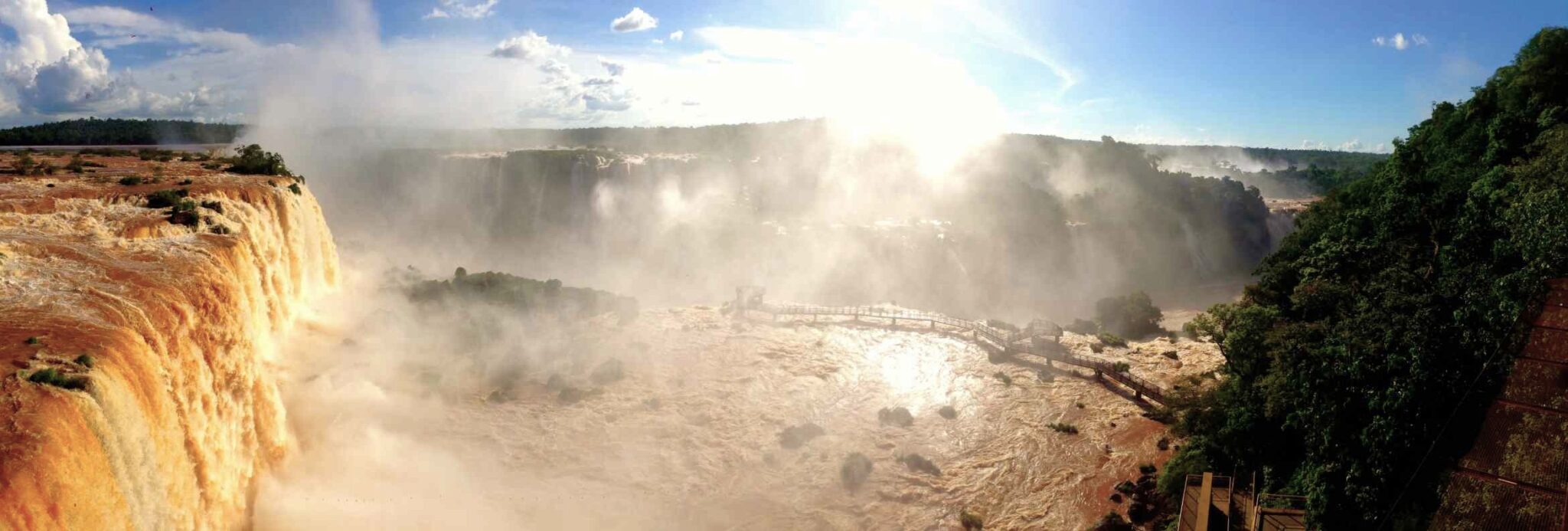
There is no single month that consistently has the highest water flow at Iguazu Falls. Higher volumes are often associated with wetter periods, particularly during spring and early summer, but significant rises can occur at any time of year.
Iguazu has a warm, humid subtropical climate with rainfall throughout the year and no clearly defined dry season. Although precipitation is often more concentrated during the warmer months, the water level at the falls depends on rainfall across the entire Iguazu River basin, not only on the weather near Puerto Iguazú or Foz do Iguaçu.
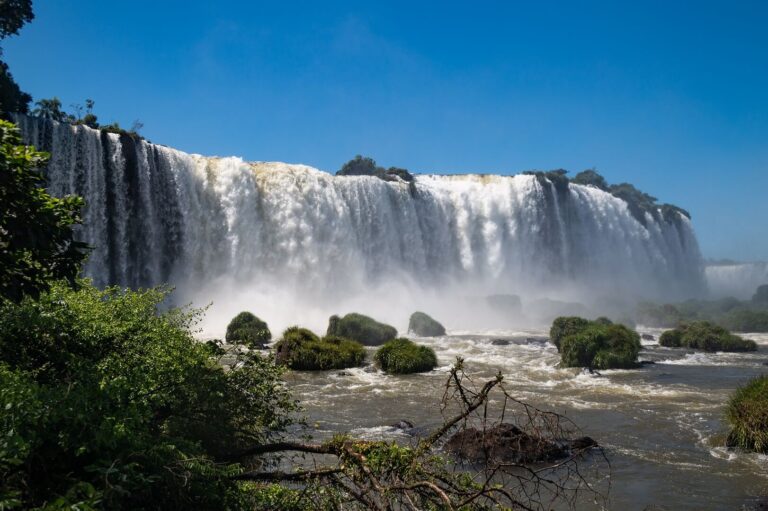
Experience the Brazilian side of Iguazu Falls on a guided half-day tour with transportation from your hotel in Puerto Iguazú or Foz do Iguaçu.
From Price: USD59
Periods of higher water flow are often associated with increased rainfall from October through early summer, particularly after several days or weeks of sustained precipitation.
However, this should not be understood as a fixed high-water season. The falls may experience:
The appearance of the falls can therefore vary considerably from one year to another, even when comparing visits made during the same month.
The water reaching Iguazu Falls comes from a large river basin that extends far beyond the national parks.
Heavy rainfall hundreds of kilometers upstream can create a flood wave that travels downstream and raises the water level at the falls several days later. This means the weather may be sunny near the parks while the river is still rising because of precipitation elsewhere in the basin.
Several factors influence the final volume:
Because these factors interact, it is not possible to predict the exact water level several months before a visit.
Iguazu receives rain throughout the year and does not have a sharply defined dry season.
Summer is generally hotter and more humid, and thunderstorms can bring intense rainfall. Spring can also be particularly wet, while winter usually offers cooler temperatures and may include comparatively drier periods.
However, substantial rainfall and high river levels can still occur during autumn or winter. A winter visit does not guarantee low flow, just as a summer visit does not guarantee exceptionally high water. Argentina’s National Parks Administration describes the local climate as warm, humid, and without a marked dry season.
The historical average flow at Iguazu Falls is commonly cited at approximately 1,500 cubic meters per second.
This figure is a long-term average rather than the amount visitors should expect on a particular day. During prolonged dry conditions, the flow may fall below that level. After exceptional rainfall, it can rise several times above the average.
It would therefore be misleading to present a figure such as 12,750 cubic meters per second as a normal seasonal maximum. Extreme flood levels are exceptional events, not conditions that occur predictably every summer.
During periods of high flow, Iguazu Falls appears broader, louder, and more powerful. Individual cascades may visually merge into large curtains of water, while heavy mist rises above the gorge.
Visitors may notice:
The Brazilian side is particularly suitable for appreciating the overall volume because its main circuit provides panoramic views across much of the waterfall system.
Very high water does not always create better viewing conditions. Heavy mist can obscure parts of Devil’s Throat and other cascades, while exceptional river levels may lead to temporary operational changes.

Enhance your visit to Iguaçu National Park in Brazil and experience a breathtaking sunset at Iguazu Falls with a delightful drink in hand.
From Price: USD139
During periods of lower flow, the waterfall system remains impressive, but its appearance changes.
Visitors may see:
Lower water can reveal details of the landscape that disappear during periods of intense flow. It should not automatically be considered a worse time to visit.
Yes. Exceptionally high river levels can affect some circuits and visitor activities.
Temporary measures may include:
The parks generally remain open during rainy weather, but individual circuits are subject to weather and safety conditions. Iguazú Argentina and the National Parks Administration monitor river conditions and coordinate responses when increased rainfall creates a flood wave upstream.
Annual rainfall patterns can vary substantially. One year may bring prolonged dry conditions, while another may include repeated storms and unusually high water.
Short-term weather events can also change the flow quickly. As a result, monthly climate averages are useful for understanding general conditions, but they cannot guarantee how the falls will look on a specific travel date.
Local weather forecasts are not enough to estimate the water level because rainfall elsewhere in the basin may still be moving downstream.
It is better to choose your travel dates according to your complete itinerary, preferred temperatures, and expected visitor levels rather than trying to predict an exact river flow.
For most travelers, the best approach is to:
The national park can be visited throughout the year. Summer is warmer and tends to receive the highest concentration of visitors, while cooler months may offer more comfortable conditions for walking. Vacation periods, weekends, and public holidays often influence crowds more than the river level itself.
There is no guaranteed month for seeing Iguazu Falls at its highest flow.
Higher volumes are often associated with wetter conditions during spring and early summer, but major increases can occur during any season. The appearance of the falls on a particular day depends mainly on recent rainfall across the entire Iguazu River basin.
Iguazu Falls remains an extraordinary experience throughout the year. High water creates immense curtains, mist, and power, while lower flow reveals more of the individual cascades, cliffs, and islands that form the waterfall system.

Experience the wonder of Iguazu Falls on a private 2 day tour from Buenos Aires. Easily reserve accommodations and optional activities. Book now!
From Price: USD150
Explore both sides of Iguazu Falls with a flexible package tailored to your schedule and travel style.

