
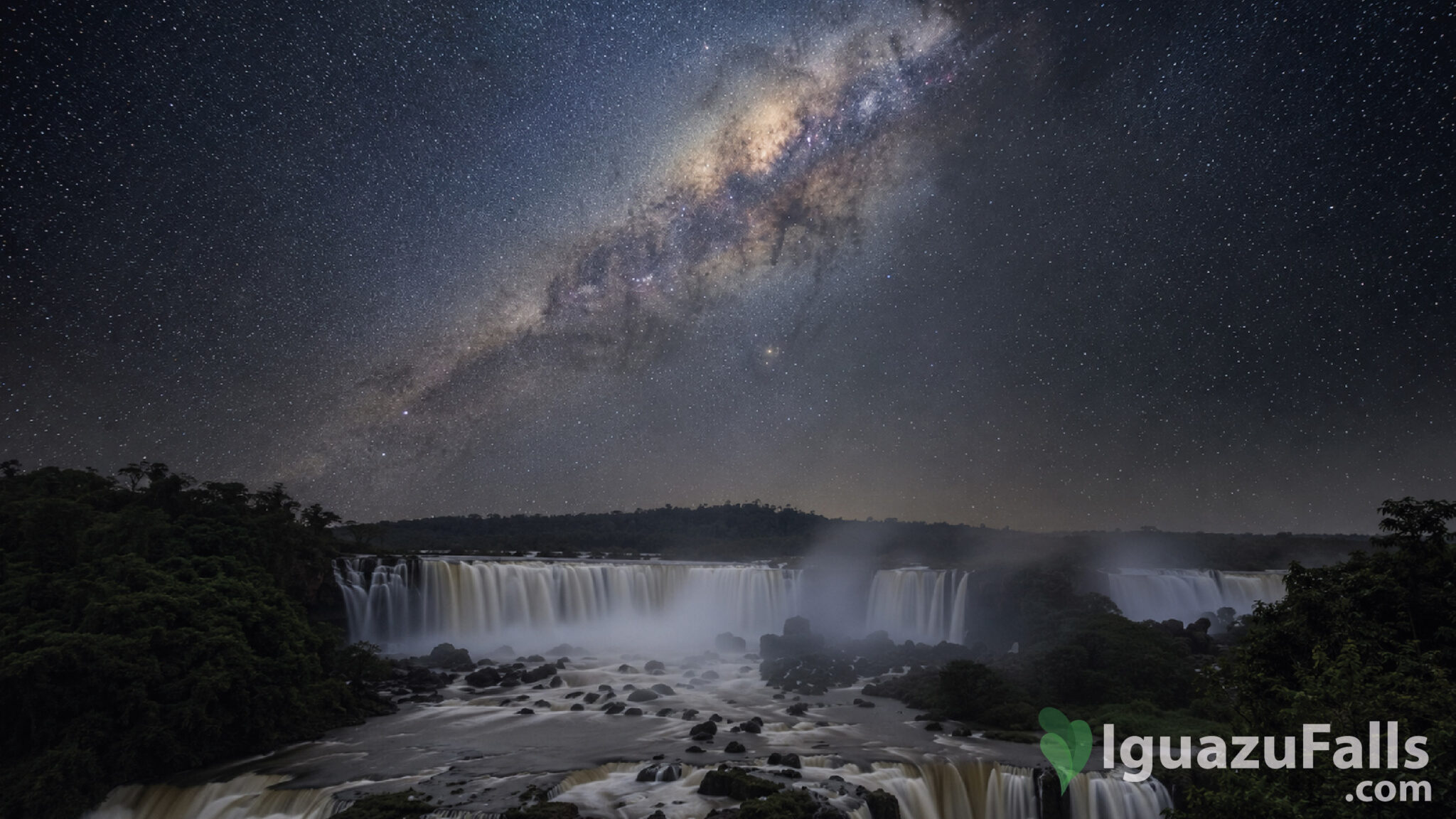
The best night for astrophotography at Iguazu Falls depends on what you want to capture. Dark, moonless nights are ideal for stars, while full-moon nights are better for photographing illuminated waterfalls and possible lunar rainbows.
Night access to the national parks is restricted, so photography must take place during an authorized nighttime experience or from permitted accommodation and public areas.
For photographing the Milky Way, constellations or a star-filled sky, choose the nights around the new moon.
With little moonlight, the sky appears darker and faint stars become more visible. The best conditions normally occur within three or four nights before or after the new moon.
Look for:
Winter generally provides cooler nights and can occasionally offer clearer atmospheric conditions, although Iguazu’s humid subtropical climate makes clouds possible throughout the year.

Experience a breathtaking night under the stars at Iguazu Falls, in a peaceful and exclusive setting inside the Brazilian side of the national park.
From Price: USD265
A full moon is less suitable for photographing faint stars because its brightness illuminates the sky. However, it is ideal for photographing Iguazu Falls at night.
Moonlight can reveal the cascades, forest and rising mist. Under particularly favorable conditions, it may also produce a lunar rainbow, or moonbow.
The best opportunity occurs during the nights immediately surrounding the full moon, when:
The Argentine park operates an authorized Full Moon Walk on selected nights, traveling by ecological train and walkway to Devil’s Throat. The experience is weather-dependent and may be canceled because of rain or unsafe conditions.
Quarter-moon nights offer a useful compromise.
Part of the night remains relatively dark for stars, while moonlight can still illuminate the landscape. These conditions are suitable for balanced photographs combining:
Photographers should check the Moon’s rising and setting time—not only its phase. A night with the Moon below the horizon during the first few hours may provide excellent dark-sky conditions.
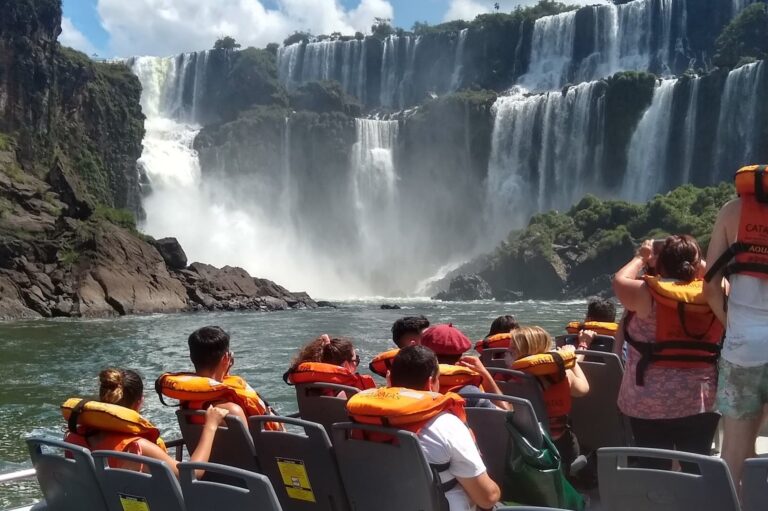
Experience the awe of Iguazu Falls on a 3-day tour from Buenos Aires. Book now for an unforgettable adventure!
From Price: USD190
The Brazilian park has offered the authorized Noite nas Cataratas experience on selected evenings. It provides access to the waterfall viewpoints after normal closing time and can coincide with either a dark sky or moonlit conditions, depending on the date.
The park has also promoted nighttime photographs showing stars and a silver lunar rainbow above the falls.
Schedules can change, so confirm availability and photography restrictions before planning your visit.
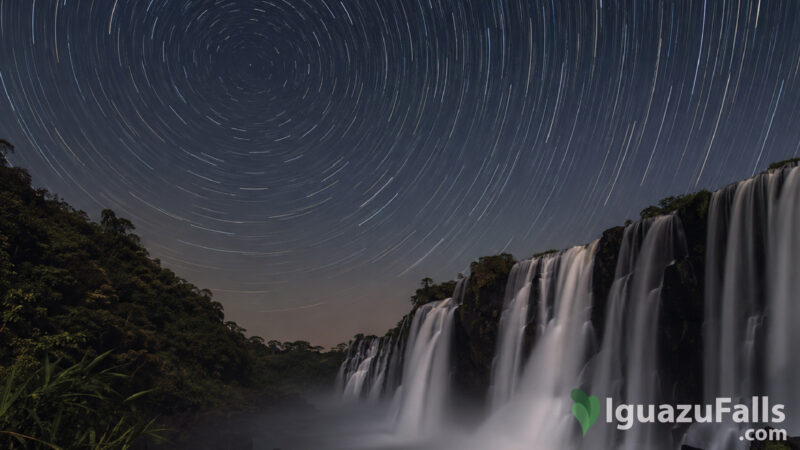
A promising astrophotography forecast should include:
A completely cloudless night is not always necessary. Thin or scattered clouds can add movement and atmosphere to a long exposure, particularly when photographing the waterfalls under moonlight.

Enhance your visit to Iguaçu National Park in Brazil and experience a breathtaking sunset at Iguazu Falls with a delightful drink in hand.
From Price: USD139
For stars, use these settings as a starting point:
For moonlit waterfalls:
Waterfall spray can cover the lens within seconds, so carry several dry microfiber cloths and waterproof protection.
Visitors cannot independently enter the waterfall circuits after closing. Tripods, bright lights and prolonged stops may also be restricted during group experiences.
Always:
The perfect conditions are never guaranteed at Iguazu Falls. Nevertheless, matching the lunar phase to your photographic objective—and reserving authorized nighttime access—is the key to obtaining a successful image.
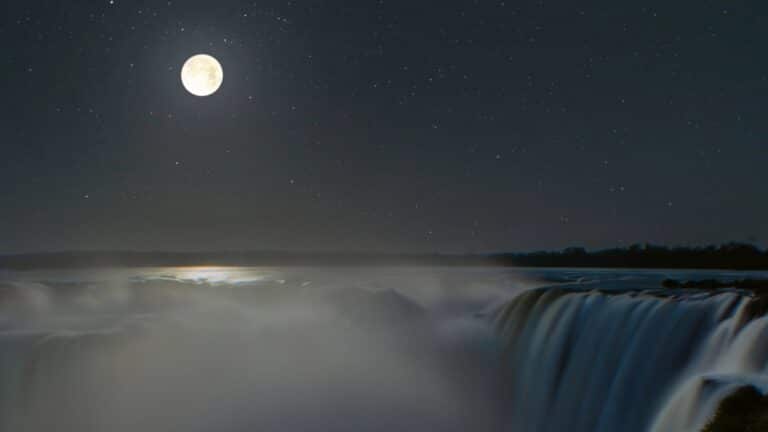
Experience the enchantment of Iguazu Falls at night illuminated by the soft glow of the full moon. Book your tour now for an unforgettable experience.
From Price: USD190
Experience a breathtaking night under the stars at Iguazu Falls, in a peaceful and exclusive setting inside the Brazilian side of the national park.
From Price: USD265
