

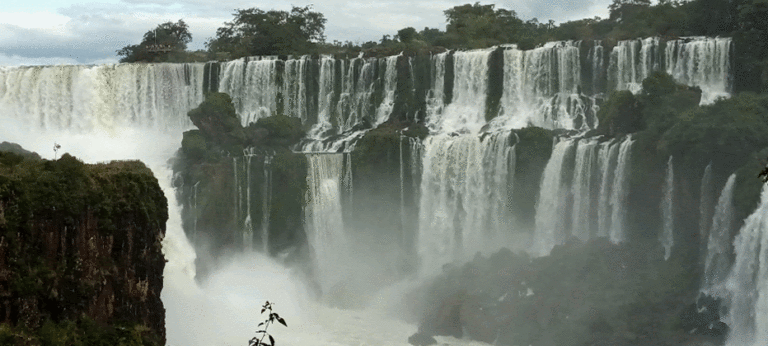
Iguazu Falls is much more than one enormous waterfall. It is a complex system of cascades, islands, river channels and rainforest located between Argentina and Brazil.
Protected by two national parks and recognized by UNESCO, Iguazu combines extraordinary geology with one of the most biodiverse remnants of the Atlantic Forest. Its appearance also changes constantly according to rainfall, river levels, sunlight and season.
Here are 100 fascinating facts that reveal the natural, cultural and historical importance of Iguazu Falls.
The waterfalls lie on the international border between Argentina’s Misiones Province and the Brazilian state of Paraná.
Paraguay is part of the surrounding Triple Frontier region, but the waterfalls themselves are entirely between Argentina and Brazil.
Puerto Iguazú is approximately 18 kilometers from the entrance to Iguazú National Park.
Foz do Iguaçu is a considerably larger city and serves as the principal base for visiting the Brazilian side.
Ciudad del Este lies across the Paraná River from Foz do Iguaçu and is best known as a major commercial and shopping center.
Puerto Iguazú, Foz do Iguaçu and Ciudad del Este belong to three different countries but form one closely connected international region.
The lower section of the Iguazu River separates Argentina and Brazil before joining the Paraná River.
After descending through the waterfalls, the Iguazu River continues through a deep canyon before meeting the Paraná River approximately 20 kilometers downstream.
UNESCO describes the waterfall system as extending for approximately 2,700 meters, making it one of the broadest major waterfall complexes on Earth. UNESCO’s Iguaçu National Park profile highlights both its scale and ecological importance.
The system consists of numerous separate cascades divided by rocky outcrops, channels and forest-covered islands.
Experience Argentina’s Icons with Comfort and Style

The figure of 275 is widely used, but it should be understood as an approximate description rather than a permanent count.
At low water, some channels become dry and individual cascades appear more clearly separated. During floods, neighboring falls can merge into broad curtains.
Heavy rain in the upper river basin can cause the river to rise even when the weather at the national parks is sunny.
The volume reaching the falls depends on conditions throughout the wider Iguazu River basin, not only on rainfall directly above the waterfalls.
Individual drops vary, but the highest parts of the waterfall system are approximately 80 meters high.
The underlying basalt structure creates ledges that divide some cascades into two distinct drops.

Enjoy a wonderful activity in the jungle with a 4x4 ride and boat navigation under the falls!
From Price: USD110
The International Union of Geological Sciences cites an average discharge of approximately 1.8 million liters per second, although the actual volume changes dramatically with river conditions. The IUGS geological description identifies Iguazu as a globally significant geological site.
During exceptional floods, observation walkways may close, islands can become partially submerged and individual cascades may disappear inside a continuous mass of water.
When the river is low, visitors can see rock ledges, channels and the geological structure normally concealed by the water.
River level, cloud cover, sunlight, wind and seasonal vegetation continually change the appearance of the falls.
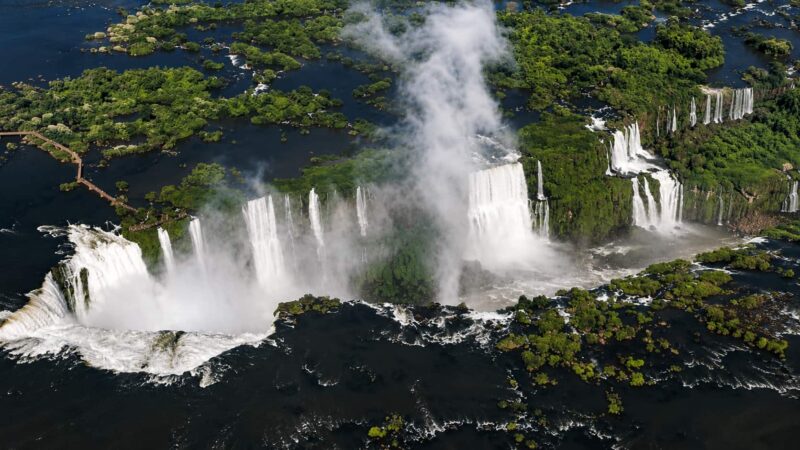
Known as Garganta del Diablo in Spanish and Garganta do Diabo in Portuguese, it is the most powerful and recognizable part of the system.
The river converges around a deep, curved head of the canyon, creating an amphitheater of falling water.
Several channels meet at this point, concentrating an extraordinary quantity of water in a relatively confined space.
From this point, the Iguazu River flows through a narrow basalt gorge toward its confluence with the Paraná.
The Argentine walkway approaches Devil’s Throat across the upper river and ends directly beside the drop.
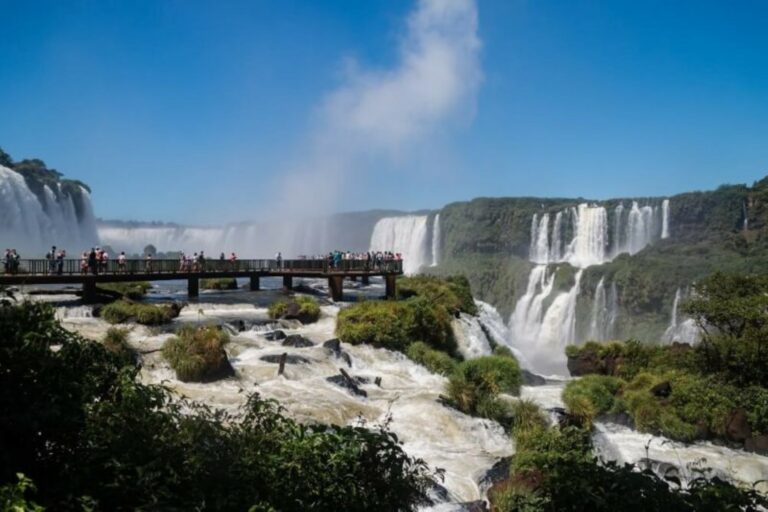
The Brazilian side reveals the wider horseshoe formation and allows visitors to appreciate how Devil’s Throat relates to the rest of the waterfall system.
Unveiling the Wonders of Argentina: Explore Buenos Aires and Iguazu Falls on a 6-Night Journey

The combination of falling water, canyon acoustics and rising spray creates an intense roar near the principal viewpoints.
Powerful air currents carry mist upward, sometimes obscuring the base of the falls entirely.
The Argentine approach is built above islands and upper-river channels that may appear surprisingly calm before reaching the precipice.
Mist, wind, changing water and moving clouds create an almost continuously shifting scene.
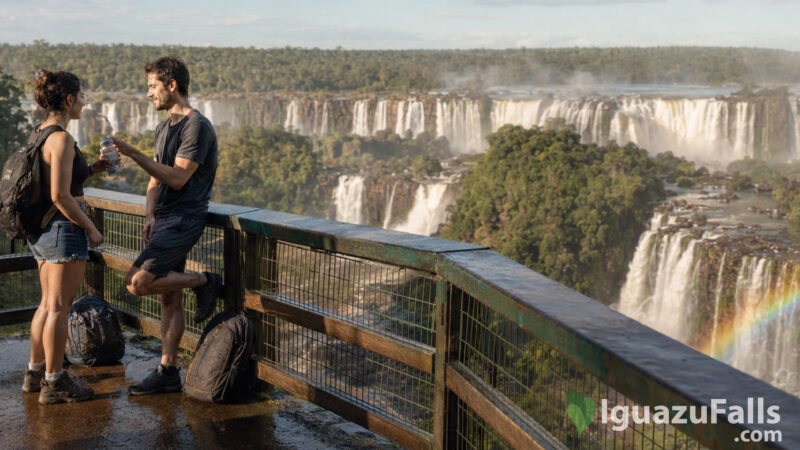
The dark volcanic rock visible around the waterfalls is basalt produced by enormous ancient lava flows.
The rocks beneath the falls formed approximately 120–130 million years ago during the Cretaceous Period. A geological guide produced by Paraná’s environmental authorities describes this as one of the greatest basalt-flood events in Earth’s history. Geology of Paraná.
They developed through a long interaction between lava layers, fractures, river erosion and the progressive retreat of the waterfall edge.
More resistant layers form ledges, while weaker zones are gradually removed by the river.
The contrast between basalt layers explains why many falls descend over two main levels.
Natural joints in the basalt influence where water concentrates and where erosion progresses most efficiently.
Discover two of Argentina’s most iconic destinations in one exciting journey.

Like many large waterfalls, Iguazu gradually migrates upstream as erosion removes rock from the canyon head.
The deep gorge downstream shows where the waterfall system was positioned during earlier stages of its geological history.
Before reaching the waterfall front, the Iguazu River spreads across islands, rapids and multiple channels.
After entering the canyon, the water is compressed into a much narrower and deeper course.
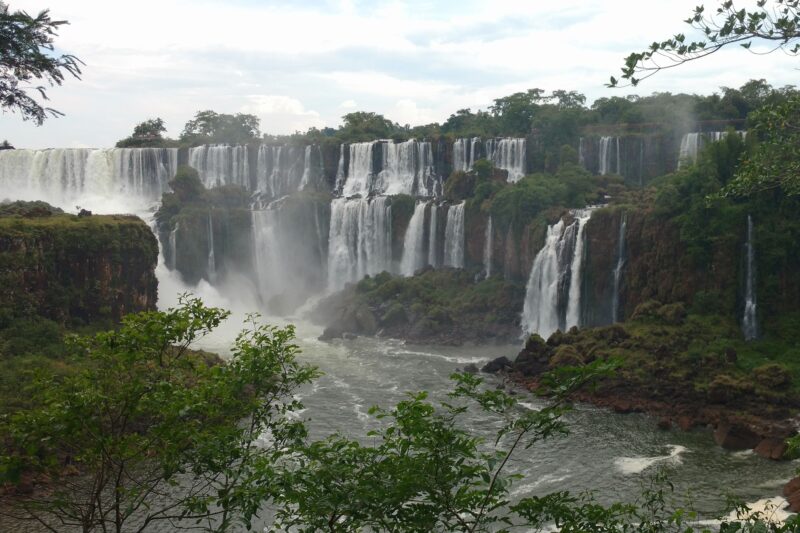
It is one of Argentina’s oldest national parks and was established to protect both the waterfalls and surrounding forest.
The Brazilian protected area preserves the opposite side of the falls and an extensive portion of Atlantic Forest.
The word includes an accent over the final letter: Iguazú.
Portuguese uses the letter ç, producing the spelling Iguaçu.
They are listed separately even though they protect the same connected ecosystem.
UNESCO added Iguazú National Park to the World Heritage List for its natural beauty and biodiversity.
Unveiling the Wonders of Argentina: Explore Buenos Aires and Iguazu Falls on a 6-Night Journey
Iguaçu National Park received its own World Heritage designation two years later.
Wildlife, rivers and ecological processes cross the international boundary regardless of political borders.
The designation protects more than a spectacular view. It also recognizes the forest, endangered species and ecological processes surrounding the falls.
Argentina and Brazil collaborate on issues including conservation, research, fire management, wildlife protection and sustainable tourism. UNESCO has repeatedly encouraged this cross-border cooperation.
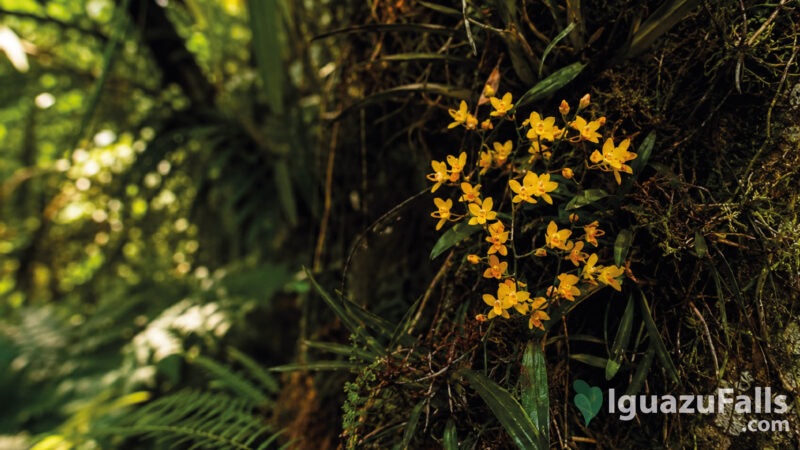
The region belongs to the Interior Atlantic Forest, one of South America’s most biologically diverse and threatened ecosystems.
Although Iguazu looks tropical, its forest is ecologically distinct from the Amazon.
In Spanish, the ecosystem is commonly known as the Selva Paranaense.
Tall canopy trees, smaller understory vegetation, climbing plants, palms and ground-level species occupy different levels.
UNESCO reports over 2,000 plant species in the broader protected ecosystem. UNESCO’s Iguazú National Park profile emphasizes the exceptional richness of the forest.
Constant humidity near the waterfalls supports mosses, ferns and other moisture-loving vegetation.
A smart, great-value way to see Iguazu Falls in two nights. Stay at a confirmed 3-star hotel, join shared group tours to both the Brazilian and Argentine sides, and enjoy shared transfers from and to IGR or IGU.
Orchids, bromeliads and other epiphytes use tree trunks and branches for support without necessarily behaving as parasites.
The juçara palm, also known locally as palmito, provides food for wildlife but has historically faced pressure from illegal harvesting.
Its tall form is one of many components of the upper forest canopy.
Vegetation helps stabilize soil, regulate runoff and preserve habitat around tributaries feeding the Iguazu River.
The jaguar—or yaguareté—is the region’s largest wild cat and an important symbol of conservation.
Jaguars avoid busy visitor areas and inhabit large forest territories. Visitors should not expect a sighting during an ordinary park excursion.
The South American tapir is the region’s largest native land mammal.
South American coatis frequently appear near trails, restaurants and visitor areas.
Human food damages their health and encourages aggressive behavior. They can bite or scratch while attempting to reach food.
Experience Argentina’s diversity on a 10-day adventure through vibrant cities, remote mountain landscapes, and one of the world’s greatest natural wonders.

They are intelligent and opportunistic, so visitors should keep food and loose possessions secured.
Besides jaguars, the forest supports smaller felines such as ocelots, margays and jaguarundis.
UNESCO identifies the giant anteater as one of the threatened species associated with Iguaçu National Park.
Visitors may occasionally see yacaré caimans in quieter water, but they are not commonly encountered on the busy waterfall walkways.
Frogs and toads thrive in the forest’s streams, leaf litter and temporary pools, especially after rain.
UNESCO’s documentation highlights Iguazu as one of the continent’s important bird habitats.
The toco toucan and other toucan species may be seen flying between tall trees or feeding in the canopy.
These remarkable birds fly through heavy spray and nest on rock walls behind or beside the falling water.
From Bustling City to Majestic Natural Wonders: Buenos Aires, El Calafate & Iguazu Falls in 9 Nights

The inaccessible, wet cliff environment offers natural protection from many predators.
Their dark plumage, blue markings and conspicuous crest make them easy to recognize.
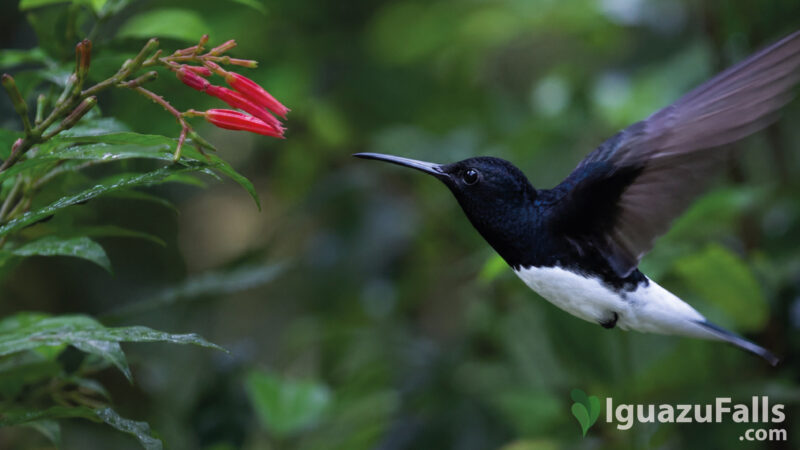
Various hummingbird species feed on nectar from native flowers and help pollinate plants.
This behavior, known as puddling, allows them to obtain minerals and salts.
They may be attracted to perspiration, moisture or minerals on clothing and skin.
Beetles, spiders, ants, moths and other small animals form essential parts of the forest food web.
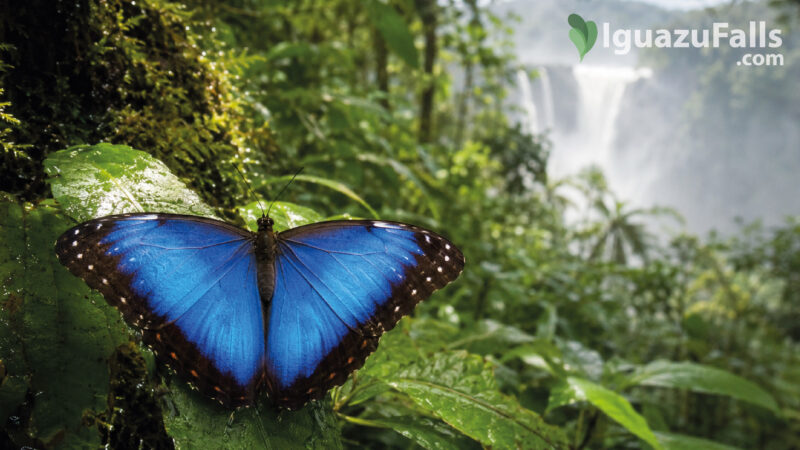
Many rainforest species use color for camouflage, communication, mimicry or mate attraction—not only as a warning.

It derives from Indigenous languages of the region and is generally interpreted as “great water” or “big water.”
In the commonly cited linguistic explanation, y means water.
The second part of the name expresses magnitude, producing the idea of “great water.”
The cultural history of the forest predates Argentina, Brazil and Paraguay as modern states.
Several communities maintain their language, artistic traditions, forest knowledge and cultural identity.
One single amazing destination, three different countries!
The story describes the forbidden love between Naipí, a young woman, and Tarobá, a warrior.
According to the legend, Mboi divides the river to create the waterfalls when the couple tries to escape.
In popular versions of the story, he is condemned to watch from the riverbank.
She remains surrounded by the force of the water, separated from Tarobá.
Rather than being a geological explanation, the story gives emotional and spiritual meaning to the falls.
The Spanish explorer is generally credited as the first European to document seeing Iguazu Falls.
The European name did not replace the Indigenous name, which ultimately remained associated with the river and waterfalls.
Early visitors faced difficult access through forest and river environments before modern roads, airports and walkways were built.
The Rainforest Ecological Train connects the main visitor stations and helps reduce private vehicle circulation within the waterfall area.
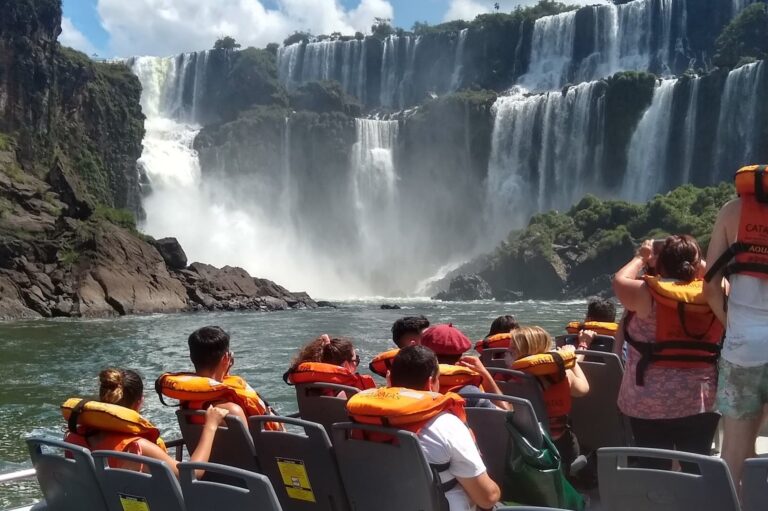
Experience the awe of Iguazu Falls on a 3-day tour from Buenos Aires. Book now for an unforgettable adventure!
From Price: USD190
Visitors travel from the Brazilian Visitor Center into the park using an organized internal transport system.
Argentina provides more extensive trails and close encounters above and beside the falls, while Brazil offers broader panoramic views.
Travelers must meet the passport, visa and entry requirements of Argentina and Brazil.
The two waterfall systems have very different shapes. Iguazu extends across a broader, highly segmented front, while Niagara consists of three principal waterfalls.
She is often said to have exclaimed, “Poor Niagara!” after seeing Iguazu. The phrase is famous, but reliable documentary evidence confirming the exact wording is limited.
It is simultaneously a river, waterfall system, geological formation, wildlife refuge, Indigenous cultural landscape, international border and UNESCO-protected natural wonder.

Experience the wonder of Iguazu Falls on a private 2 day tour from Buenos Aires. Easily reserve accommodations and optional activities. Book now!
From Price: USD150
Experience the awe of Iguazu Falls on a 3-day tour from Buenos Aires. Book now for an unforgettable adventure!
From Price: USD190
