
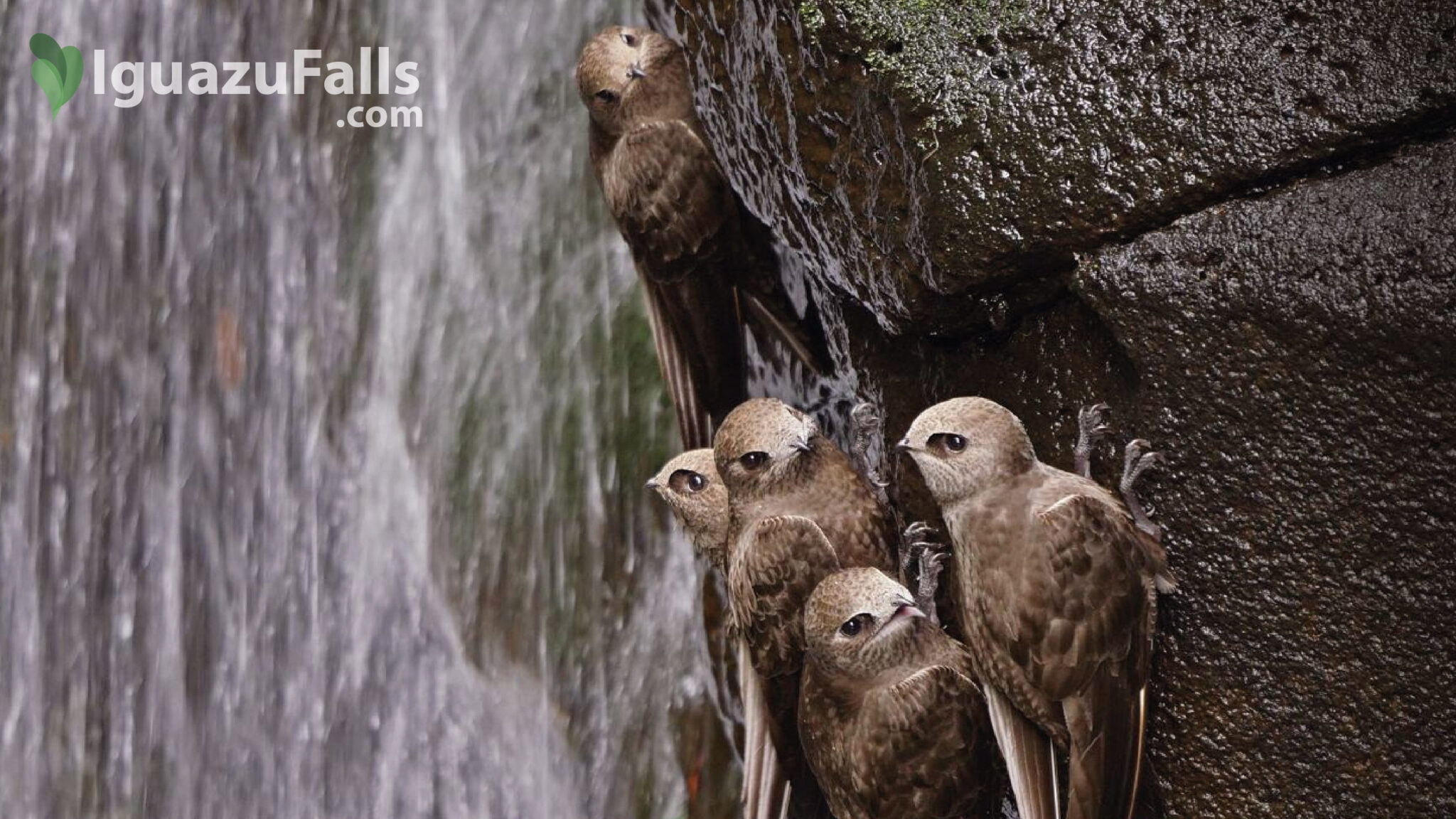
Iguazu Falls is famous for its immense volume of water, powerful spray and subtropical rainforest. However, one of its most extraordinary natural wonders is much smaller: a dark bird capable of flying through the curtains of falling water.
The Great Dusky Swift, known scientifically as Cypseloides senex, roosts and nests on wet rock walls beside and behind waterfalls. At Iguazu, these birds have adapted to an environment that appears almost impossible to inhabit.
The birds most closely associated with the waterfalls are Great Dusky Swifts.
They are also known as:
They belong to the swift family, Apodidae, and should not be confused with swallows.
One single amazing destination, three different countries!

The Great Dusky Swift is approximately 18 centimetres long and has a compact, aerodynamic body.
Its principal characteristics include:
From a distant viewpoint, the birds usually appear as small dark silhouettes moving rapidly across the white waterfalls.
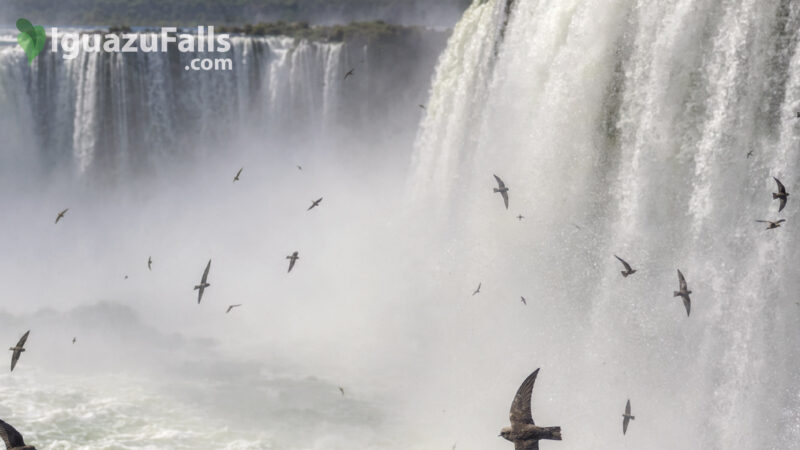
Yes. Great Dusky Swifts can fly directly through sections of falling water to reach protected rock walls and ledges.
Visitors may see them approaching the falls at speed, disappearing through the white curtain and later emerging from what seems to be solid water.
This is not accidental. Their flight behaviour allows them to access roosting and nesting places that most animals cannot reach.
Documented observations from Iguazú National Park describe the birds clinging to wet rock faces and being continuously covered by spray. The species is particularly famous for occupying areas behind the cataracts.

Experience the wonder of Iguazu Falls on a private 2 day tour from Buenos Aires. Easily reserve accommodations and optional activities. Book now!
From Price: USD150
The waterfall creates an effective natural barrier. Many terrestrial predators cannot cross the rushing water or climb the permanently wet basalt walls.
Birds of prey may also find it difficult to pursue the swifts through the turbulent air, dense spray and powerful water curtains.
The dangerous location therefore offers valuable protection.
Behind and beside the cascades, the birds find:
Their nests are commonly described as compact structures made from moss, mud and small pieces of natural material attached to wet rock.
Great Dusky Swifts are social birds. Groups may gather on the same wet rock wall or disappear into a shared roost near the waterfalls.
Living together can provide additional security and may help the birds locate suitable sites within the immense Iguazu waterfall system.
Enjoy a unique 3-night birdwatching tour in rainforest lodge
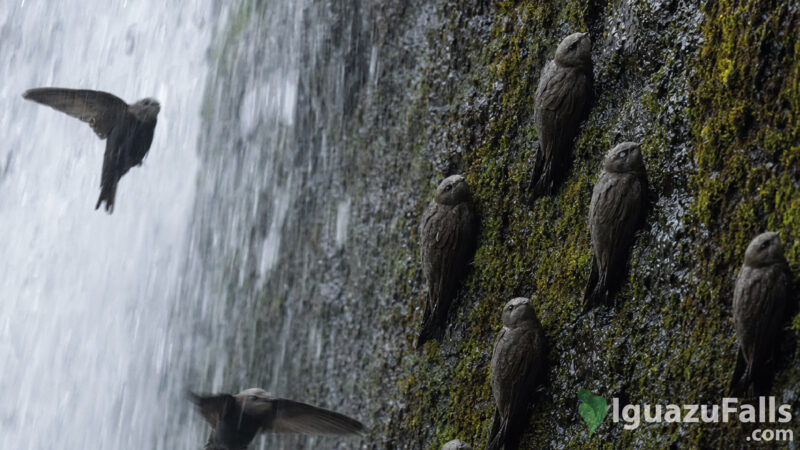
The birds do not remain directly beneath the heaviest part of the cascade. They use protected irregularities, ledges and recessed sections of the rock wall where the main torrent passes in front of them.
Their compact bodies, powerful flight and gripping feet allow them to:
Although their feathers become wet, their protected locations prevent them from being continuously struck by the full force of the falls.

Enhance your visit to Iguaçu National Park in Brazil and experience a breathtaking sunset at Iguazu Falls with a delightful drink in hand.
From Price: USD139
They feed primarily on flying insects captured in the air.
The swifts spend much of their active time flying above the rainforest, river and waterfalls, opening their mouths to catch small airborne insects.
Their rapid turns and long wings make them exceptionally effective aerial hunters.
They are swifts, not swallows.
The two groups have similar shapes because both catch insects in flight, but they are not closely related. This resemblance is an example of different animals developing similar adaptations.
Great Dusky Swifts normally have:
Swallows often have more visibly forked tails and may perch on wires or exposed branches. Swifts spend far more time in flight and are adapted to cling to vertical surfaces.
The immense mist plume and constant movement make Devil’s Throat one of the most dramatic places to observe swifts.
Look for small dark silhouettes crossing in front of the white water or disappearing toward the cliffs. Binoculars can help, but protect them from spray.
The Upper and Lower circuits offer different angles over the cascades. Quieter observation points can be useful for watching birds approach wet rock walls.
Great Dusky Swifts have been photographed clinging to rock faces within Iguazú National Park.
The Brazilian side provides a broad view across the waterfall system. Against the white background, flying birds may be easier to notice.
The final walkway near Devil’s Throat offers dramatic views but also receives strong spray.

Experience the awe of Iguazu Falls on a 3-day tour from Buenos Aires. Book now for an unforgettable adventure!
From Price: USD190
Swifts can be active throughout the day, but early morning and late afternoon may provide especially interesting movement as birds leave or return to roosting areas.
Visibility depends on:
Patience is essential. A visitor may initially see no birds and then notice an entire group passing within minutes.
Photographing these birds is challenging because they are fast, dark and often surrounded by bright water.
Try these techniques:
A telephoto lens is useful, but wider compositions can better demonstrate the remarkable scale of the birds against the waterfalls.
Enjoy a unique 3-night birdwatching tour in rainforest lodge
The nesting and roosting walls are inaccessible for good reason. Visitors should never attempt to approach them or leave authorized walkways.
Follow these basic rules:
The objective is to observe the birds’ natural behaviour without changing it.
The Great Dusky Swift is currently classified as Least Concern globally. However, its dependence on waterfalls makes the preservation of rivers, cliffs and surrounding forests extremely important.
Potential threats in parts of its range include changes to river systems, dam construction, habitat loss and disturbance at breeding or roosting sites.
Protected areas such as Iguazú National Park and Iguaçu National Park help conserve both the birds and the unusual waterfall habitat on which they depend.
Most people visit Iguazu Falls to admire the power of the water. Few realize that behind those torrents exists a hidden habitat occupied by one of South America’s most remarkable birds.
Watching Great Dusky Swifts fly into Devil’s Throat transforms the waterfalls from a spectacular landscape into something even more fascinating: a living ecosystem where wildlife has adapted to mist, noise, darkness and immense physical force.
DISCOVER A WONDERFUL PLACE TO ENJOY BIRDWATCHING. BE READY WITH YOUR BINOCULARS.

