
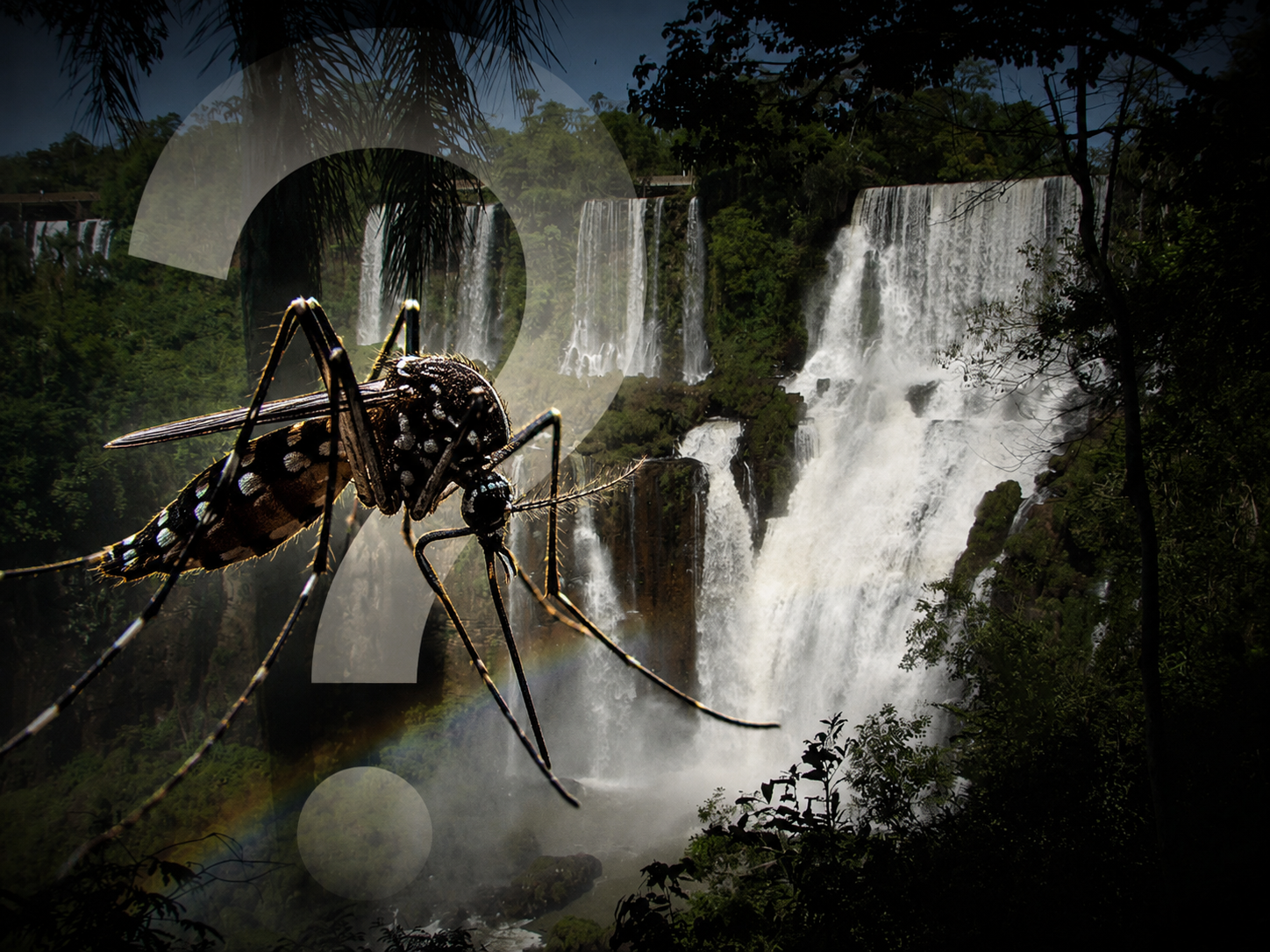
Mosquitoes are present in the Iguazu Falls region, especially during warm and humid periods. However, they are usually manageable and should not prevent you from enjoying your visit.
The number of mosquitoes you may encounter depends on the weather, recent rainfall, time of day, and the specific areas you visit. Forest trails, shaded areas, and places with standing water generally have more mosquito activity than open walkways and busy visitor areas.
Mosquitoes tend to be more noticeable during the warmer and rainier months, generally from October to March, when temperatures and humidity are higher.
During the cooler months, usually from May to September, mosquito activity is often lower. However, Iguazu Falls has a humid subtropical climate, so mosquitoes can be present at any time of year.
Some species are more active around dawn and dusk, while mosquitoes that transmit dengue can also bite during the day. For this reason, protection should be used throughout your visit, particularly in forested and humid areas.

Experience the wonder of Iguazu Falls on a private 2 day tour from Buenos Aires. Easily reserve accommodations and optional activities. Book now!
From Price: USD150
Travelers who are particularly concerned about mosquitoes may prefer the cooler months, from approximately May to September. During this period, lower temperatures and reduced humidity often result in less mosquito activity.
However, there is no completely mosquito-free season, and avoiding the warmer months is not essential for most visitors. Iguazu Falls can be visited throughout the year with basic precautions.
August and September may offer a comfortable balance of milder weather and lower mosquito activity. April and May are transitional months, with temperatures beginning to decrease after summer.
Weather patterns and rainfall vary from year to year, so these periods should be considered general guidance rather than a guarantee.

Enhance your visit to Iguaçu National Park in Brazil and experience a breathtaking sunset at Iguazu Falls with a delightful drink in hand.
From Price: USD139
A few simple precautions are usually enough to reduce the risk of mosquito bites during your visit.
When using sunscreen and insect repellent together, apply the sunscreen first and the repellent afterward.
Experience the awe of Iguazu Falls on a 3-day tour from Buenos Aires. Book now for an unforgettable adventure!
From Price: USD190
Mosquitoes in the region can transmit illnesses such as dengue fever, so preventing bites remains important even when mosquito activity appears low.
The purpose of these recommendations is not to discourage travelers from visiting Iguazu Falls, but to encourage the same preventive measures advised for other warm and subtropical destinations.
Travelers who are pregnant, have a medical condition, or have specific concerns about mosquito-borne diseases should consult a healthcare professional before traveling.
The yellow fever vaccine may be recommended for eligible travelers visiting the Iguazu Falls region. However, a health recommendation is not the same as an immigration requirement, and not every visitor is required to present proof of vaccination when entering Argentina or Brazil.
Whether you should receive the vaccine depends on several factors:
When vaccination is recommended and medically appropriate, it should generally be administered in advance of the trip. Consult a qualified healthcare professional or travel medicine clinic before making a decision.
Some countries may request a yellow fever vaccination certificate from travelers arriving from, or transiting through, a country with a risk of transmission. Always check the current requirements for every destination included in your itinerary.

A day full of activities, visiting Iguazu Falls Brazilian Side and then, enjoying a wonderful Dinner Show in Rafain Churrascaria
From Price: USD184
For more detailed information, read our guide to yellow fever and vaccinations for Iguazu Falls.
Mosquitoes are part of the subtropical environment surrounding Iguazu Falls, but they are not usually a major obstacle for visitors.
Bring an effective insect repellent, wear appropriate clothing in forested areas, and follow current health recommendations. With these basic precautions, you can explore the national parks and enjoy the waterfalls comfortably at any time of year.
