Can You Swim in the Iguazu Falls?

Iguazu Falls Sunset

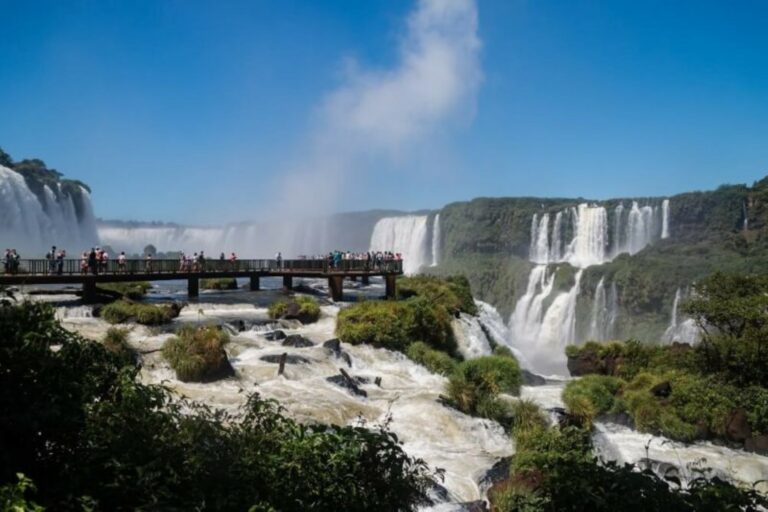
No, swimming at or near Iguazu Falls is not allowed and is extremely dangerous. The powerful currents, steep drops, turbulent water, and immense volume of the Iguazu River make entering the water near the falls extremely hazardous.

While there are boat tours that take visitors close to the waterfalls, these excursions operate under specific safety regulations, with trained crews and mandatory safety equipment such as life jackets. Visitors should only approach the falls through authorized trails, walkways, viewpoints, and regulated boat excursions.

For safety reasons, swimming is not permitted in the main waterfall areas on either the Argentine or Brazilian side. However, this should not be confused with the entire Brazilian national park. The Brazilian side now has specific, clearly marked bathing areas along the Circuito São João, away from the main falls. Swimming or bathing should only take place where it is explicitly authorized by park authorities.

The safest way to experience Iguazu Falls is to admire them from the designated viewing areas and authorized activities.

★★★★★ (7 reviews - 5 ★)

2 Day Trip to Iguazu Falls From Buenos Aires

Experience the wonder of Iguazu Falls on a private 2 day tour from Buenos Aires. Easily reserve accommodations and optional activities. Book now!

  • Traditional

From Price: USD150

Risks

Swimming near Iguazu Falls poses several significant risks due to the natural conditions of the river, the waterfalls, and the surrounding environment. Some of the main dangers include:

1. Strong Currents

  • Powerful Water Flow: Iguazu Falls is one of the world’s largest waterfall systems. The enormous volume of water flowing through the falls generates extremely powerful currents that can easily overwhelm even experienced swimmers.
  • Turbulent Water and Eddies: Near the waterfalls, the combination of falling water, rocks, and strong currents creates highly turbulent conditions and powerful recirculating currents that can make it extremely difficult to regain control or reach a safe area.

2. Waterfall Drops and Cliffs

  • Steep Drops: Some of the waterfalls reach around 80 meters (262 feet) in height. Entering the river or approaching exposed edges outside designated visitor areas could result in extremely serious or fatal accidents.
  • Rough Rocks and Slippery Surfaces: Rocks and surfaces near waterfalls and waterways can be wet and slippery. Leaving designated trails or attempting to reach the water can significantly increase the risk of falls and injuries.

3. Hidden Obstacles

  • Debris in the Water: During periods of strong flow, the river can carry branches, tree trunks, and other natural debris. These objects can become particularly dangerous in fast-moving water.
  • Unpredictable Changes in Water Levels: Water levels and flow rates in the Iguazu River can change considerably, particularly after heavy rainfall in the river basin. High water levels can increase currents and may even require authorities to temporarily restrict access to certain walkways or viewpoints.

4. No Designated Swimming Areas Near the Falls

  • Swimming Is Not Part of the Falls Experience: The main visitor circuits on both sides of Iguazu Falls are designed for observation, walking, and authorized excursions, not for swimming. Entering fast-moving water outside authorized areas can make rescue extremely difficult, even where professional emergency and safety procedures are in place.

On the Brazilian side, there are specific designated bathing areas elsewhere in the national park, such as those along the Circuito São João. Visitors should only enter the water in locations that are officially marked and authorized.

Argentina, Brazil, & Paraguay Border: Triple Frontier

One single amazing destination, three different countries!
Argentina, Brazil, & Paraguay Border: Triple Frontier

5. Wildlife Risks

  • Snakes, Insects, and Other Wildlife: Iguazu National Park protects a highly biodiverse subtropical forest. Snakes, insects, and other wild animals are naturally present in the region, which is another reason visitors should remain on designated trails and follow park instructions.
  • Caimans and Other Reptiles: Caimans, known locally as yacarés, are among the species found in the aquatic environments of the Iguazu region. Wildlife is not the main reason swimming near the falls is prohibited, but entering undesignated natural waterways can increase the possibility of unexpected encounters.

6. Limited Visibility

  • Reduced Underwater Visibility: Sediment, turbulence, spray, and changing river conditions can reduce visibility in the water. This can make submerged rocks, branches, changes in depth, and other hazards difficult or impossible to see.

Afternoon Iguazu Falls Tour with Sunset & Drinks – Brazil Side

Enhance your visit to Iguaçu National Park in Brazil and experience a breathtaking sunset at Iguazu Falls with a delightful drink in hand.

  • Nature

From Price: USD139

Picture of Ramiro Rodriguez

Ramiro Rodriguez

25 years working in the travel industry, as Sales & Marketing Manager at RipioTurismo. Marketing Manager at Nuevas Ideas Travel Consulting Group. Writer and travel lover.

Table of Contents