
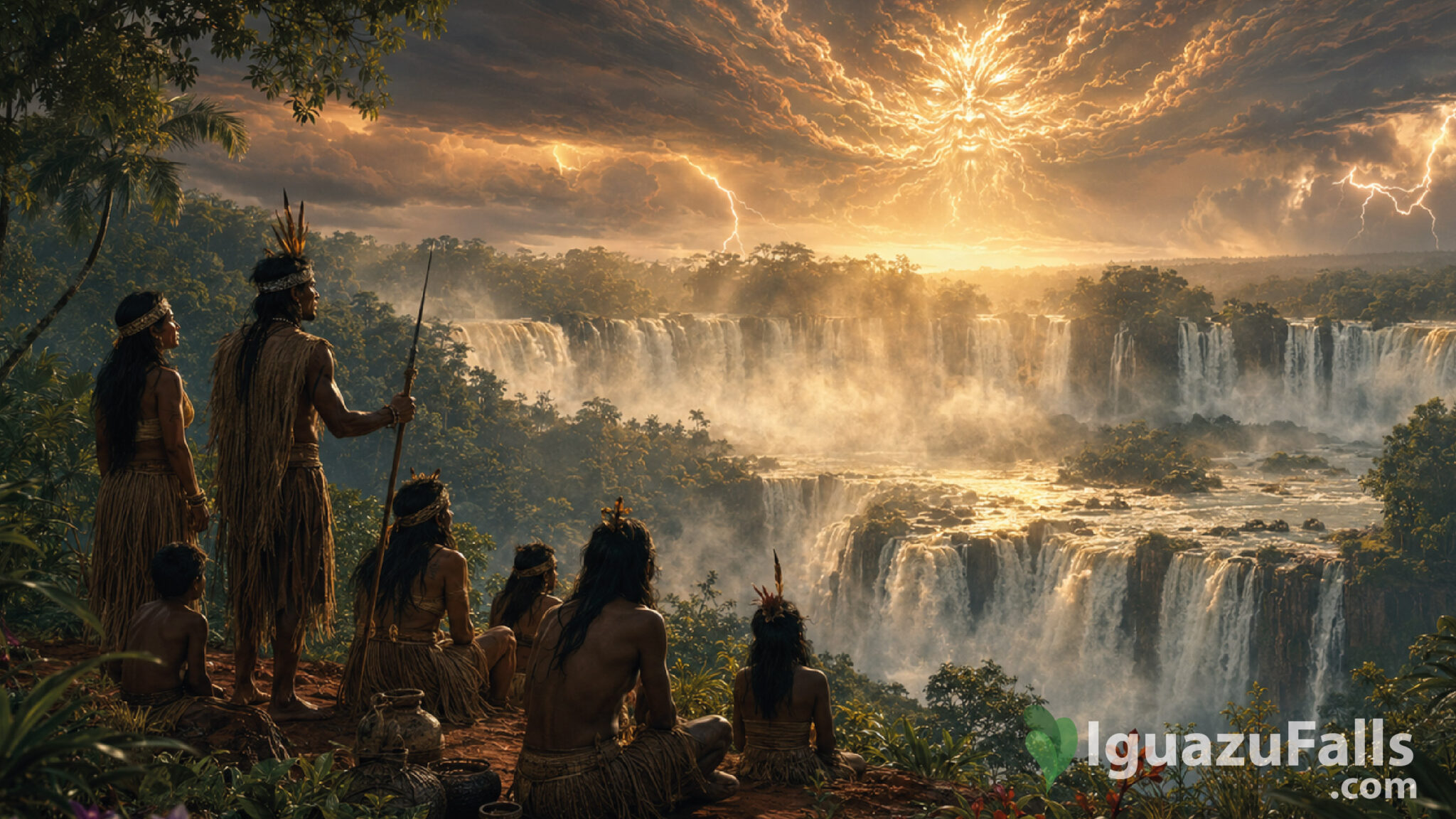
Iguazu Falls is more than an extraordinary natural attraction. Long before national parks, international borders and sightseeing walkways appeared, Indigenous peoples inhabited and travelled through this subtropical landscape. Its rivers, animals, trees trees and waterfalls formed part of a living territory filled with spiritual meaning.
The Guarani traditions associated with the region do not constitute a single, fixed collection of stories. Guarani peoples include different communities and cultural groups, each with its own oral traditions. Versions can also change from one storyteller, village or historical period to another.
Many popular accounts combine ancestral Guarani beliefs with Paraguayan, Argentine and Brazilian folklore. Understanding this distinction allows visitors to appreciate these traditions without reducing a diverse and living culture to a list of supernatural characters.
One single amazing destination, three different countries!
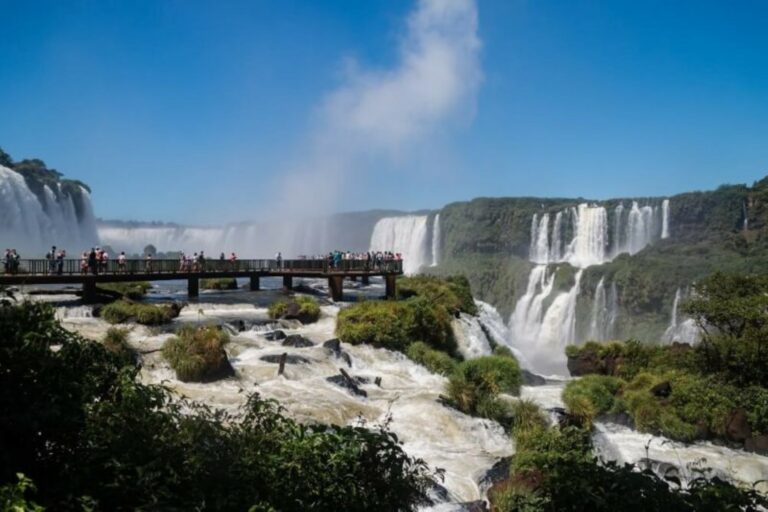
The Atlantic Forest surrounding Iguazu Falls has been inhabited and crossed by Indigenous peoples for centuries. Today, Mbyá Gu Guarani communities continue to live in Misiones and other areas of the Triple Frontier.
For the Guarani, territory is not simply a physical area that provides food and shelter. It is connected with identity, spirituality, memory and relationships with plants, animals and invisible beings. Academic studies of Guarani communities describe the forest and their cosmology as deeply interconnected rather than separate aspects of life.
This perspective changes the way we understand the landscape. A tree may provide fruit or medicine, but it can also possess spiritual importance. A river is a source of water and transportation, but it may simultaneously represent a boundary, a path or the home of powerful beings.
Not necessarily. Some stories are specifically associated with the waterfalls, while others belong to the wider Guarani cultural world extending across present-day Argentina, Paraguay, Brazil and Bolivia.
They remain relevant to Iguazu because they help explain how forests, rivers, animals, weather and human behaviour have traditionally been understood throughout the region.
Several Guarani creation traditions begin with a primordial spiritual being, often identified in Mbyá narratives as Ñamandú or Ñanderu. The details and names vary between Guarani groups, but creation is frequently associated with wisdom, light and the sacred word.
In Mbyá Guarani thought, words are more than instruments of communication. Sacred speech, prayer and song can connect human beings with the spiritual world. The spoken word participates in maintaining harmony between communities, nature and divine beings.
This helps explain why myths were traditionally transmitted orally. The meaning of a story did not exist only in its plot. It was also present in the voice of the storyteller, the language being used, the place where it was told and the relationship between the speaker and the listeners.

Experience the wonder of Iguazu Falls on a private 2 day tour from Buenos Aires. Easily reserve accommodations and optional activities. Book now!
From Price: USD150
The Guarani word ñe’ẽ can refer to speech, language, word and, in certain spiritual contexts, the soul or vital essence. Although interpretations vary, the concept reveals the close relationship between identity and the ability to speak.
For this reason, Guarani songs and narratives should not be treated merely as performances for visitors. Some may have ceremonial or community-specific significance.
One of the best-known ideas associated with Guarani cosmology is Yvy Marã E’ỹ, commonly translated as “the Land Without Evil.”
It is sometimes described too simply as a hidden earthly paradise. Its meaning is more complex. Depending on the tradition and interpretation, it may may represent a land free from suffering and decay, a spiritual destination or the possibility of achieving a more harmonious way of living.
Historically, searches for such a place have been connected with migration, religious leadership and the movement of communities across a large forested territory.
Yvy Marã E’ỹ demonstrates how spiritual and physical geography can overlap. Travelling through rivers and forests was not always motivated exclusively by hunting, agriculture or conflict. Movement could also possess a sacred purpose.
In this context, the Paraná and Iguazu river systems were part part of a much larger network of routes, settlements and cultural relationships.

Visit a Mbya-Guaraní community near Puerto Iguazú and explore their traditions, lifestyle, and jungle environment with a native guide.
From Price: USD50
The pindó palm, generally associated with native palms of the Atlantic Forest, occupies an important place in several Mbyá Guarani narratives.
In accounts documented by anthropologist León Cadogan, the eternal pindó rises above primordial waters and appears in stories concerning the passage toward Yvy Marã E’ỹ. It can symbolize stability, continuity and the connection between different levels of existence.
Visitors can see different palm species throughout the forests of Misiones. However, the mythological pindó should not be reduced to botanical identification alone. Its importance comes from the relationship between the plant, the land and the sacred stories in which it appears.

Enjoy a city tour in Puerto Iguazu, to visit differnt areas and views of the river, and the famous triple frontier landmark
From Price: USD75
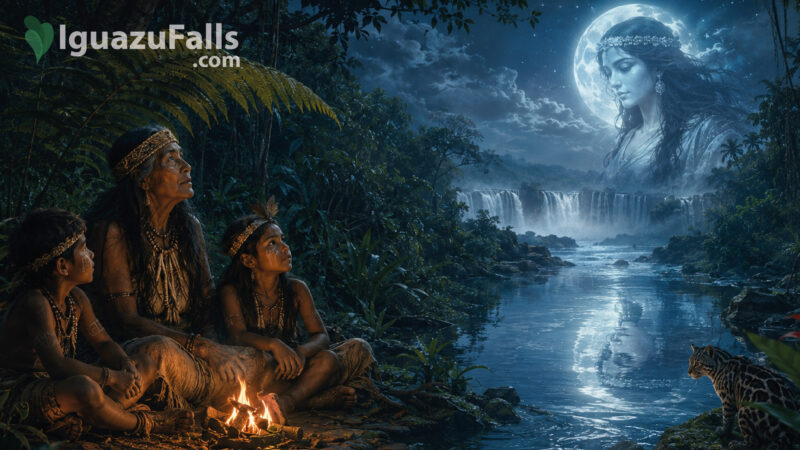
The Sun and Moon appear in numerous Guarani narratives. They are commonly known as Kuarahy and Jasy, although spellings, relationships and stories differ among communities.
They may be represented as ancestral or divine beings whose journeys help establish the structure of the world. Their adventures explain natural cycles, relationships between humans and animals, and the origin of particular customs.
Jasy, the Moon, is also connected with one of the best-known legends surrounding yerba mate. In a popular regional version, Jasy descends to Earth and is protected from danger by a generous person. In gratitude, she offers the yerba mate plant, or ka’a, as a gift.
Numerous versions of this story exist. Its central themes usually include generosity, hospitality and the sharing of a drink that creates bonds between people.
Yerba mate remains a fundamental part of everyday life in Misiones. Sharing mate can therefore be understood not only as drinking an infusion but also as participating in a social ritual of welcome and conversation.
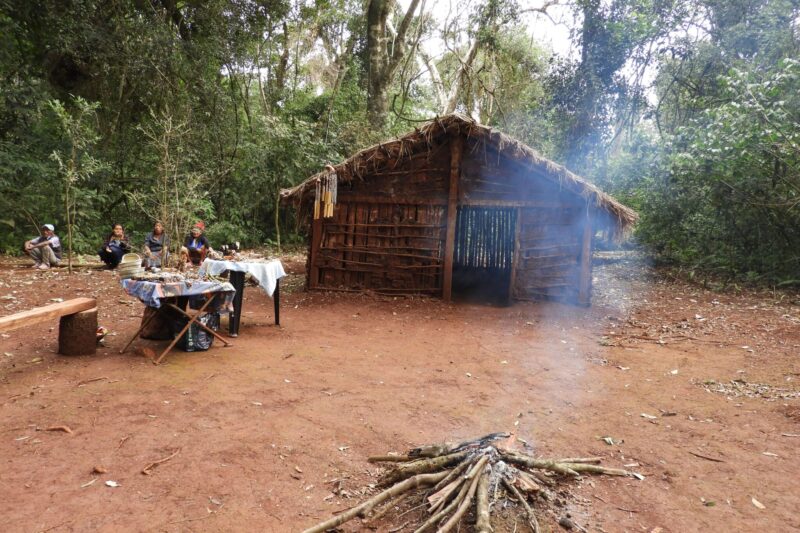
The dense Atlantic Forest naturally inspired stories about beings that protect animals, control paths or punish people who who behave carelessly.
Some of these characters have Indigenous roots, while others developed through centuries of contact between Guarani, Spanish, Portuguese, African and rural traditions.
The Pombero is one of the most famous supernatural characters in the folklore of Paraguay and northeastern Argentina. He is often described as a small, elusive nocturnal being who lives in the forest and announces his presence through whistles or unusual sounds.
Depending on the version, the Pombero can be a guardian of birds and wild animals, a mischievous trickster or a dangerous figure. He may reward those who respect the forest and confuse hunters who kill unnecessarily.
Stories about leaving him offerings—such as tobacco, honey or alcohol—belong particularly to modern rural folklore. There is no single, universally accepted description of the Pombero.
Jasy Jateré is generally portrayed as a small, childlike forest being. He is often associated with the quiet hours of the afternoon, when children were expected to rest rather than wander into the forest alone.
In popular versions, he carries a magical staff or cane and attracts children with a whistle. The story served as both supernatural entertainment and a practical warning about the dangers of entering the jungle without adult supervision.
Around Iguazu, this warning makes environmental sense. Heat, insects, snakes, sudden storms and the risk of becoming lost can make the forest dangerous, particularly for children.
Kurupí is another complex figure in Guarani-influenced regional mythology. He is generally connected with wild nature, sexuality and fertility. Modern representations often exaggerate one physical characteristic, but the figure has a broader symbolic association with uncontrolled natural forces and behaviour outside social rules.
Because traditional accounts can contain adult themes, Kurupí stories are not always presented in family-oriented cultural programs.
Paraguayan mythology includes a celebrated cycle concerning seven extraordinary beings born to Tau and Kerana. Among them are Teju Jagua, Mbói Tu’ĩ, Moñái, Jasy Jateré, Kurupí, Ao Ao and Luisón.
Teju Jagua is frequently described as a giant lizard with several dog-like heads, while Mbói Tu’ĩ combines characteristics of a serpent and a parrot.
These figures are often promoted collectively as “Guarani mythology.” However, the cycle as it is popularly told today belongs mainly to Paraguayan and regional folklore. Visitors should avoid assuming that every Guarani community shares exactly the same version or considers all seven beings equally important.
One single amazing destination, three different countries!
Serpents appear frequently in South American Indigenous and regional mythology. Their long bodies, silent movement and ability to inhabit water, trees or the forest floor make them powerful symbols.
In the Iguazu region, serpent beings are often associated with rivers, storms, fertility, hidden places and the danger of uncontrolled water. Such stories reflect close observation of a landscape where river levels can rise rapidly and waterfalls produce permanent thunder, mist and movement.
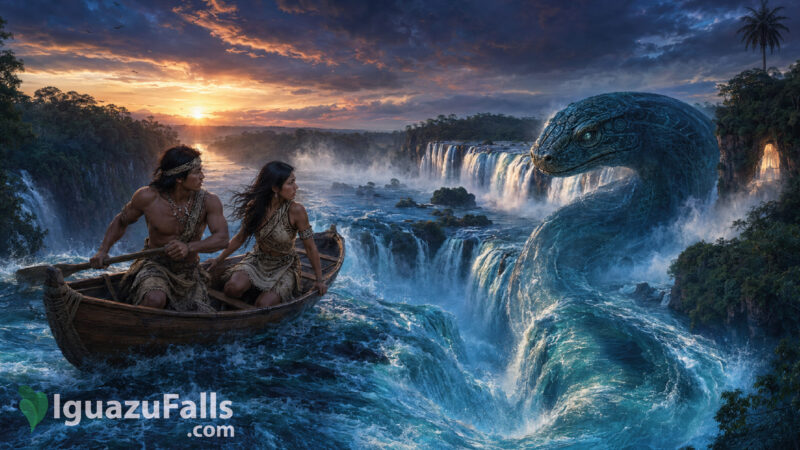
The best-known legend of Iguazu Falls tells the story of Naipi, a young woman, and Tarobá, a warrior who falls in love with her. They escape together by canoe, defying M’Boi, a powerful serpent deity. Enraged, M’Boi breaks the riverbed and creates the waterfalls, separating the lovers forever. Naipi becomes a rock, while Tarobá is transformed into a palm tree overlooking the falls.
Because we have covered this story in detail in a separate article, it is enough here to note that its symbolism connects forbidden love with the immense power of the river.
The tale is frequently presented internationally as a Guarani legend. However, several official sources from Paraná attribute the best-known version to the Kaingang or Caingangue tradition. This does not diminish its importance, but it demonstrates how Indigenous and regional stories can overlap or be reinterpreted over time.
The Atlantic Forest supports jaguars, tapirs, monkeys, toucans, coatis, snakes and hundreds of other species. In Indigenous traditions, these animals are not always portrayed as passive resources. They can possess intelligence, intentions, spiritual owners or transformative abilities.
The jaguar is one of the most powerful animals in South American mythology. It may represent strength, danger, authority or the ability to move between ordinary and spiritual worlds.
Encountering a jaguar in a story can be a test of courage or wisdom. In some narratives, the animal is an enemy; in others, it possesses knowledge that humans must respect.
Birdcalls are prominent in Atlantic Forest life. It is therefore unsurprising that birds appear as messengers, guides and signs in regional stories.
The mysterious calls heard at dawn, dusk or during the night can announce changes in weather, warn of danger or suggest the presence of a supernatural being. These interpretations vary considerably between communities and storytellers.
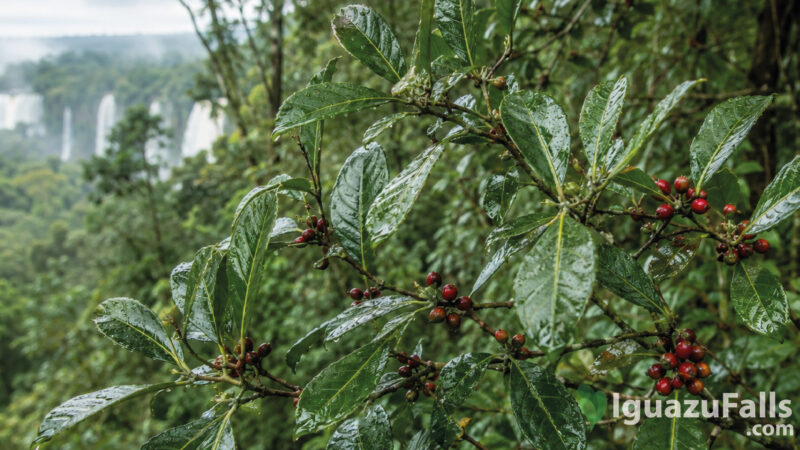
Mbyá Guarani knowledge of Atlantic Forest plants includes their use as food, construction materials and medicine. Research has also documented the exchange and transportation of medicinal species between Guarani communities, showing how botanical knowledge is maintained through movement and social relationships.
This knowledge may be accompanied by stories concerning the origin, personality or spiritual owner of a plant. Healing is not necessarily limited to the chemical properties of leaves, bark or roots. It may also involve prayer, ritual knowledge and the appropriate relationship between the healer, patient, plant and territory.
Visitors should never collect plants inside Iguazu National Park. They should also avoid reproducing medicinal practices without proper cultural and botanical knowledge, since some rainforest species can be toxic.
The enormous sound of Iguazu Falls, the clouds of mist and the sudden appearance of rainbows create an atmosphere that can feel almost supernatural.
From a Western tourist perspective, these features are usually interpreted through geology, hydrology and scenic beauty. Indigenous cosmologies do not necessarily reject practical observations of nature, but they may include other levels of meaning.
Water can be simultaneously a physical element, a source of life, a route through the territory and the domain of spiritual beings. The forest can provide food while also demanding respectful behaviour. Myths help communicate these relationships.
Although each narrative has its own context, several recurring lessons can be found in Guarani and regional forest traditions.
Stories about forest guardians frequently warn against greed, unnecessary hunting and disrespect toward animals. A hunter who takes too much may lose his way, become ill or encounter a supernatural protector.
Many myths show that breaking social or spiritual rules can transform both people and landscapes. Rivers change course, humans become animals or plants, and supernatural forces intervene when boundaries are crossed.
Hospitality, sharing food, respecting elders and listening to collective knowledge are recurrent values. Survival in the forest depends on cooperation rather than individual strength alone.
The jungle contains mysteries beyond human understanding. The supernatural beings of the forest often represent the limits of human authority and the need for humility.
One single amazing destination, three different countries!
Guarani culture should not be described exclusively in the past tense. Mbyá Guarani communities continue to maintain their languages, family structures, agricultural practices, artistic traditions and spiritual identities.
They also face contemporary challenges, including territorial pressure, deforestation, discrimination and the commercialization of Indigenous culture.
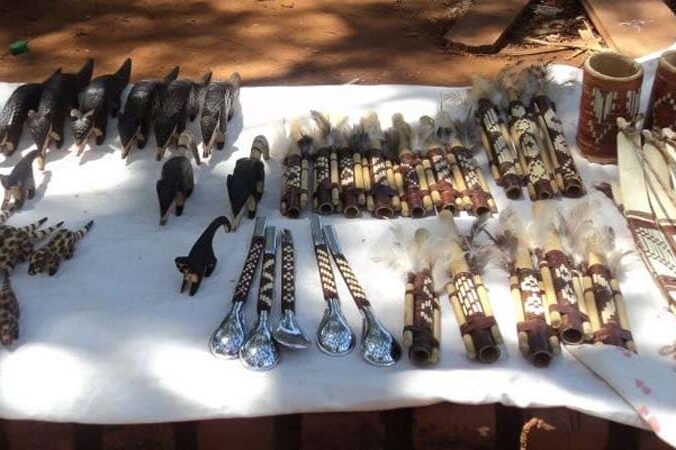
Responsible travellers should seek experiences led or authorized by the communities themselves. Buying handicrafts directly from their makers can support local families, but visitors should ask permission before taking photographs and respect any restrictions involving ceremonies, sacred places or songs.
Travellers interested in Indigenous history can explore cultural centres, museum exhibitions and community-based experiences on both the Argentine and Brazilian sides of the region.
When choosing an activity, look for programs that:
Experience the awe of Iguazu Falls on a 3-day tour from Buenos Aires. Book now for an unforgettable adventure!
From Price: USD150
It is commonly marketed as a Guarani legend, but official Brazilian sources from Paraná also identify the best-known version as Kaingang. The story has circulated widely throughout the region, and its attribution may vary according to the source.
There is no simple answer applicable to every Guarani group. Ñamandú and Ñanderu are important names in several creation and spiritual traditions, but beliefs, names and interpretations vary among communities.
Yvy Marã E’ỹ is a spiritual and cultural concept commonly translated as the Land Without Evil. It can refer to a place or condition free from suffering, corruption and decay, although its meaning is more complex than the idea of a conventional paradise.
Pombero has strong Guarani cultural associations, but the figure known today also contains elements of rural and colonial folklore. Stories about his appearance and behaviour vary throughout Paraguay, Argentina and Brazil.
Community-based cultural experiences may be available in the wider Iguazu and Misiones region. Visitors should select responsible programs created with the consent and participation of the communities.
Learning about Guarani myths adds a new dimension to a visit to Iguazu Falls. The waterfalls cease to be an isolated attraction and become part of a broader cultural landscape shaped by rivers, ancestral paths, medicinal plants, sacred trees and living communities.
These stories should not be treated as literal explanations competing with science. Nor should they be reduced to exotic entertainment. They represent ways of remembering the territory, transmitting values and describing relationships between humans and the natural world.
When visitors listen respectfully, Guarani mythology offers an essential lesson: the Iguazu rainforest is not merely scenery surrounding the waterfalls. It is a living territory in which water, plants, animals, people and memory remain profoundly connected.
Experience the wonder of Iguazu Falls on a private 2 day tour from Buenos Aires. Easily reserve accommodations and optional activities. Book now!
From Price: USD150
Experience the awe of Iguazu Falls on a 3-day tour from Buenos Aires. Book now for an unforgettable adventure!
From Price: USD150
