
New7Wonders and UNESCO are not the same recognition. Iguazu Falls became one of the New 7 Wonders of Nature following an international public voting campaign. Separately, UNESCO inscribed Iguazú National Park in Argentina and Iguaçu National Park in Brazil on the World Heritage List in 1984 and 1986 respectively.
The New 7 Wonders of Nature campaign was organized by New7Wonders, an independent international initiative based on public participation. Natural destinations from around the world passed through several nomination and voting stages before the final seven were announced.
Iguazu Falls participated as a shared destination representing Argentina and Brazil. The provisional New 7 Wonders of Nature were announced in Zurich on November 11, 2011. Iguazu Falls was subsequently officially inaugurated as one of the selected wonders during ceremonies held in Argentina and Brazil in May 2012.
This distinction is a popular international recognition. It is not a UNESCO designation, a scientific ranking or a new legal conservation status.
UNESCO World Heritage status is granted through an intergovernmental process under the World Heritage Convention. Sites are evaluated according to established cultural or natural criteria, and their inscription carries formal conservation and management responsibilities.
There is not one single UNESCO listing called “Iguazu Falls.” Instead, the two neighboring protected areas have separate World Heritage inscriptions:
Both national parks were inscribed under UNESCO natural criteria related to exceptional natural beauty and biodiversity.
The New7Wonders recognition resulted from an international public voting campaign. Iguazu Falls competed as one natural destination shared by Argentina and Brazil and was announced among the final seven in 2011.
The designation increased international awareness of the destination, but it did not replace the UNESCO inscriptions or create a new protected area.
The recognition and its chronology can be verified through the organizations responsible for each designation:
Official New7Wonders profile for Iguazu Falls:
https://nature.new7wonders.com/wonders/iguazu-falls-argentina-and-brazil/
Official New 7 Wonders of Nature campaign and voting history:
https://nature.new7wonders.com/
UNESCO World Heritage listing for Iguazú National Park in Argentina:
https://whc.unesco.org/en/list/303/
UNESCO World Heritage listing for Iguaçu National Park in Brazil:
https://whc.unesco.org/en/list/355/
Published figures about participation in the worldwide New7Wonders campaigns are sometimes described as votes and sometimes incorrectly repeated as individual voters. Because these figures do not necessarily represent unique participants, this page does not state an unverified number of voters.
Yes. Iguazu Falls was announced as one of the New 7 Wonders of Nature on November 11, 2011, following the international campaign organized by New7Wonders.
No. UNESCO did not organize or participate in the selection of the New 7 Wonders of Nature. New7Wonders is an independent initiative, while UNESCO manages the World Heritage List under an international convention.
The provisional result was announced on November 11, 2011. Official inauguration ceremonies for Iguazu Falls were held in Argentina and Brazil in May 2012.
Yes, but they are listed separately. Iguazú National Park in Argentina was inscribed in 1984, while Iguaçu National Park in Brazil was inscribed in 1986.
No. Iguazu Falls participated as a shared natural destination representing both Argentina and Brazil.
New7Wonders reports global voting activity across its campaign, but publicly repeated figures do not always distinguish between the number of votes and the number of unique voters.
For this reason, it is more accurate to say that Iguazu Falls was selected through an international public vote without assigning an unverified number of individual voters.
No. It is an international popular recognition. The formal conservation status of the area comes from national park protections, environmental legislation and the separate UNESCO World Heritage inscriptions.
No. The New7Wonders recognition applies to Iguazu Falls as a shared Argentina–Brazil destination. The UNESCO designations, however, apply separately to the Argentine and Brazilian national parks.
Last reviewed: September 11, 2026.

Experience the wonder of Iguazu Falls on a private 2 day tour from Buenos Aires. Easily reserve accommodations and optional activities. Book now!
From Price: USD150
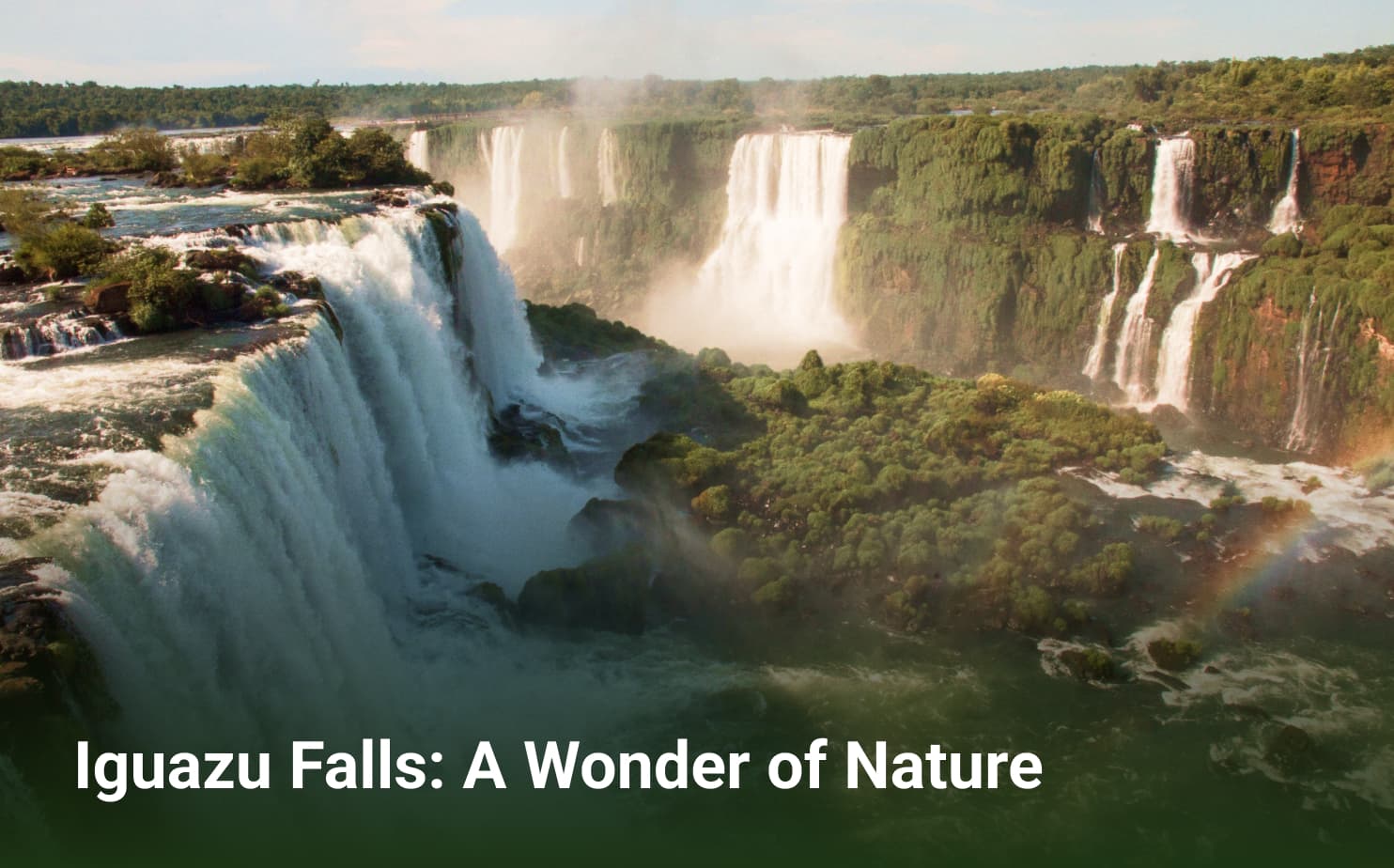
Spectacular scale and power. Iguazu Falls is one of the largest and most impressive waterfall systems in the world. It consists of 275 cascades extending along 2.7 km (1.7 miles) of the Iguazu River. Its most famous section, Garganta del Diablo (Devil’s Throat), reaches approximately 80 meters (262 feet) in height and creates an enormous cloud of mist as the water plunges below.
A unique location and geography. The falls are located on the border between Argentina and Brazil, within Iguazú National Park in Argentina and Iguaçu National Park in Brazil. They are surrounded by lush subtropical rainforest, creating a striking contrast between the powerful waterfalls and dense vegetation.

Enjoy a full day tour to the amazing Iguazu Falls, Argentinian Side and return to your hotel in Puerto Iguazu by boat
From Price: USD169
Rich biodiversity and conservation. The falls are part of the Atlantic Forest, one of the most threatened ecosystems in the world. The region is home to over 2,000 plant species, 400 bird species, and 80 mammal species, including jaguars, giant otters, toucans, hummingbirds, coatis, and capybaras. Both Iguazú National Park in Argentina and Iguaçu National Park in Brazil are UNESCO World Heritage Sites, helping to protect this unique natural environment.
Cultural and historical significance. The name “Iguazú” comes from the Guaraní language and means “Great Waters.” According to local legend, the falls were created by the wrath of a god who split the river to separate a beautiful woman named Naipí from her lover. The falls were first documented by Spanish explorer Álvar Núñez Cabeza de Vaca in 1541.
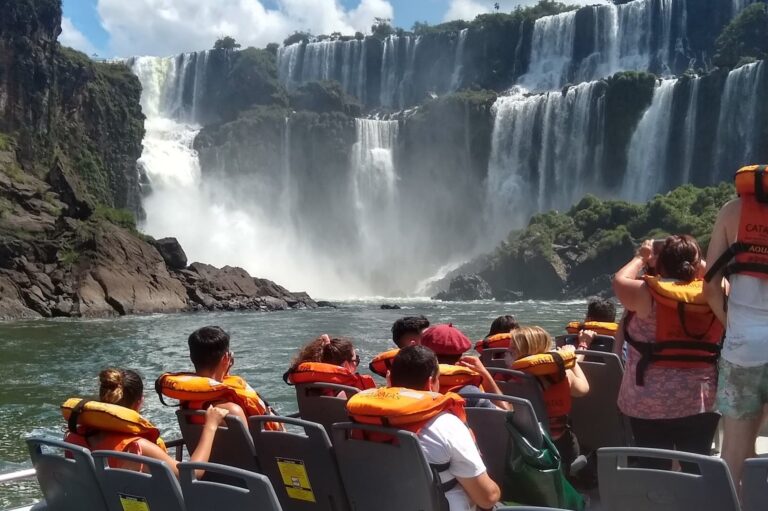
A world-famous tourist destination. Iguazu Falls attracts over 1.5 million visitors per year. Visitors can explore well-maintained trails, take boat rides, and enjoy panoramic viewing platforms that offer different perspectives of the falls. Another distinctive experience is the Iguazu Falls Moonlight Walk, which allows visitors to see the falls under the light of the full moon.

Experience Iguazu Falls from Buenos Aires, Sao Paulo, or Rio de Janeiro with our Day Tour.
From Price: USD230
Iguazu Falls earned its place among the New 7 Wonders of Nature thanks to its remarkable scenery, ecological importance, and cultural significance. Whether you visit for adventure, panoramic views, or a closer connection with nature, Iguazu Falls remains one of South America’s most memorable natural destinations.
Experience the awe of Iguazu Falls on a 3-day tour from Buenos Aires. Book now for an unforgettable adventure!
From Price: USD150
