
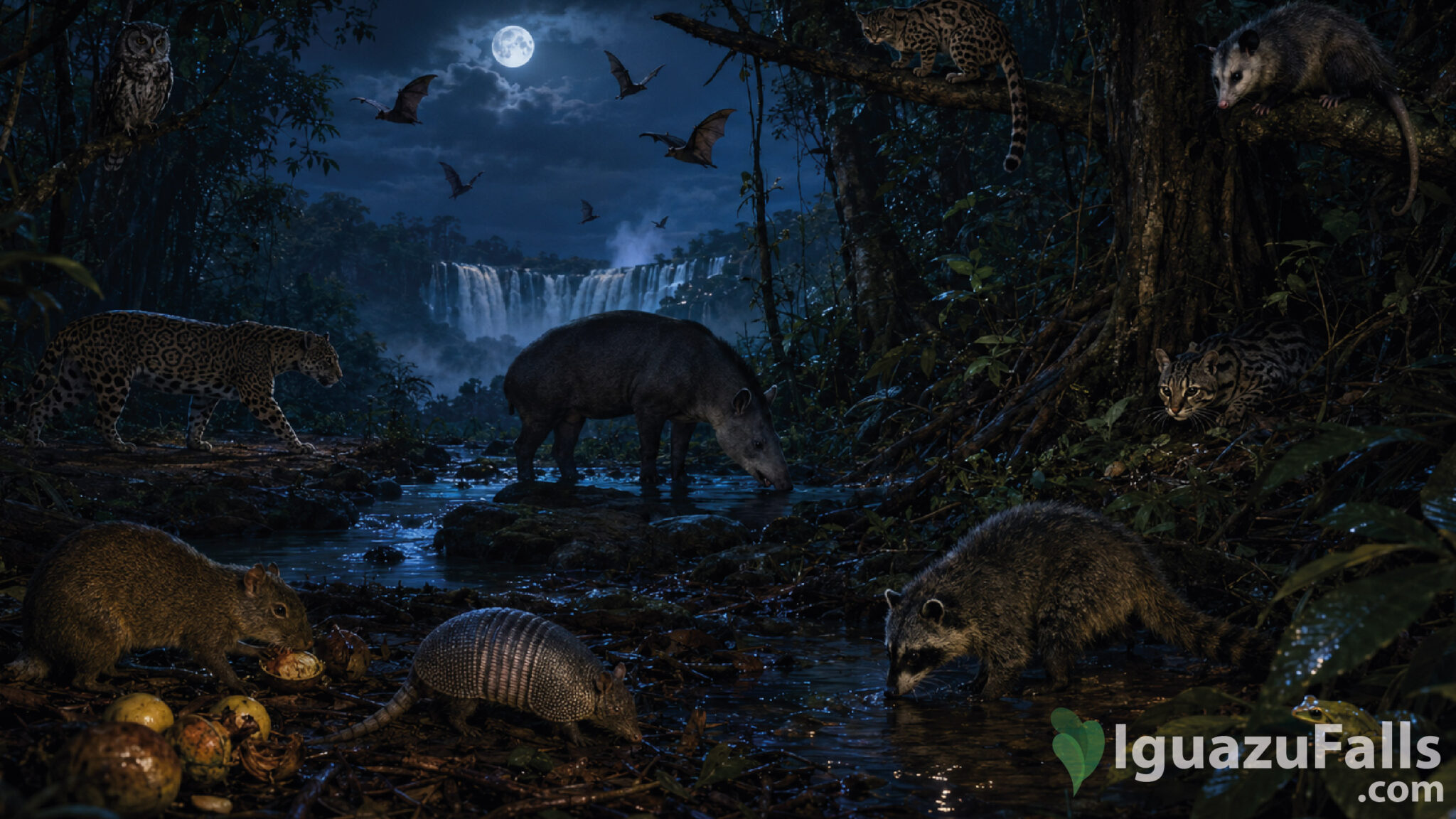
The waterfalls may be Iguazu’s most famous attraction, but they are only part of a much larger ecosystem. Surrounding the cascades is a dense section of the Atlantic Forest, a biodiversity hotspot shared by Argentina and Brazil.
When daylight disappears and the visitor trails grow quiet, another version of the forest emerges. Jaguars patrol their territories, tapirs search for fruit, armadillos dig beneath the leaf litter and bats fly between the trees.
Many of these animals are nocturnal, while others are crepuscular—most active around sunrise and sunset. Some may also change their routines according to temperature, food availability and human activity.
Nighttime offers several advantages to rainforest animals. Temperatures are cooler, humidity is higher and the darkness provides protection from predators—or cover for animals searching for prey.
The forest is not silent after sunset. Frogs call from ponds, insects produce a continuous background chorus and owls communicate through the canopy. At the same time, mammals move almost invisibly through the vegetation.
The protected forests surrounding Iguazu Falls form one of the most important remaining areas of Upper Paraná Atlantic Forest. Together, the Argentine and Brazilian protected areas preserve habitat for hundreds of bird species and more than one hundred species of mammals, according to the WWF fauna guide for Iguaçu National Park.

Enhance your visit to Iguaçu National Park in Brazil and experience a breathtaking sunset at Iguazu Falls with a delightful drink in hand.
From Price: USD139
The jaguar is the largest wild cat in the Americas and the apex predator of the Iguazu forest.
Although jaguars are not exclusively nocturnal, much of their movement may occur around dusk, at night and during the early morning. Darkness allows them to travel along forest trails, patrol large territories and approach prey discreetly.
A jaguar’s spotted coat provides excellent camouflage among leaves, shadows and patches of moonlight. Its presence also helps regulate populations of other animals, making it essential to the ecological balance of the forest.
Sightings are exceptionally rare. Researchers rely heavily on footprints, genetic material and camera traps to study them. On the Brazilian side of the protected forest, monitoring estimated an average of approximately 25 jaguars in 2022, compared with 9–11 in 2009, although population estimates naturally have a margin of uncertainty. WWF and ICMBio describe the monitoring and conservation work.
Pumas share the forest with jaguars, although they generally avoid direct encounters with the larger cat.
They can be active during the day or night, but frequently move during low-light periods. Their ability to adapt allows them to hunt in different habitats, from thick forest to more open areas.
Unlike jaguars, pumas have a uniform coat without rosettes. They are powerful, silent and capable of covering considerable distances.
The ocelot is one of Iguazu’s most characteristic nocturnal hunters. Smaller than a jaguar but larger than a domestic cat, it has elongated spots and dark stripes that blend into the forest floor.
Ocelots usually hunt alone, feeding on rodents, birds, reptiles and other small animals. Their excellent night vision, sensitive hearing and careful movements make them highly efficient predators.
The margay is sometimes confused with the ocelot, but it is smaller and particularly adapted to life in the trees.
Its flexible ankles allow it to rotate its rear feet and descend tree trunks headfirst. A long tail provides balance as it moves along narrow branches.
Margays are predominantly nocturnal and spend much of their lives above the forest floor, which makes them extremely difficult to observe.
The South American—or lowland—tapir is the largest native land mammal in this part of the continent.
Tapirs often become active at dusk and during the night, following familiar paths through dense vegetation. They eat leaves, shoots and fruit and may travel near rivers or muddy areas.
By swallowing fruit and depositing seeds elsewhere, tapirs contribute to forest regeneration. For this reason, they are sometimes described as “gardeners of the forest.”
The paca is a sturdy forest rodent with rows of pale spots along its sides. It spends the day inside burrows or sheltered cavities and emerges after dark to search for fruit, seeds and vegetation.
Pacas are usually found near water. When threatened, they can swim and remain partially submerged to escape predators.
Although visitors rarely notice them, pacas are an important part of the food web and are potential prey for large cats.
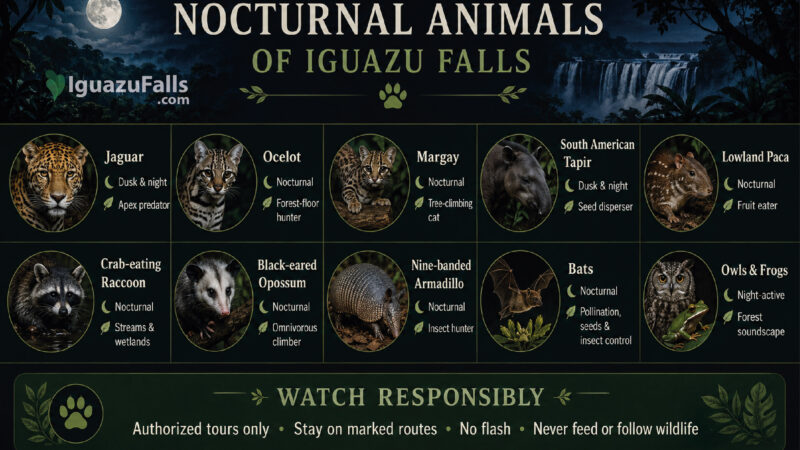
Also known as the South American raccoon, this nocturnal mammal often explores riverbanks, wetlands and muddy areas.
Despite its name, it does not eat only crabs. Its diet may include amphibians, insects, molluscs, fish, eggs and fruit. Its sensitive front paws help it examine mud, shallow water and fallen vegetation.
The black-eared opossum is a highly adaptable nocturnal marsupial. It can climb trees but also spends time on the ground looking for fruit, insects, eggs and small animals.
Its role as an omnivore allows it to participate in seed dispersal while also controlling some invertebrate populations.
Opossums are sometimes misunderstood, but they are a natural and valuable part of the rainforest community.
Armadillos emerge from their shelters to dig through soil and leaf litter. Their strong claws help them locate ants, termites, larvae and other invertebrates.
Visitors are more likely to find the small holes left behind by a feeding armadillo than to see the animal itself.
Experience Argentina’s Icons with Comfort and Style

Iguazu’s bats perform several completely different ecological jobs.
Some eat insects, helping control their populations. Others feed on fruit and disperse seeds, while nectar-feeding species can pollinate nocturnal plants.
Rather than being creatures to fear, bats are essential to the health and recovery of tropical forests.
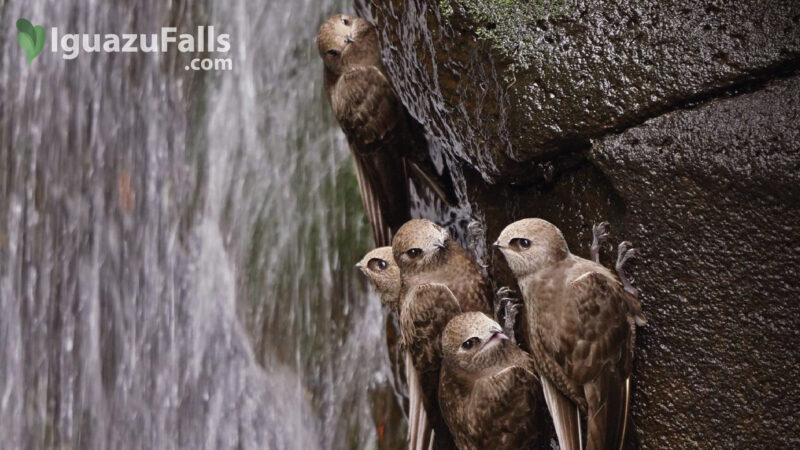
The darkness of the Atlantic Forest belongs to several species of owl. Their specialized feathers permit remarkably quiet flight, while their hearing helps them locate prey hidden beneath leaves or among branches.
Owls can be difficult to see, but their calls form an unmistakable part of Iguazu’s nighttime soundscape.
After rain, frogs may become some of the most noticeable nocturnal animals in the forest. Males call to attract mates, producing whistles, clicks and resonant notes from ponds, leaves and tree cavities.
Cicadas, crickets and other insects add more layers to this natural orchestra.

Experience the wonder of Iguazu Falls on a private 2 day tour from Buenos Aires. Easily reserve accommodations and optional activities. Book now!
From Price: USD150
Camera traps are among the most useful tools for studying Iguazu’s secretive mammals. These motion-activated cameras record animals without requiring researchers to remain in the forest throughout the night.
A long-term monitoring project in Argentina’s Iguazú National Park recorded hundreds of images of wildlife including jaguars, pumas, ocelots, tapirs, peccaries, opossums, armadillos and crab-eating raccoons. The Argentine National Parks report illustrates how much of Iguazu’s biodiversity ordinarily remains hidden from visitors.
Researchers also study footprints, droppings, feeding marks, animal calls and DNA.
Most travelers should not expect to see a jaguar, puma or margay. Even scientists may spend months collecting indirect evidence before recording one.
Occasional sightings of smaller mammals, bats, owls and frogs are more realistic, particularly in forested accommodation areas or during properly authorized nature activities.
Standard national-park circuits have controlled operating hours. Visitors must never enter closed paths or remain on trails after closing time. If an authorized nocturnal activity is available, it should always be taken with an approved operator or qualified local guide.

Experience the awe of Iguazu Falls on a 3-day tour from Buenos Aires. Book now for an unforgettable adventure!
From Price: USD150
Responsible wildlife observation protects both visitors and animals:
No encounter should be forced, and sightings can never be guaranteed.
One single amazing destination, three different countries!
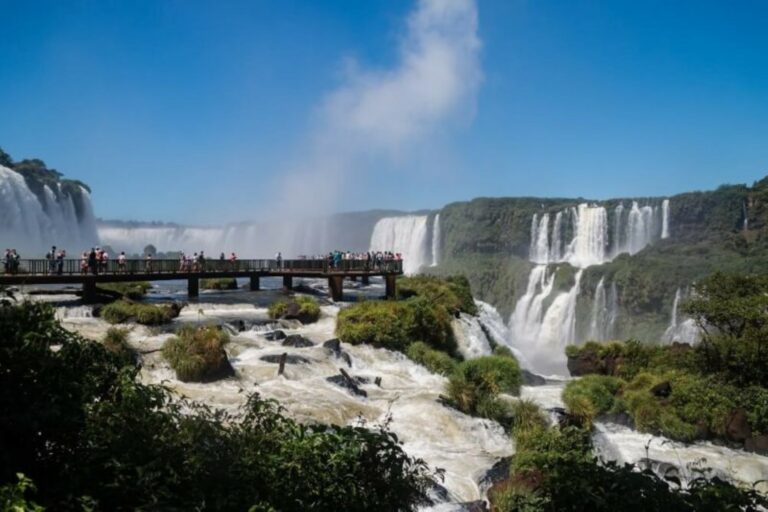
Iguazu’s nocturnal animals depend on a connected, healthy forest. Habitat fragmentation, illegal hunting, vehicle collisions and conflict between people and predators can affect species that require large territories.
Protecting jaguars also helps preserve the many animals, plants and waterways contained within their habitat. Tapirs support seed dispersal, bats contribute to pollination and forest recovery, and smaller predators help regulate prey populations.
Conservation is therefore not about protecting isolated species. It is about maintaining the relationships that allow the entire Atlantic Forest to function.
Yes. Jaguars inhabit the protected Atlantic Forest surrounding Iguazu Falls, but they are elusive and sightings by ordinary visitors are extremely rare.
Not all of them. Some are primarily nocturnal, while others are crepuscular or may be active at different times depending on local conditions.
Visitors should only enter during official operating hours or participate in an explicitly authorized activity. Never enter a closed trail independently.
The most common sounds come from frogs, insects, owls and other birds. Large mammals generally move much more quietly.
Choose a legitimate guided activity, remain quiet and treat every sighting as an unexpected privilege—not a guaranteed part of the tour.
Enhance your visit to Iguaçu National Park in Brazil and experience a breathtaking sunset at Iguazu Falls with a delightful drink in hand.
From Price: USD139

A wonderful adventure activity including kayak and trekking
From Price: USD69
