
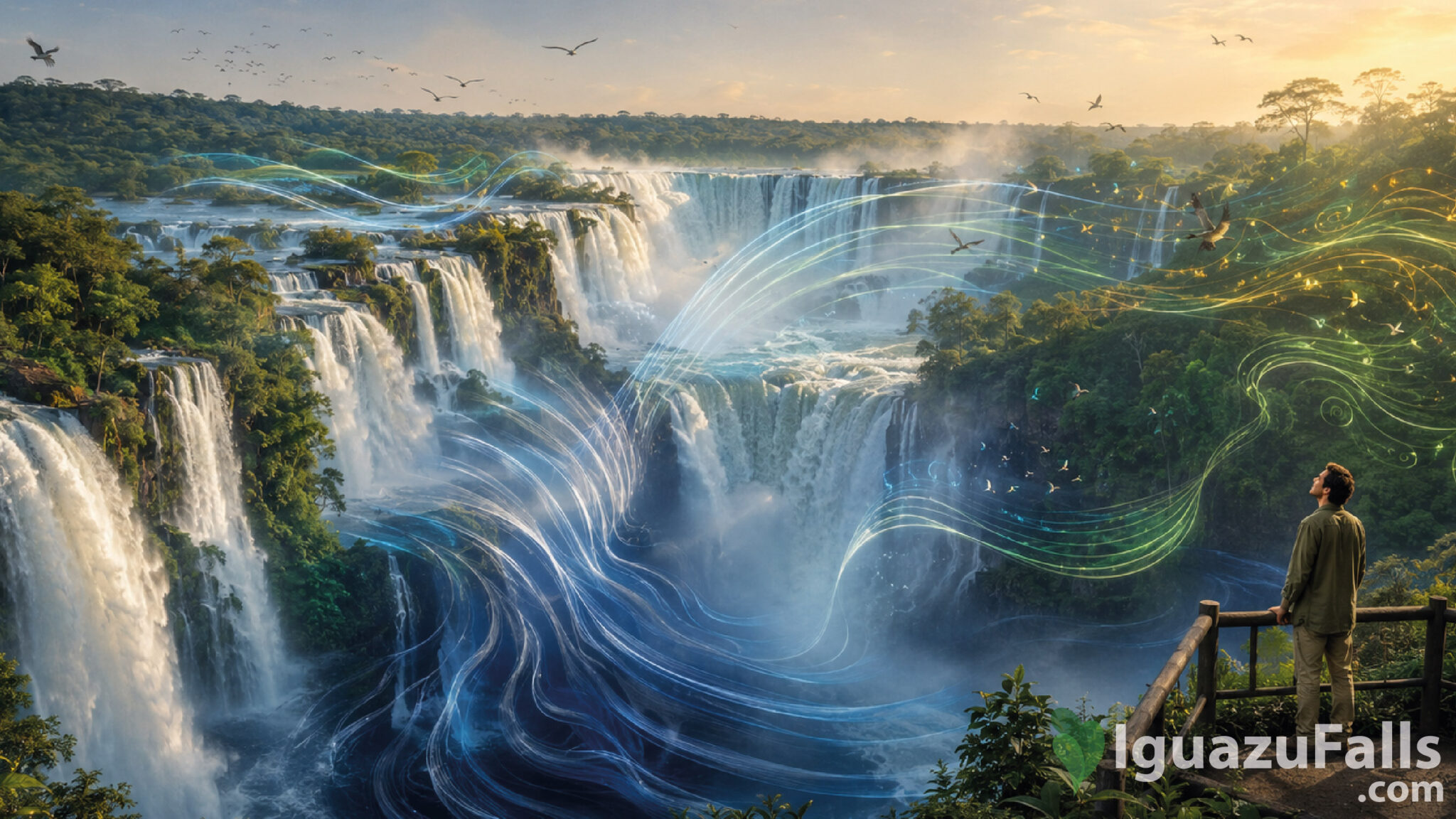
Before visitors see Iguazu Falls, many of them hear it. A distant rumble emerges through the rainforest. As the trails approach the cascades, that low sound becomes deeper, wider and more physical. Near Devil’s Throat, it turns into an immense roar that seems to rise from the canyon, travel through the mist and vibrate beneath the walkways.
But Iguazu does not have just one sound. Its natural soundscape combines falling water, river currents, wind, birds, insects, rustling leaves and the echoes produced by hundreds of separate cascades.
The result is not simply loud. It is layered, constantly changing and surprisingly musical.
The closest comparison might be a combination of:
None of these comparisons is completely accurate. Iguazu is broader than a single crash of thunder and more continuous than ocean waves. The sound does not begin and end—it surrounds the listener.
UNESCO describes Iguazu as one of the world’s most visually and acoustically stunning natural places, recognizing that sound is an essential part of its extraordinary character. Iguazú National Park protects a waterfall system extending for almost three kilometers.
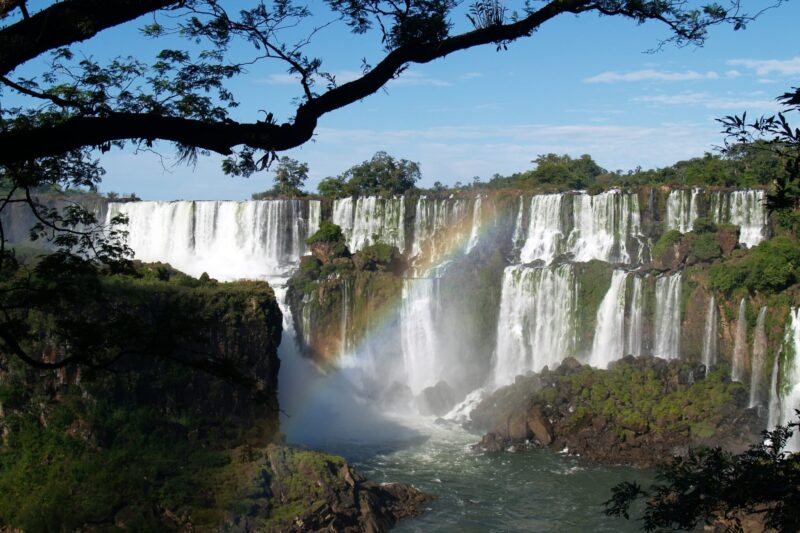
One of the most memorable parts of visiting Iguazu is hearing the waterfalls gradually appear.
On forest trails away from the main viewpoints, the waterfalls may sound like distant thunder that never arrives.
The jungle absorbs many of the sharper frequencies, leaving a deep background vibration. Visitors may initially confuse it with wind, machinery or an approaching storm.
As they move closer, the sound becomes more defined.
Near the major cascades, the individual sounds merge into a broad wall of noise. Conversation becomes more difficult, and visitors naturally speak louder or move closer together.
The sound is no longer coming from one obvious point. It rises from below, reflects from the basalt cliffs and returns from different directions.
Experience Argentina’s Icons with Comfort and Style

Devil’s Throat produces Iguazu’s most powerful acoustic experience.
An enormous proportion of the river enters a narrow horseshoe-shaped chasm. Water collides with other currents, the canyon walls and the river below, generating a deep, uninterrupted roar.
Unlike thunder, it does not fade after a few seconds. It continues with remarkable consistency, although its intensity changes with wind and river conditions.
At the closest viewpoints, visitors may experience the falls as both sound and vibration.
Low frequencies travel through the air and structure of the walkway. The sensation can be felt through the body, particularly when the river is high.
Mist, wind and movement reinforce the impression that the waterfall is surrounding the visitor rather than simply appearing in front of them.
Devil’s Throat concentrates water inside a deep, relatively narrow canyon. Its curved walls reflect and redirect sound, while the mist scatters the higher frequencies.
The result is a powerful combination of:

Experience the wonder of Iguazu Falls on a private 2 day tour from Buenos Aires. Easily reserve accommodations and optional activities. Book now!
From Price: USD150
No. Each section of Iguazu has its own acoustic personality.
On the Upper Circuit, visitors walk close to the river before it drops over the edge.
Here, the sound often includes rushing currents, water sliding over rock and the increasing roar of nearby cascades. Because many views are from above, the sound can feel broad and open.
The Lower Circuit brings visitors closer to the base of several waterfalls.
From these lower viewpoints, the cliffs and vegetation create stronger echoes. Individual cascades may sound more distinct, with sharp impacts layered over the deeper background roar.
The Brazilian side offers panoramic views across a large part of the waterfall system.
Its soundscape reflects that perspective. Instead of hearing only one cascade, visitors often perceive a wide curtain of sound produced by many separate falls.
As the walkway approaches Devil’s Throat, the broad roar becomes increasingly concentrated and intense.

Explore the Brazilian side of Iguazu Falls and visit Parque das Aves in a single full-day experience.
From Price: USD95
The sound of Iguazu varies with the volume of the river.
When the river is high:
The experience resembles an enormous, uninterrupted wall of water and noise.
When the river level falls:
Lower water does not necessarily make the landscape silent. It can make the soundscape more detailed.
From Bustling City to Majestic Natural Wonders: Buenos Aires, El Calafate & Iguazu Falls in 9 Nights

Water dominates the experience, but it is only one part of the natural orchestra.
Toucans, jays, swifts and many other birds inhabit the surrounding Atlantic Forest. Their calls are easiest to hear farther from the major viewpoints or early in the day.
Great dusky swifts are particularly associated with Iguazu. They fly through the mist and around the cascades, sometimes disappearing behind the water.
In quieter forest sections, insects create a constant high-frequency background. Cicadas can become especially prominent during warm periods.
Frogs may be heard near streams, pools and humid vegetation, particularly after rain or around dusk.
Wind carries the sound of the waterfalls through the forest. It also moves through palm leaves, bamboo and the dense upper canopy.
At some moments, the forest seems to answer the falls with its own rustling rhythm.
Brazil’s Chico Mendes Institute created an audio project containing recordings from different parts of the visitor circuit, emphasizing that the park can be experienced through hearing as well as sight. “Visiting with the Ears” includes dozens of recordings from the national park.
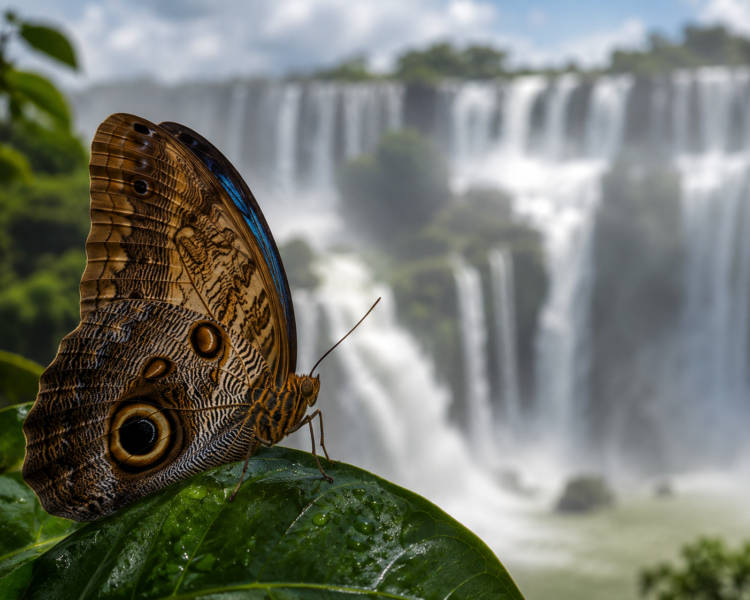
The main waterfalls never become truly quiet while the river is flowing.
However, visitors can experience quieter environments on forest trails, near secondary streams or farther from Devil’s Throat. In these places, the roar becomes a low background presence instead of the dominant sound.
This contrast makes the return to a major viewpoint even more dramatic.
The most interesting listening experience is often not the loudest one, but the transition between forest silence and waterfall thunder.
Most conventional visits take place during daylight hours, but authorized nighttime experiences offer a different acoustic environment.
Without daytime crowds and visual distractions, the roar may seem deeper and more enveloping. Night insects, frogs and nocturnal birds become more prominent, while darkness makes visitors depend more heavily on hearing.
Moonlight visits on the Brazilian side have been promoted partly for their combination of water, movement, moonlight and natural sound. ICMBio describes the sound of the water as one of the elements that captures visitors’ attention during this experience.
Night access is limited to officially authorized activities. Visitors should never enter closed trails or remain inside the parks after permitted hours.
Yes, but capturing it accurately is surprisingly difficult.
Smartphone microphones often reduce the lowest frequencies or automatically compress loud sounds. A recording may therefore seem flatter and less powerful than the real experience.
DISCOVER A WONDERFUL PLACE TO ENJOY BIRDWATCHING. BE READY WITH YOUR BINOCULARS.

A complete audio portrait should include both the powerful waterfalls and the quieter rainforest.
Experience the wonder of Iguazu Falls on a private 2 day tour from Buenos Aires. Easily reserve accommodations and optional activities. Book now!
From Price: USD150
Some people may find the combination of loud water, crowds, mist and vibration overwhelming—especially near Devil’s Throat.
Visitors with noise sensitivity may consider:
Earplugs can reduce the intensity while still allowing visitors to experience the falls safely.
Photographs show Iguazu’s scale, but they cannot reproduce its physical presence.
The sound communicates the river’s energy. It reveals waterfalls hidden by vegetation, changes as visitors move between elevations and makes Devil’s Throat feel even larger than it appears.
It is also a reminder that Iguazu is not a static landscape. It is an active system where water, rock, air and wildlife interact continuously.
The falls do not merely look powerful. They sound alive.
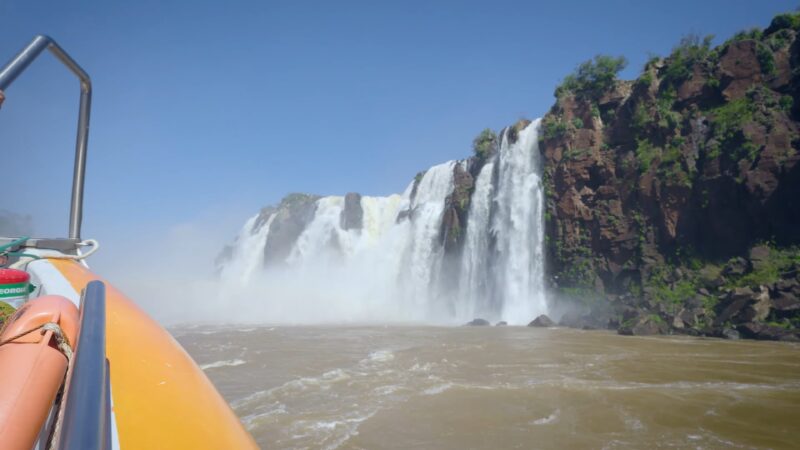
Yes. On several trails and approaches, visitors hear a distant rumble before the first major panoramic view appears.
It generally provides the most intense acoustic experience because a huge volume of water is concentrated within a narrow canyon.
Both produce a powerful continuous roar, but Iguazu’s wider system of numerous cascades creates a more layered and spatially varied soundscape.
Higher river levels usually produce a deeper and more continuous roar because more water and more channels are active.
Yes, although their calls may be masked close to the largest cascades. Birds are easier to hear along forest trails and in quieter sections of the parks.
Most visitors do not require it, but simple earplugs can help children and adults who are particularly sensitive to loud or continuous noise.
Experience the wonder of Iguazu Falls on a private 2 day tour from Buenos Aires. Easily reserve accommodations and optional activities. Book now!
From Price: USD150
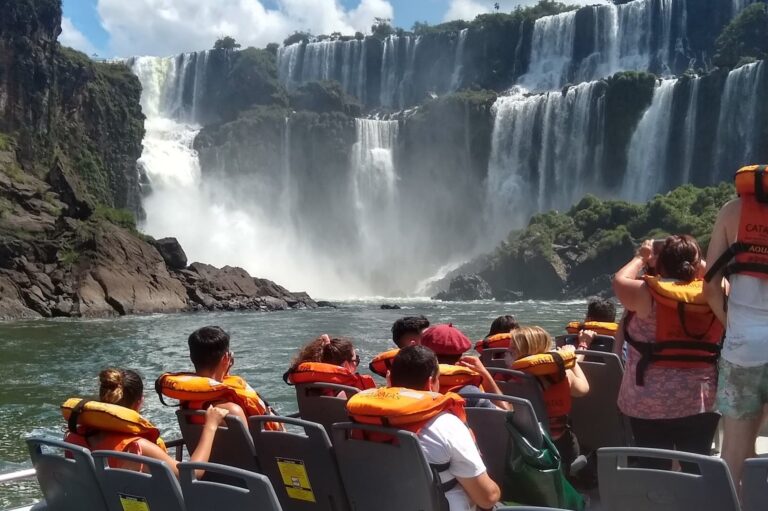
Experience the awe of Iguazu Falls on a 3-day tour from Buenos Aires. Book now for an unforgettable adventure!
From Price: USD150
