
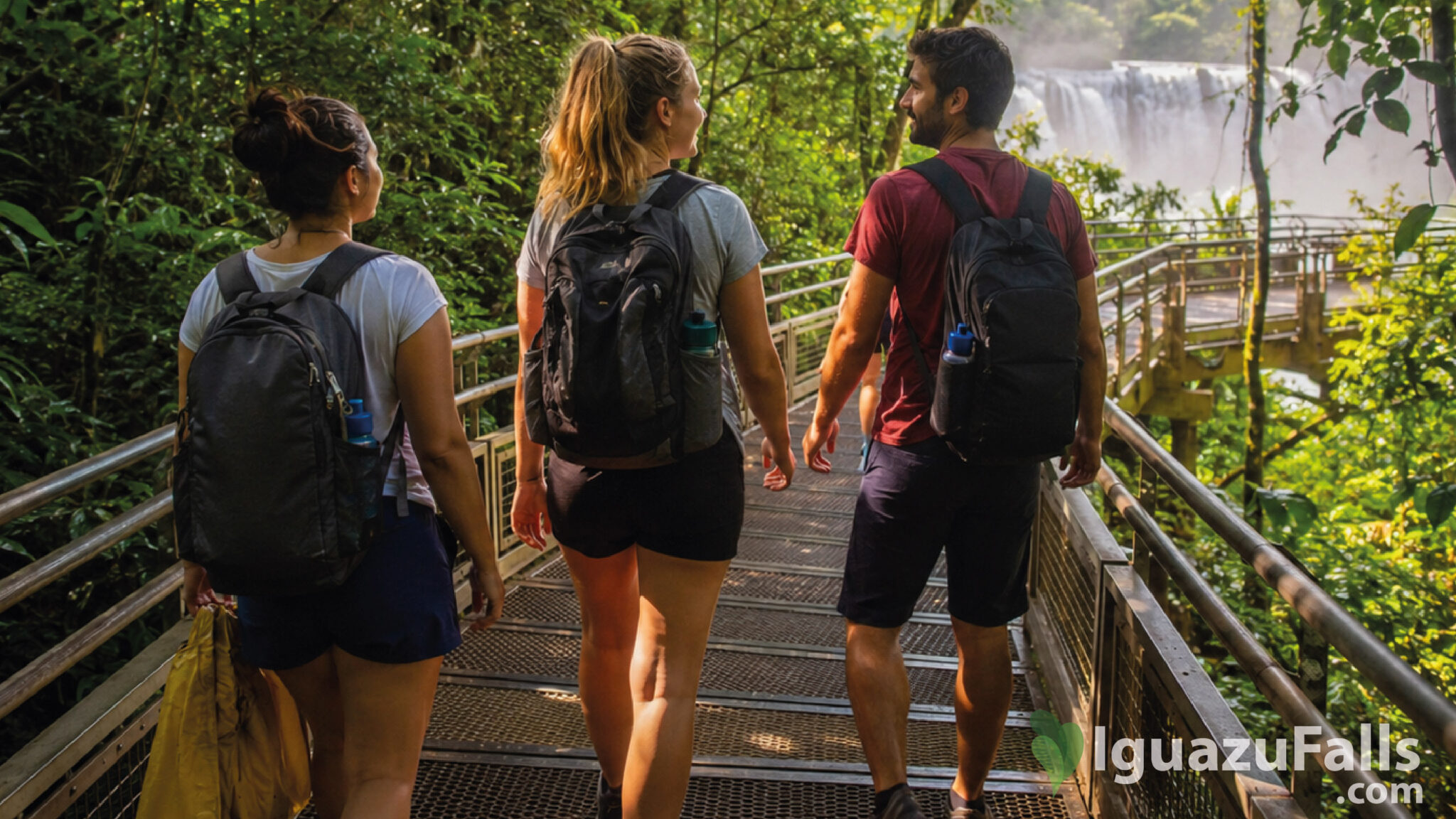
Iguazu Falls may be one of South America’s greatest natural attractions, but visiting it does not have to consume your entire travel budget. With affordable hostels, long-distance buses, local public transportation and plenty of inexpensive places to eat, Iguazu fits naturally into a backpacking journey through Argentina, Brazil and Paraguay.
The destination is particularly attractive to overland travellers because it sits at the meeting point of three countries. Puerto Iguazú in Argentina, Foz do Iguaçu in Brazil and Ciudad del Este in Paraguay form the Triple Frontier, making the region both a spectacular destination in its own right and a strategic stop on a longer South American route.
However, Iguazu requires more financial planning than a typical backpacker town. The national park entrance tickets are unavoidable, transportation costs can add up, and visiting both sides means dealing with different currencies and an international border.
The key is not to make Iguazu as cheap as possible. The key is to spend carefully on logistics so you can afford the experiences that brought you here in the first place.
A smart, great-value way to see Iguazu Falls in two nights. Stay at a confirmed 3-star hotel, join shared group tours to both the Brazilian and Argentine sides, and enjoy shared transfers from and to IGR or IGU.
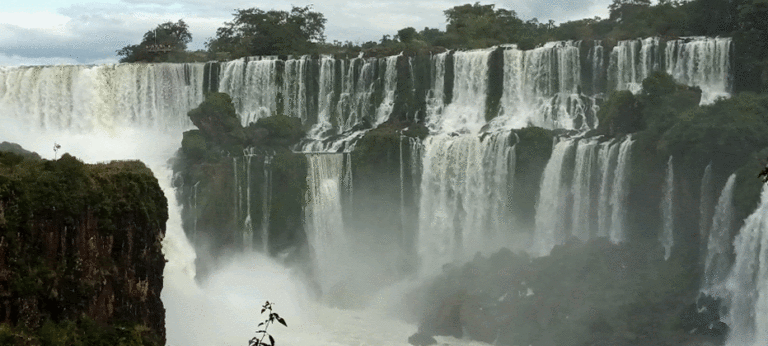
Backpackers sometimes hesitate to include Iguazu because it is located away from Argentina’s most familiar overland corridor. Yet the falls connect surprisingly well with several major backpacking routes.
From Puerto Iguazú, travellers can continue towards Buenos Aires, the Jesuit Missions of Misiones, southern Brazil or Paraguay. Foz do Iguaçu provides connections to destinations such as Curitiba, Florianópolis, São Paulo and Rio de Janeiro, while Ciudad del Este opens an overland route towards Asunción.
Iguazu is also an appealing change of pace after spending time in large cities. Instead of museums, nightlife and urban sightseeing, the focus shifts to rainforest, wildlife, rivers and one of the most powerful waterfall systems on Earth.
For backpackers, the destination offers several advantages:
It is also a destination where one major expense delivers an entire day of exploration. Although the park tickets may appear expensive compared with free urban attractions, the Argentine side can occupy most of a full day.
One single amazing destination, three different countries!
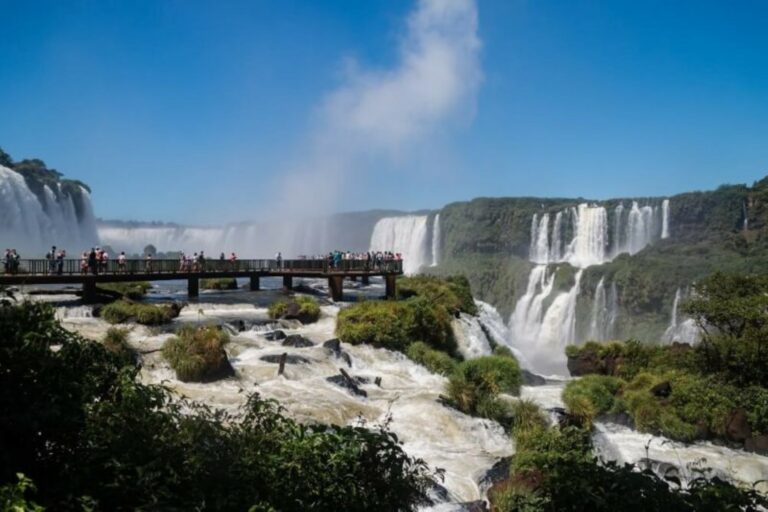
Choosing the right base can have a major effect on transportation, atmosphere and total cost.
Puerto Iguazú is smaller, calmer and easier to navigate on foot. The bus terminal is located close to many hostels, restaurants and shops, making it especially convenient for backpackers arriving without private transportation.
It is usually the most practical base if the Argentine side is the principal purpose of your visit. Buses run between the town and the national park, and the compact central area allows travellers to avoid frequent taxi expenses.
Puerto Iguazú also has a more relaxed tourist-town atmosphere. Many backpackers enjoy staying near the centre, where they can walk to bakeries, supermarkets, inexpensive restaurants and the bus terminal.
Its disadvantages are that prices in highly tourist-oriented areas can be higher than expected and the town has fewer big-city services than Foz do Iguaçu.
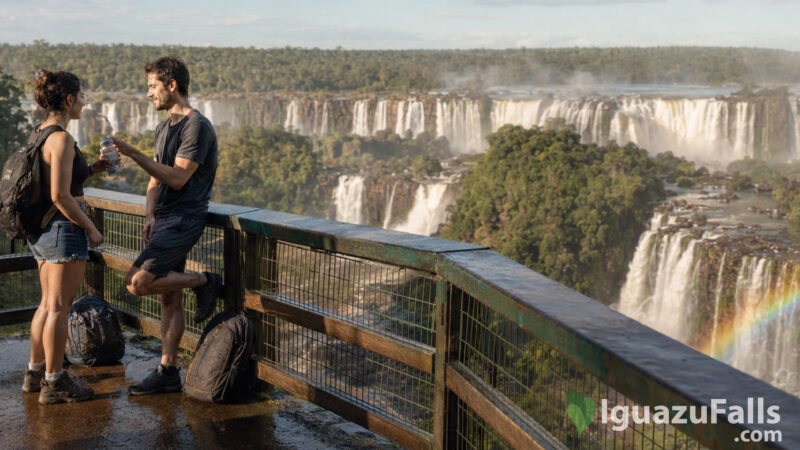
Foz do Iguaçu is a much larger city with a wider range of supermarkets, restaurants, urban buses and accommodation. Backpackers travelling through Brazil may find it more convenient to remain on the Brazilian side rather than crossing the border with all their luggage.
Foz can also be a useful base for visiting the Brazilian park, Parque das Aves, Itaipu and Ciudad del Este.
Because the city is spread over a larger area, location matters. A cheap bed may not represent a real saving if the hostel is far from transport connections or requires repeated rideshares.
Before booking, check:
Moving from one hostel to another may seem unnecessary, but it can make sense for backpackers continuing through Brazil.
One possible strategy is to spend two nights in Puerto Iguazú, visit the Argentine park and then cross to Foz do Iguaçu for another night before continuing through Brazil.
This avoids returning to Argentina after visiting the Brazilian side. The disadvantage is that you must cross the border with your complete backpack and allow extra time for immigration.
If your onward journey departs from Argentina, staying only in Puerto Iguazú is generally simpler.
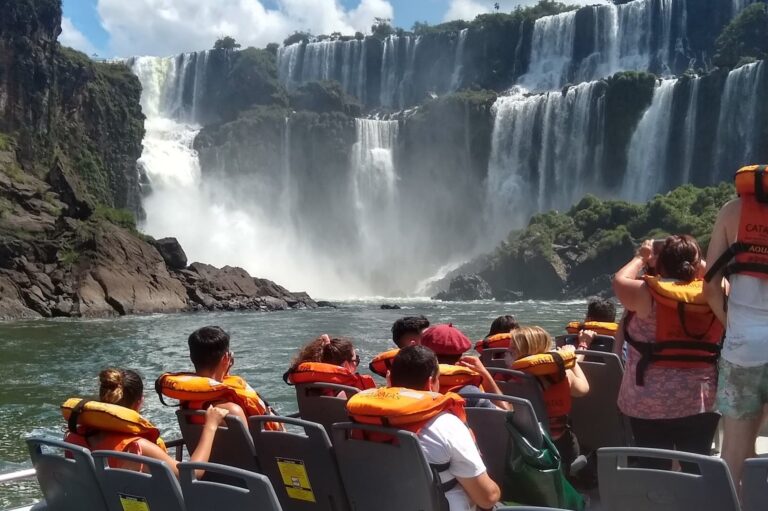
Experience the awe of Iguazu Falls on a 3-day tour from Buenos Aires. Book now for an unforgettable adventure!
From Price: USD190
Long-distance buses remain a classic way to include Iguazu in an overland journey. Puerto Iguazú has connections with Buenos Aires, Posadas and other Argentine cities, while Foz do Iguaçu connects with many destinations in Brazil.
The journey from Buenos Aires is long, so compare the complete cost of a bus with a low-cost flight before deciding. A bus may save one night of accommodation, but it is not always dramatically cheaper once food, seat category and transportation to the terminal are included.
For an overnight journey:
In Brazil, remember that Foz do Iguaçu’s long-distance bus terminal is different from the urban transport terminal.
Flying is not automatically incompatible with backpacking. If booked early, a flight can occasionally cost little more than a premium overnight bus and save an entire travel day.
The region has two principal airports:
Always include airport transportation and possible border costs when comparing fares. A very cheap flight into Brazil may become less attractive if your hostel and first activities are in Argentina.
Likewise, confirm the airport code before purchasing. Booking the wrong side of the border can create an unplanned international transfer.
Backpackers travelling from Asunción may reach Ciudad del Este and continue across the Friendship Bridge to Foz do Iguaçu.
This route can be economical, but the commercial border area is busy and can be uncomfortable with a large backpack. Complete all required immigration procedures even if local commuters appear to cross differently.
Do not imitate residents who may have special arrangements or who are making short local journeys. An incomplete entry or exit record can cause problems later in the trip.
DISCOVER A WONDERFUL PLACE TO ENJOY BIRDWATCHING. BE READY WITH YOUR BINOCULARS.

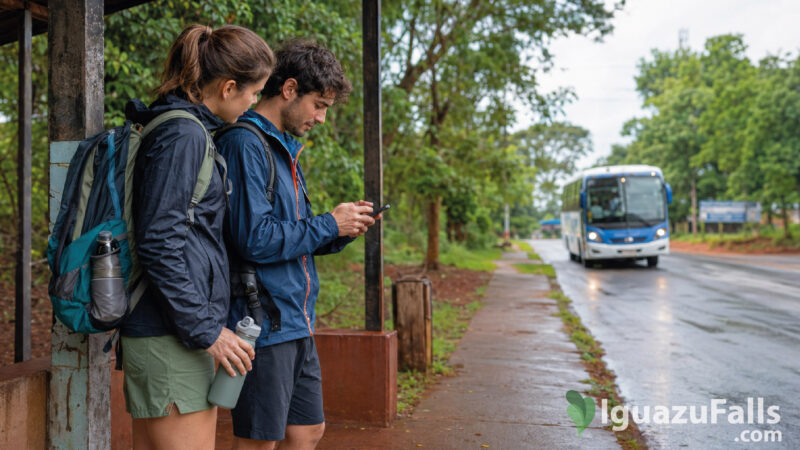
Public transportation is one of the largest potential savings for backpackers.
Buses depart from Puerto Iguazú’s bus terminal for the Argentine national park. The official park information currently indicates frequent services, but schedules and fares can change, so verify them locally before travelling. The park’s official visitor information also confirms that the Cataratas Area is accessible by bus from the terminal. Check current park information.
Arrive early enough to avoid losing valuable park time. During busy periods, there may be queues both at the terminal and at the entrance.
Ask at the terminal:
From Foz do Iguaçu, urban buses provide an economical route towards the Brazilian national park and nearby attractions.
If you are staying in Puerto Iguazú, reaching the Brazilian park independently requires more planning. International services, local connections and immigration stops may not function like a direct sightseeing transfer.
Ask specifically whether the bus waits while passengers complete immigration on both sides. Never assume you can simply get off and board the next service without checking the procedure.
The cheapest theoretical option is not always the best backpacker decision. A shared transfer may be worthwhile when it:
For the Argentine park, public transportation is relatively straightforward. For a cross-border visit, a shared excursion or transfer may provide better overall value.
If you meet other backpackers at your hostel, sharing a taxi can be economical. Compare the per-person price with bus fares, particularly for early departures or evening returns.
Confirm the price before starting the journey and make sure everyone agrees on the payment arrangement. For international trips, verify that the driver is authorized to cross the border and will wait during immigration procedures.
A smart, great-value way to see Iguazu Falls in two nights. Stay at a confirmed 3-star hotel, join shared group tours to both the Brazilian and Argentine sides, and enjoy shared transfers from and to IGR or IGU.
Prices and exchange rates can change quickly, especially in Argentina, so building your plan around spending categories is more reliable than using a fixed daily total.
Your backpacker budget should include:
Park tickets should be considered core expenses rather than optional entertainment. Current Argentine admission categories and official online sales are published by the Argentine National Parks Administration.
Depending on your interests, you may also budget for:
Choose one or two priorities rather than trying to book every available attraction.
Experience Argentina’s Icons with Comfort and Style

Some savings create more inconvenience than value. Be cautious about:
A sensible backpacker budget protects the experiences that cannot be repeated easily.
Experience the awe of Iguazu Falls on a 3-day tour from Buenos Aires. Book now for an unforgettable adventure!
From Price: USD190
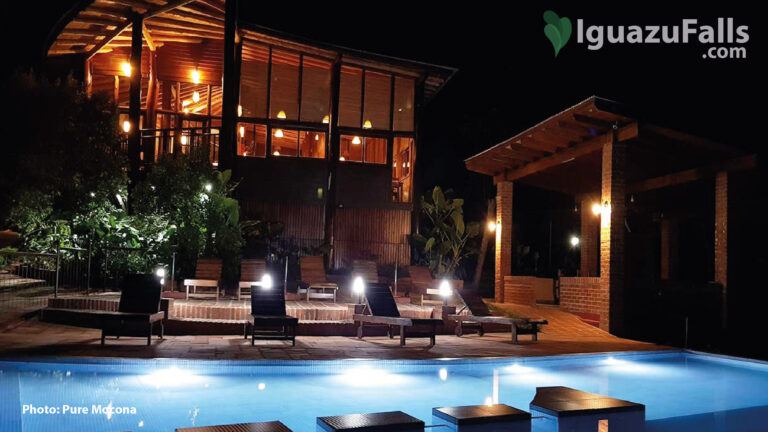
The lowest nightly rate should not be the only factor when choosing a hostel.
A useful location is generally within walking distance of the bus terminal and central services.
Prioritize:
A swimming pool can be more valuable than it sounds after a humid day in the national park.
In Foz, examine the location on a map rather than relying on the phrase “city centre.” Check the routes between the hostel, urban bus terminal, Brazilian park and your onward departure point.
If you plan to visit Paraguay, ask whether the hostel can explain the safest and simplest transport route to the Friendship Bridge.
A dormitory is usually the least expensive and most social choice. However, private rooms can be good value for two backpackers travelling together.
Solo travellers should compare the private-room supplement carefully. On quieter dates, the price difference may be smaller than expected.
Before booking a dormitory, check whether:
Food costs are easy to control without living entirely on instant noodles.
A hostel kitchen makes it possible to prepare breakfast, sandwiches and simple evening meals. Buy only what you will use before moving to the next country, as carrying fresh food across international borders may be restricted.
Good backpacker staples include:
Prepare food before leaving for the park, but check rules about what can be brought into protected areas and store everything securely away from wildlife.
The most economical restaurant meal is often lunch rather than dinner. Search away from the most tourist-heavy blocks and ask hostel staff where local workers eat.
In Argentina, bakeries, takeaway empanadas and daily set menus can offer good value. In Brazil, comida por quilo restaurants allow you to pay according to the weight of your plate, making them useful for controlling both cost and portion size.
A prato feito—a simple fixed plate commonly containing rice, beans, salad and meat—is another reliable Brazilian budget meal.
Bring a refillable bottle and start the day hydrated. Water is heavy, so there is no need to carry several litres if safe refilling points are available during your itinerary.
Avoid purchasing every drink inside the most visited tourist areas, where prices may be higher.
Backpackers frequently travel with groceries, but fruit, vegetables, seeds, meat and animal products may be controlled at international borders. Consume fresh food before crossing or confirm the rules with customs authorities.

Enjoy a city tour in Puerto Iguazu, to visit differnt areas and views of the river, and the famous triple frontier landmark
From Price: USD75
Three nights is a practical minimum for travellers visiting both sides without rushing.
This works if you arrive early, have already organized transportation and visit one park on each available day.
It provides little flexibility for delayed buses, bad weather or border queues.
This is the best balance for many backpackers:
A fourth night allows for a slower pace, a rest period, a visit to Itaipu or a local cultural attraction.
It may also be worthwhile when the cost of another hostel night is lower than taking an inconvenient overnight connection.
A longer stay can suit slow travellers, digital nomads and backpackers using Iguazu as a transition between countries. However, accommodation savings must be weighed against the relatively high cost of the main ticketed attractions.
If staying longer, include local neighbourhoods, nature reserves and rest time instead of paying for a major excursion every day.
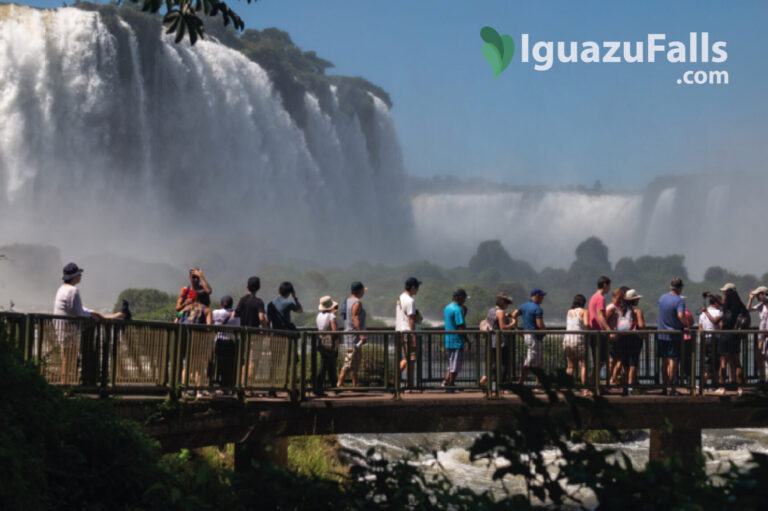
Enjoy a fully complete day visiting the Parque Nacional do Iguaçu on the brazilian side, including Helicopter Ride and Macuco Safari
From Price: USD355
Check into a hostel near useful transportation. Visit a supermarket, ask reception about current bus fares and confirm how early you need to leave for the Argentine park.
Explore central Puerto Iguazú and walk to the Hito Tres Fronteras if time and weather allow. Return before it becomes too late or use local transportation if your accommodation is not nearby.
Prepare breakfast and organize your daypack for the next morning.
Take an early bus from Puerto Iguazú to the Argentine park and dedicate the full day to the experience.
The park generally operates every day, but entry slots, operating hours and access to individual walkways may change. Consult the official visitor information shortly before the visit.
Bring a reusable bottle, sun protection, rain protection and a securely packed snack if permitted. Avoid purchasing an expensive excursion simply because it is offered on arrival; decide beforehand whether a boat ride is one of your priorities.
Return by bus and cook at the hostel or choose an inexpensive local dinner.
Cross into Brazil with the correct documentation. Visit the Brazilian side, whose panoramic route can usually be combined with Parque das Aves because the attractions are close to each other.
If paying for Parque das Aves exceeds your budget, spend the remainder of the day exploring Foz do Iguaçu or return to Puerto Iguazú.
Travellers continuing through Brazil can move to a Foz hostel that evening, avoiding the need to cross back again.
Travel onward to Brazil, Paraguay, Posadas or Buenos Aires.
Leave a generous margin between your hostel and departure, particularly if the journey involves an international crossing.
Two natural wonders in one trip: Iguazu Falls and Ibera Wetlands

The Triple Frontier is exciting for backpackers, but borders should never be treated casually.
Visa and entry requirements depend on the traveller’s passport, not on the country where the hostel is located or the short duration of the visit.
Before visiting another side of the falls, confirm:
Citizens of some Mercosur and associated countries may use approved national identity documents, while many other international visitors require a valid passport. Argentina publishes current tourist documentation guidance through its official immigration website.
Local buses and residents cross these borders constantly. Their procedures may differ from those of an international backpacker.
Make sure you receive the proper exit and entry registration every time it is required. A missing record can create difficulties when leaving the country or applying for future entry.
Leave the main backpack secured at your hostel and carry only what you need. Crossing a busy border is considerably easier without all your luggage.
Your day bag should keep your passport protected from rain and waterfall spray.
The bridge between Puerto Iguazú and Foz do Iguaçu is open to passenger traffic, but waiting times vary. The official Argentine border information identifies the Tancredo Neves Bridge as the connection between the two cities. Check current conditions through the Iguazú Border Centre.
Weekends, public holidays and shopping periods may increase traffic. Do not schedule a park visit immediately before a flight or long-distance bus departure on the opposite side of the border.
2 nights in Iguazu + 3 nights in Puro Mocona rainforest lodge, to visit the amazing Mocona Falls
The region uses Argentine pesos, Brazilian reais and Paraguayan guaraníes.
Cards are widely useful, but public buses, small stores and informal food outlets may require cash. Carry enough for immediate transportation and one backup meal.
Avoid withdrawing more than you expect to spend. Leftover currency can become difficult or costly to exchange later.
If a terminal offers to charge your card in your home currency, the displayed conversion may be less favourable. Paying in the local currency generally allows your card provider to perform the conversion.
Keep one card and a small amount of cash in your wallet. Store a backup card separately.
Do not carry all your funds or documents in an easily accessible outer pocket of your backpack.
ATM fees and withdrawal limits can make repeated small withdrawals expensive. Compare the total cost before confirming the transaction.
Backpackers staying only briefly on one side may find card payments more practical than withdrawing a large quantity of currency.
The region’s subtropical climate rewards travellers who pack light, fast-drying items.
Useful items include:
Avoid filling your backpack with duplicate outdoor equipment. The main park routes do not require technical trekking gear.
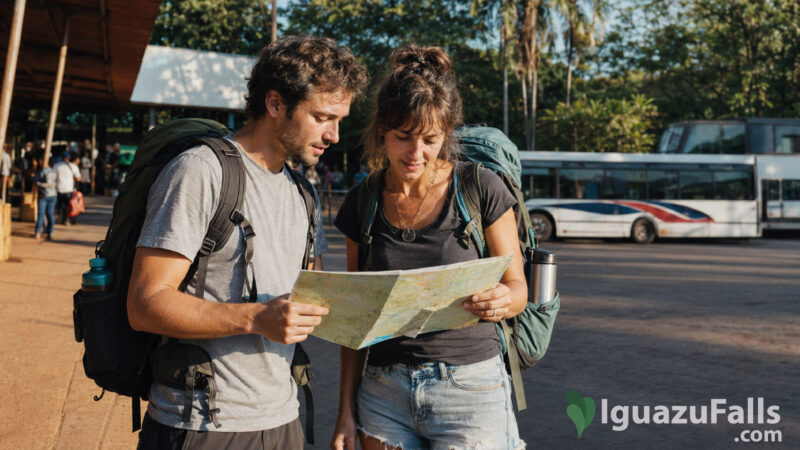
For park visits, carry:
A large trekking backpack is unnecessary inside the parks and can be uncomfortable on buses and crowded walkways.
Waterproofing in Iguazu is not only about rain. Spray from the waterfalls can soak documents and electronics even on a sunny day.
A dry bag, waterproof pouch or strong resealable bag is a small investment that can prevent an expensive problem.

Experience the wonder of Iguazu Falls on a private 2 day tour from Buenos Aires. Easily reserve accommodations and optional activities. Book now!
From Price: USD150
There is no single perfect backpacker season. The best period depends on whether you prioritize prices, weather, water volume or social atmosphere.
Summer is hot, humid and often rainy. The forest is intensely green, but long days outdoors can be physically demanding.
Hostels may feel lively during holiday periods, although transportation and attractions can also be busier.
Autumn can provide a comfortable balance between warm weather and less intense heat. It is well suited to travellers continuing through Argentina or southern Brazil.
Winter mornings and evenings may be cooler, while afternoons are often comfortable for walking. Argentine winter holidays and Brazilian vacation periods can increase demand on certain dates.
Bring a light warm layer, especially for overnight buses with air-conditioning.
Spring generally offers warm conditions and active wildlife. As temperatures rise, insect protection becomes increasingly important.
Regardless of the month, tropical weather can change quickly. Leave some flexibility and check the forecast shortly before each park visit.
Not every day in Iguazu has to involve an expensive admission ticket.
Puerto Iguazú’s Triple Frontier landmark overlooks the meeting of the Iguazú and Paraná rivers, with Brazil and Paraguay visible across the water.
It is a good late-afternoon activity for an arrival day and provides geographical context for the region.
The small market area known as La Feirinha is a relaxed place to browse regional products and share inexpensive food or drinks with other travellers.
Prices vary, so check before ordering.
Foz offers an urban contrast to the national parks. Backpackers can explore local restaurants, public spaces and multicultural neighbourhoods without purchasing a formal excursion.
Itaipu is a paid attraction, but it may be worth adding for travellers interested in engineering, energy and large-scale infrastructure.
Compare the different visit types rather than automatically choosing the most expensive option.
Ciudad del Este is known primarily for shopping. It can be interesting as part of a broader Paraguay itinerary, but it should not be treated merely as a place to search for cheap electronics.
The central commercial area is crowded and intense. Carry minimal valuables, understand the border procedure and research product warranties and customs allowances before purchasing.
Backpackers continuing towards Posadas can stop near the Jesuit Missions rather than taking a return day trip from Puerto Iguazú.
This is an example of efficient route planning: integrating an attraction into the onward journey instead of paying to travel the same road twice.
One single amazing destination, three different countries!
Iguazu is a natural meeting point for travellers moving in opposite directions across South America.
Hostel kitchens and common areas are useful places to exchange practical information about:
Shared costs can make certain experiences more affordable, but confirm plans clearly before committing money.
A useful travel companion for one activity does not need to become a partner for the entire trip. Iguazu works well for temporary travel groups formed around a park visit, taxi ride or meal.
Digital nomads can use Puerto Iguazú or Foz do Iguaçu as a short working stop, but expectations should be realistic.
Before booking accommodation, ask for recent information about:
Foz do Iguaçu generally provides more urban infrastructure, while Puerto Iguazú offers a smaller and more relaxed environment.
Do not plan important video calls immediately after a full park day. Heat, walking and transportation make the experience more tiring than it may appear on a map.
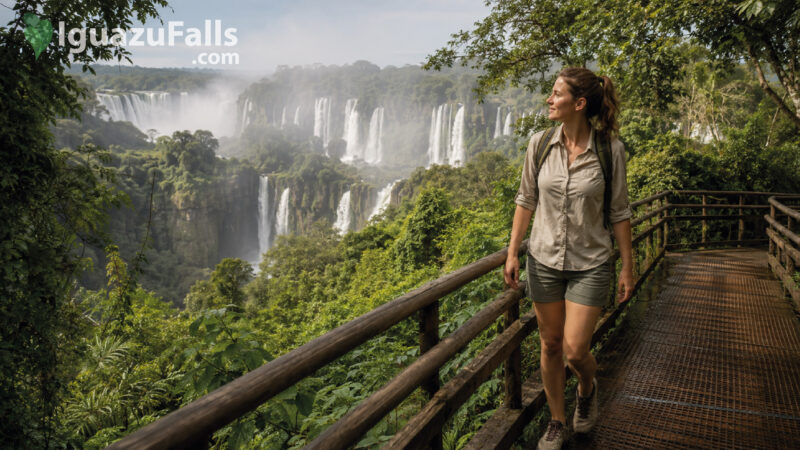
Budget travel and responsible travel should support one another.
Coatis and monkeys can become aggressive when they associate visitors with food. Feeding them also alters their natural behaviour and can damage their health.
Keep all food inside a closed backpack and follow park instructions.
Carry a reusable bottle, refuse unnecessary bags and avoid leaving food packaging in natural areas.
Take everything you bring into the park back out or place it in the appropriate waste container.
A closed walkway is not an invitation to search for an alternative route. Water levels, structural maintenance and wildlife conditions can make certain areas temporarily dangerous.
Use authorized guides, official transportation and established accommodation. Extremely cheap informal offers may operate without suitable insurance, safety standards or worker protections.
The Guaraní people are an essential part of the region’s cultural identity. Choose respectful community-based experiences and avoid photographing individuals without permission.
DISCOVER A WONDERFUL PLACE TO ENJOY BIRDWATCHING. BE READY WITH YOUR BINOCULARS.
A remote hostel may increase daily transportation costs and reduce your ability to cook or walk to services.
Build the tickets into your budget before arriving. They are the central reason for visiting, not an unexpected extra.
Use hostel luggage storage whenever possible. A light daypack is more comfortable and secure.
A day trip is still an international journey. Rules are based on citizenship and can change.
Do not assume immigration is optional because other passengers remain on the bus.
Leave enough time for border queues, local buses and weather disruptions.
Heavy jeans and cotton garments can remain wet for hours. Lightweight, quick-drying clothing is more practical.
Visiting Iguazu only as a rushed stopover often saves little after transportation and produces a much poorer experience.
Carry a second payment method and keep it separately.
A very low rate is not good value if lockers do not work, reception is frequently unattended or the location is unsuitable.
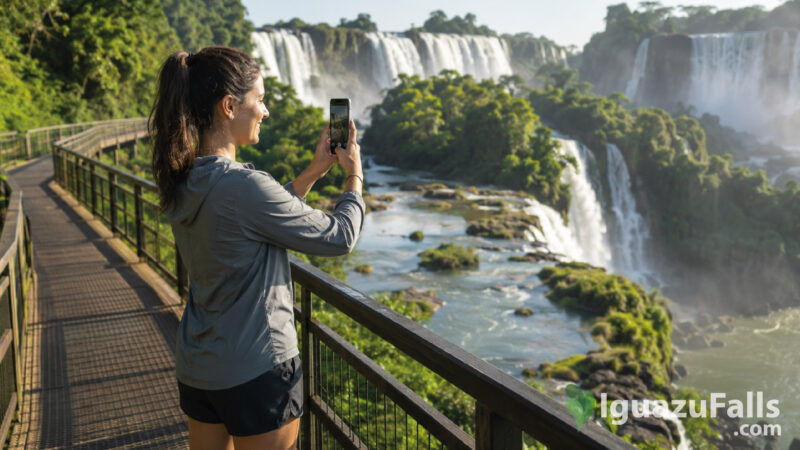
Yes, but the park entrance tickets will remain the main fixed expense. Save money through hostels, supermarkets, public buses and careful route planning rather than cutting the essential waterfall experiences.
No. The Argentine park can be reached by public bus and its visitor routes are organized. However, a shared tour or transfer may be worthwhile for the Brazilian side if it simplifies the international journey.
The central area is relatively compact, and many hostels, restaurants, supermarkets and the bus terminal are within walking distance. Some attractions and jungle accommodations require transportation.
Many hostels have communal kitchens, but facilities vary. Check photographs and recent reviews rather than relying only on the kitchen icon in a booking listing.
Advance purchase is advisable, particularly during weekends, holidays and high season. Use official sales channels and respect the selected entry time.
Yes, provided your nationality meets the entry requirements for all three countries. Each crossing must be treated as a formal international border movement.
One side is better than missing Iguazu entirely, but the Argentine and Brazilian parks provide complementary experiences. Backpackers should ideally budget and allow time for both.
Prices fluctuate according to demand, exchange rates and accommodation type. Compare the final price, taxes, breakfast, transport location and payment conditions rather than assuming one country will always be cheaper.
Storage options may be available, but capacity and charges can change. Leaving the main backpack at your hostel is generally simpler. Confirm luggage storage before checking out.
During ordinary periods, backpackers may find availability relatively close to arrival. For Easter, year-end holidays, Carnival, long weekends and school vacations, book earlier.
Visit Three Beautiful Destinations in 9 Nights

Iguazu is not the cheapest stop on a South American backpacking journey, but it can be one of the most rewarding. The destination does not require luxury transportation, expensive hotels or a private guide. What it does require is a realistic budget, enough time and careful attention to border logistics.
Stay near useful transportation, choose a hostel with a kitchen, take public buses when they genuinely make sense and reserve money for both national parks. Avoid sacrificing an essential experience to save a minor amount elsewhere.
Most importantly, do not treat Iguazu as a box to tick between overnight buses. Give the waterfalls at least two proper days. The sound, scale and atmosphere of the rainforest deserve more than a hurried photograph before the next border crossing.
For backpackers travelling through South America, Iguazu is much more than a detour. It is the place where three countries, two great rivers and one extraordinary natural landscape come together—and it can be experienced without abandoning the spirit or budget of independent travel.
Experience the wonder of Iguazu Falls on a private 2 day tour from Buenos Aires. Easily reserve accommodations and optional activities. Book now!
From Price: USD150
Experience the awe of Iguazu Falls on a 3-day tour from Buenos Aires. Book now for an unforgettable adventure!
From Price: USD190
