
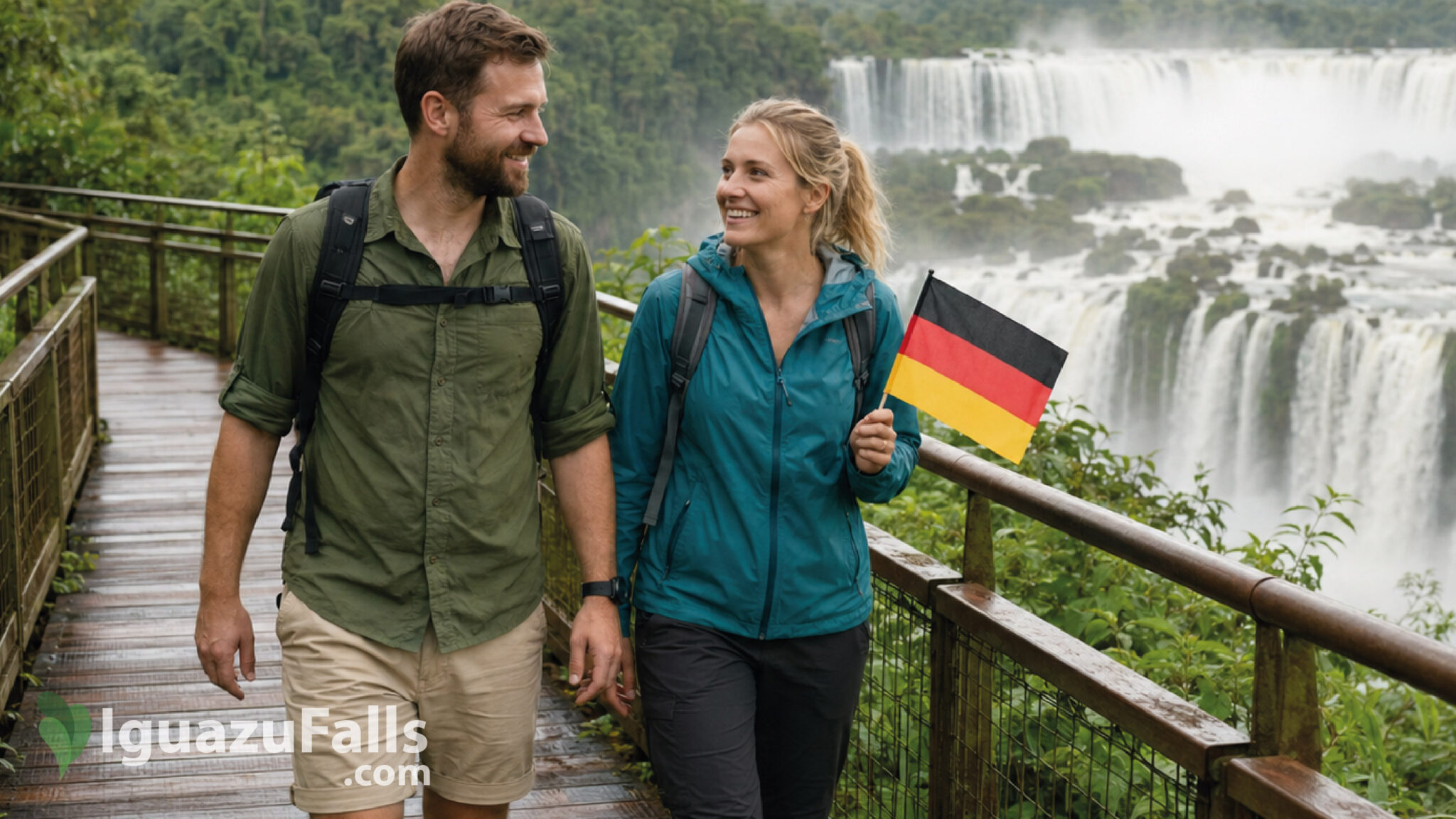
Known in German as the Iguazú-Wasserfälle, Iguazu Falls is one of South America’s most extraordinary natural destinations. Approximately 275 individual waterfalls extend across the border between Argentina and Brazil, surrounded by protected Atlantic Forest.
For German travellers interested in nature, hiking, wildlife, photography and sustainable tourism, Iguazu offers considerably more than a panoramic view. The destination combines accessible walking trails, national parks, subtropical biodiversity and the opportunity to experience two South American countries during the same trip.
However, Iguazu is very different from a typical European nature destination. The tropical climate, border formalities, changing water levels and more flexible approach to schedules require some preparation.
Willkommen in Iguazú!
German visitors frequently arrive in Iguazu as part of a longer journey through Argentina or Brazil. Some combine the waterfalls with Buenos Aires and Patagonia, while others include Iguazu in an itinerary with Rio de Janeiro, São Paulo or the Brazilian coast.
The destination is particularly appealing to travellers who appreciate:
German travellers often ask whether Iguazu is worth the additional flight when visiting South America. The simple answer is Ja, unbedingt! — Yes, absolutely!
The scale, sound and setting of the waterfalls cannot be fully appreciated through photographs. Visiting both national parks also creates two remarkably different experiences.
One single amazing destination, three different countries!
One of the most frequent questions in German travel forums is:
Welche Seite ist besser: Argentinien oder Brasilien?
Which side is better: Argentina or Brazil?
Neither side should be considered a substitute for the other.
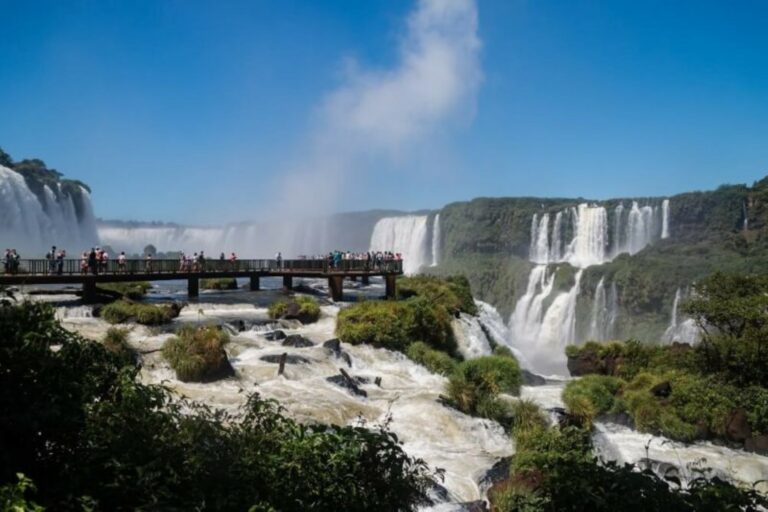
The Argentine side contains an extensive network of trails and walkways taking visitors above, below and beside numerous waterfalls.
Its principal attractions traditionally include:
The Argentine experience is longer and more immersive. Most visitors spend between six and eight hours inside the park.
German description:
Auf der argentinischen Seite erlebt man die Wasserfälle aus nächster Nähe.
On the Argentine side, you experience the waterfalls from very close range.

Experience the wonder of Iguazu Falls on a private 2 day tour from Buenos Aires. Easily reserve accommodations and optional activities. Book now!
From Price: USD150
The Brazilian park provides the most complete panoramic perspective. From its main waterfall trail, visitors look across the river toward the enormous system of cascades on the Argentine side.
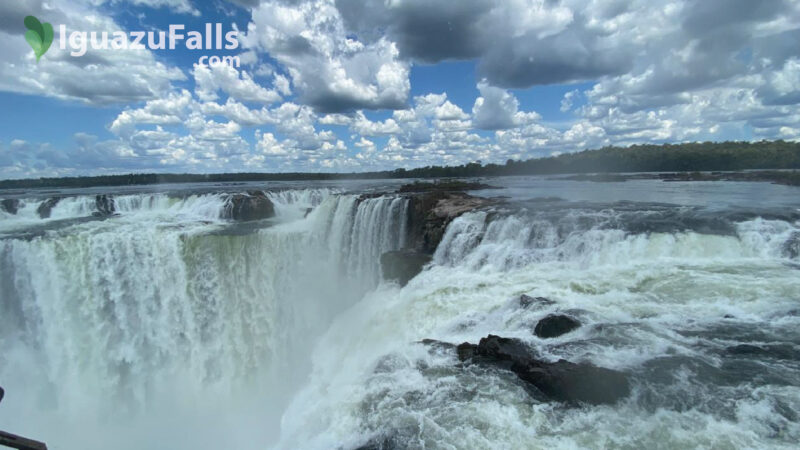
The visit is usually shorter, but the views are spectacular. The final walkway approaches Devil’s Throat and can leave visitors completely surrounded by mist.
The Brazilian park has also expanded its nature-based offer with cycling routes and longer trails, including the Caminho do Poço Preto, Caminho das Bananeiras and Ytepopo Trail. Some of these experiences are included with standard admission, while others require additional reservations.
German description:
Die brasilianische Seite bietet den besten Panoramablick.
The Brazilian side offers the best panoramic view.
Allow at least two complete days:
Travellers interested in birds, cycling, longer trails or photography should consider spending three or four nights in the region.

Enhance your visit to Iguaçu National Park in Brazil and experience a breathtaking sunset at Iguazu Falls with a delightful drink in hand.
From Price: USD139
A stay of three nights is ideal for most international travellers. This provides one full day for each side and some flexibility in case of rain, flight delays or congestion at the border.
Two nights can work if flight schedules are convenient:
This schedule is possible but relatively tight.
Three nights provide a more comfortable itinerary:
Unser Tipp: Avoid scheduling an international flight immediately after a cross-border park visit. Immigration delays are unpredictable.
One single amazing destination, three different countries!
A longer visit allows time for:
There are no nonstop flights between Germany and Iguazu. Travellers normally connect through Buenos Aires, São Paulo or Rio de Janeiro.
The Argentine airport is Cataratas del Iguazú International Airport, with the code IGR. It is located near Iguazu National Park and approximately 20 kilometres from Puerto Iguazu.
Most connections operate through:
Pay close attention to the Buenos Aires airport code. A domestic flight to Iguazu may depart from Aeroparque even if the international flight from Germany arrives at Ezeiza. Travelling between the two airports can take considerable time, especially during peak traffic.
The Brazilian airport is Foz do Iguaçu International Airport, code IGU. It is conveniently located between Foz do Iguaçu and the Brazilian national park.
Connections are commonly available through:
An open-jaw itinerary—arriving through Argentina and departing through Brazil, or vice versa—can save time and avoid unnecessary backtracking.
Before booking separate international and domestic tickets, check:
If flights are issued on separate reservations, the second airline may not assist if the first flight causes a missed connection.

Enjoy visiting Puerto Iguazu, the three frontier landmark, Guira Oga and the Aripuca in a wonderful half day trip
From Price: USD55
German citizens need a passport to enter both Argentina and Brazil. A German identity card, or Personalausweis, is not accepted as an international travel document for either country.
According to the German Federal Foreign Office:
Entry rules can change, so check the latest Argentina travel advice and Brazil travel advice from the Auswärtiges Amt before departure.
Even when visiting Brazil only for the day, travellers must complete the required border formalities.
Do not leave your passport at the hotel and do not assume that a national identity card will be sufficient.
Wichtig: The transfer between the parks is an international border crossing, not simply a bridge between two attractions.
Minors travelling without both parents may need additional consent documents. Requirements can depend on nationality, residence and family circumstances.
Families should consult the relevant consulates and airlines well before departure. A document that is sufficient for departure from Germany may not automatically satisfy every local requirement.
Experience the wonder of Iguazu Falls on a private 2 day tour from Buenos Aires. Easily reserve accommodations and optional activities. Book now!
From Price: USD150
Puerto Iguazu and Foz do Iguaçu are connected by the Tancredo Neves International Bridge. The border operates 24 hours, but waiting times can vary considerably. Argentina’s official border information sometimes displays an estimated crossing time of more than an hour, demonstrating why schedules should include a generous margin. (
A private transfer is the most convenient option. The driver assists with the route, waits during immigration procedures and takes passengers directly to the park or hotel.
This option suits German travellers who value:
International buses are less expensive but require more time and independence. Passengers may need to leave the bus at immigration and wait for another service after completing the formalities.
Always confirm the last return departure and keep local currency available.
A taxi can be convenient, but ask in advance whether:
Advance ticket purchases are strongly recommended, particularly during:
The Argentine park is normally open every day from 8:00 a.m. to 6:00 p.m., with admission permitted until 4:00 p.m. The official site recommends arriving early and respecting the time selected on the ticket. Hours can change because of weather or operational conditions.
Tickets are available online, and the park accepts Argentine pesos as well as Visa and Mastercard credit and debit cards.
The Brazilian park uses timed admission and recommends purchasing tickets online. Availability can become limited during busy periods, so travellers should select the date and entry time in advance.
Special sunrise, sunset and evening experiences may require separate tickets.
German travellers may expect the published timetable to function like a Fahrplan. Park operations, however, can be affected by:
A closure or delay is usually a safety decision rather than poor organisation.
One single amazing destination, three different countries!
Iguazu Falls can be visited throughout the year. There is no completely dry season, and rainfall can occur during any month.
Travelling during the German winter means arriving during the subtropical summer.
Expect:
The contrast with winter in Germany can be dramatic.
Autumn is often an excellent period for visiting. Temperatures may be more comfortable, although humidity and rain remain possible.
Easter and long holiday weekends can produce large crowds.
Winter in Iguazu is generally mild and can offer more comfortable walking conditions. Early mornings may feel cool, but afternoons are often pleasant.
German visitors should not imagine a European winter. Short sleeves may still be appropriate during the day day, although a light jacket is useful in the morning.
July is a busy period because of school holidays in South America.
Spring offers warm weather, active wildlife and lush vegetation. Temperatures and humidity increase as summer approaches.

Uncover pristine jungle near Iguazu Falls: trek, enjoy a delightful lunch, and relax by the pool in our natural reserve!
From Price: USD150
One of the most common comments from German travellers is:
“Die Luftfeuchtigkeit ist viel höher als erwartet.”
The humidity is much higher than expected.
The Atlantic Forest climate can make a moderate temperature feel considerably warmer. Walking slowly, drinking water and taking occasional breaks are important.
Rain does not necessarily ruin a visit. The waterfalls remain impressive, and the rainforest appears especially vivid in wet conditions.
Choose practical, lightweight clothing:
A heavy European-style waterproof jacket may become uncomfortable in tropical humidity.
Ja, sehr wahrscheinlich! — Yes, very likely!
Mist is part of the experience, especially near Devil’s Throat and on the Brazilian walkway. A waterproof case or secure bag is useful for phones, passports and camera equipment.
Avoid umbrellas on narrow, crowded walkways. A poncho leaves both hands free and is safer around other visitors.
German travellers accustomed to Wandern should understand that the principal park circuits are developed visitor walkways rather than wilderness hiking routes.
The Argentine side involves a considerable amount of walking. Although many paths are relatively level, the combination of distance, humidity and time spent standing can make the day tiring.
The ecological train connects some areas but does not eliminate the need to walk.
The traditional waterfall trail is shorter and offers a progressive sequence of panoramic viewpoints. Some sections contain stairs and slopes.
The Brazilian park now also offers longer forest routes and cycling opportunities for travellers who want a more active experience.
Both parks contain accessible areas, but conditions vary between circuits and services. Travellers with limited mobility should confirm:
Operational changes can temporarily affect accessibility.
From Bustling City to Majestic Natural Wonders: Buenos Aires, El Calafate & Iguazu Falls in 9 Nights

German travellers with an interest in Naturbeobachtung should look beyond the waterfalls. Iguazu protects one of the most biodiverse remaining areas of the Upper Paraná Atlantic Forest.
Possible sightings include:
Jaguars, tapirs and ocelots inhabit the wider ecosystem but are rarely observed on regular visitor circuits.
Early morning is usually the most productive time for birds. A specialised guide can help identify species by their calls and locate wildlife that casual visitors would miss.
German birdwatchers may wish to bring:
Coatis may approach picnic areas and appear harmless, but they are wild animals with sharp teeth and claws. Feeding them changes their behaviour and can lead to aggressive encounters.
Keep food inside a closed bag and never pose for a photograph while holding food near an animal.
Bitte nicht füttern — Please do not feed the animals.
Two natural wonders in one trip: Iguazu Falls and Ibera Wetlands

Environmental responsibility is often especially important to German visitors. Iguazu gives travellers an opportunity to support conservation, but visitor behaviour matters.
Bring a refillable water bottle where permitted and avoid unnecessary single-use packaging.
Leaving the walkway can damage vegetation and disturb animals. It can also expose visitors to snakes, insects and unstable ground.
Quiet visitors have a better chance of seeing wildlife. Loud music and shouting are inappropriate in protected forest areas.
Avoid attractions offering direct contact with wild animals or staged photographs. Select recognised conservation, rehabilitation and educational programs.
A rushed visit may require multiple transfers and provide little economic benefit outside the main attractions. Staying an additional night supports local hotels, restaurants and guides while allowing a more relaxed experience.
Nachhaltig reisen bedeutet auch, langsamer zu reisen.
Sustainable travel also means travelling more slowly.
Food in the Iguazu region reflects Argentine, Brazilian, Paraguayan and Guarani influences.
Common options include:
Visitors may find:
Vegetarian choices are increasingly available, particularly in tourist hotels and central restaurants. Vegan travellers should communicate their requirements clearly because a dish described as vegetarian may contain cheese, eggs or animal-based stock.
Useful phrases include:
In Spanish:
In Portuguese:
Do not rely solely on the German or English name of an allergy. Carry a written explanation in Spanish and Portuguese describing the ingredient and the risk of cross-contamination.
Ich habe eine schwere Allergie means “I have a severe allergy,” but local-language information will be more useful to restaurant staff.
The quality and taste of tap water can vary between locations. Many international travellers prefer filtered or bottled water.
Carry sufficient water during park visits, particularly in summer. Do not wait until you feel thirsty, as dehydration can develop quickly in humid conditions.
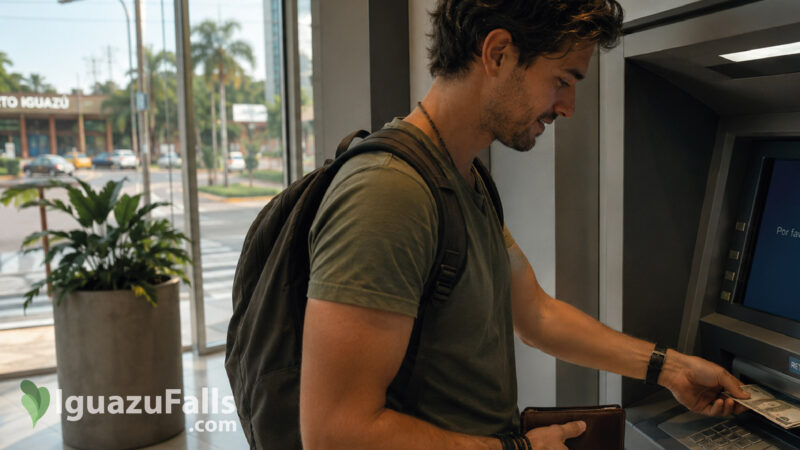
Argentina uses the Argentine peso, while Brazil uses the Brazilian real.
Visa and Mastercard are widely accepted at hotels, established restaurants, official park facilities and larger shops. Cash remains useful for:
Euros are not a regular form of payment. Some tourism businesses may accept US dollars, but visitors should use local currency or cards for routine expenses.
If a terminal offers to charge the purchase in euros, decline the automatic conversion and request payment in:
Your own bank’s conditions will determine the final rate, but merchant conversion often includes an additional markup.
Pix is widely used by Brazilians for instant electronic payments. Most German tourists cannot assume that their bank account will support it. Carry a card or Brazilian reais unless your financial provider has specifically confirmed Pix compatibility.
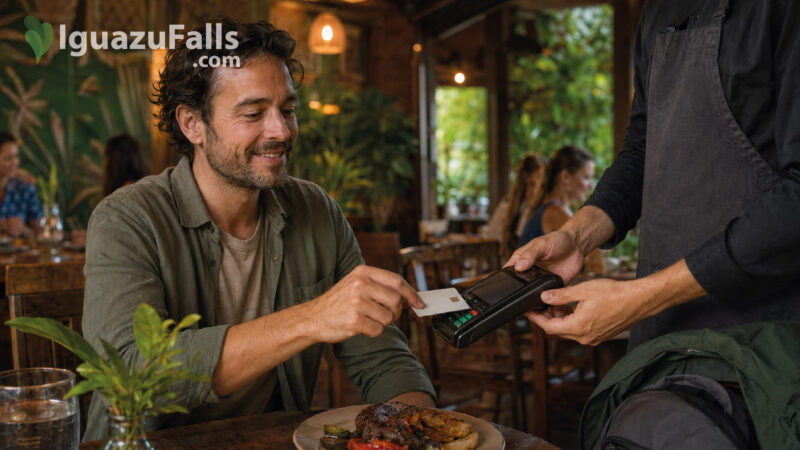
Tipping is less formalised than in the United States but more common than in Germany.
As a general guide:
Restaurant tips may not always be added to a card payment, so local cash is useful.
Trinkgeld ist freiwillig, aber bei gutem Service üblich.
Tipping is voluntary but customary for good service.
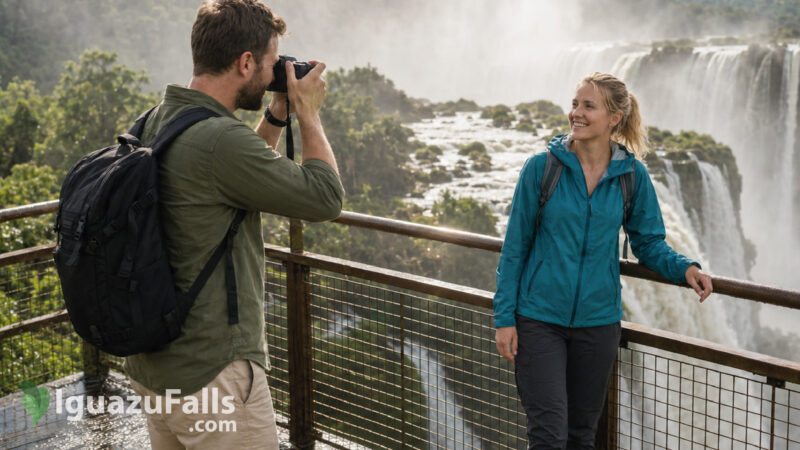
Spanish is spoken in Puerto Iguazu, while Portuguese is spoken in Foz do Iguaçu. English is available in many tourism businesses but should not be assumed everywhere.
German-speaking guides may be available by prior reservation. They are much less common than English- or Spanish-speaking guides, so request one well in advance.
| German | Spanish | Portuguese | English |
|---|---|---|---|
| Guten Morgen | Buenos días | Bom dia | Good morning |
| Danke | Gracias | Obrigado/Obrigada | Thank you |
| Bitte | Por favor | Por favor | Please |
| Wo ist der Eingang? | ¿Dónde está la entrada? | Onde fica a entrada? | Where is the entrance? |
| Wie viel kostet das? | ¿Cuánto cuesta? | Quanto custa? | How much does it cost? |
| Kann ich mit Karte bezahlen? | ¿Puedo pagar con tarjeta? | Posso pagar com cartão? | Can I pay by card? |
| Wo ist die Toilette? | ¿Dónde está el baño? | Onde fica o banheiro? | Where is the restroom? |
| Ich brauche Hilfe | Necesito ayuda | Preciso de ajuda | I need help |
| Ohne Fleisch, bitte | Sin carne, por favor | Sem carne, por favor | Without meat, please |
| Die Rechnung, bitte | La cuenta, por favor | A conta, por favor | The bill, please |
Cultural observations describe broad tendencies, not every individual. Nevertheless, understanding a few differences can make the experience more comfortable.
German travellers often value exact departure times and detailed organisation. In Iguazu, transfers and tours may be affected by traffic, weather and border controls.
A guide arriving a few minutes later than expected does not necessarily indicate that the service has been forgotten. At the same time, organised excursions should still provide a confirmed meeting point and approximate collection time.
Argentine and Brazilian hospitality may include informal conversation, expressive gestures and a relaxed interpersonal style.
A driver or guide may ask where you come from, how long you are travelling or whether you enjoy football. This is generally friendly conversation rather than intrusive questioning.
Greetings and conversational distance may be closer than in Germany. Physical contact is not obligatory, and visitors can always greet others with a smile and verbal salutation.
Meals may proceed more slowly, especially in the evening. Staff may not bring the bill until requested because doing so without being asked can appear as if the restaurant wants the guest to leave.
Say:
In Argentina, dinner often begins later than in Germany. Some restaurants become livelier after 9:00 p.m. Tourist areas usually provide earlier options, but the atmosphere may be quieter.
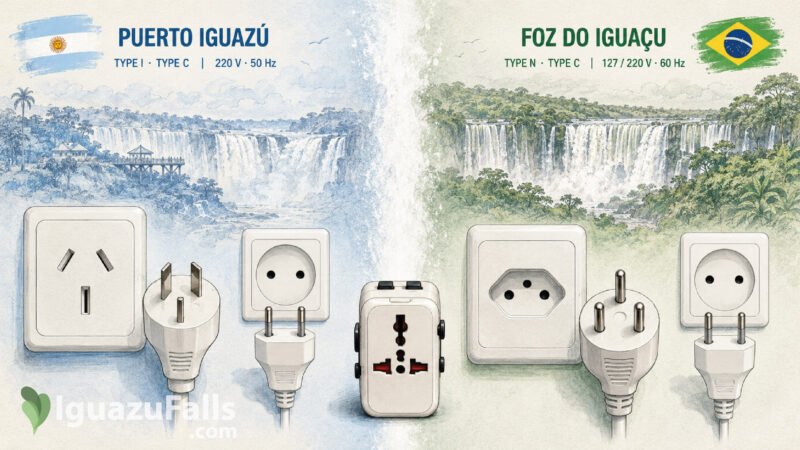
Argentina and Brazil use different electrical systems.
Argentina commonly uses:
Brazil commonly uses:
German Type C plugs may fit some Brazilian Type N sockets, but compatibility is not universal. Type F Schuko plugs usually require an adapter.
Bring a universal travel adapter and verify that chargers support the local voltage range. Most modern phone and laptop chargers accept 100–240 volts, but travellers should check the label.
One single amazing destination, three different countries!
Hotels and restaurants generally provide Wi-Fi, although speed and reliability vary.
A German mobile plan may include expensive roaming charges in South America. Options include:
Maintaining mobile access is useful for:
Download tickets and passports’ supporting documents before leaving the hotel in case the signal is weak inside the parks.
Iguazu is a subtropical destination where mosquito-borne illnesses can occur.
The German Federal Foreign Office advises travellers to protect themselves consistently from mosquito bites during both day and night. Its health guidance for Brazil recommends consultation about yellow fever and hepatitis A vaccination, with other vaccinations depending on individual risk.
Before travelling, consult a doctor or tropical medicine clinic—Tropenmediziner—for personalised advice.
Practical precautions include:
Vaccination recommendations are medical decisions and may depend on age, health, itinerary and previous immunisation.
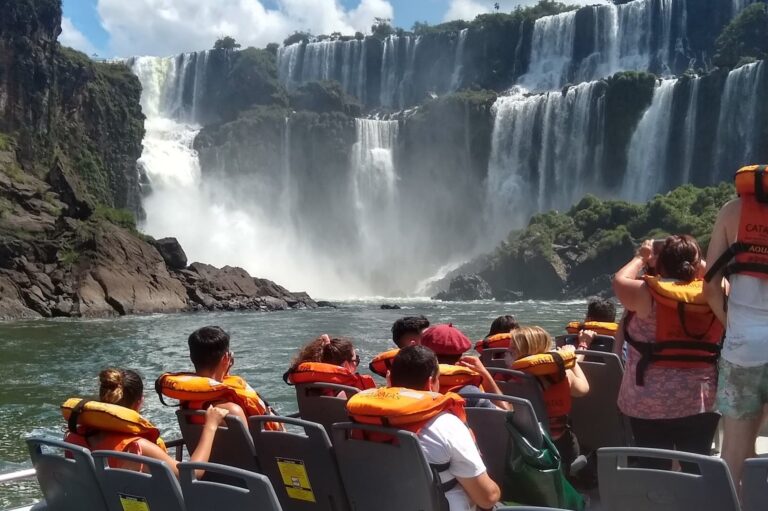
Experience the awe of Iguazu Falls on a 3-day tour from Buenos Aires. Book now for an unforgettable adventure!
From Price: USD190
German statutory or private health coverage may not pay all medical expenses in Argentina or Brazil.
A suitable Auslandskrankenversicherung should ideally cover:
Travellers participating in boat adventures, cycling or other active excursions should confirm that these activities are covered.
The park circuits are controlled and heavily visited. Normal travel precautions should still be observed in towns, airports and transport terminals.
Carry only what you need and keep phones, wallets and passports secure. Avoid leaving bags unattended in restaurants or hotel reception areas.
Book transfers through a recognised operator, hotel or official taxi service. Confirm the fare before departure when a meter is not used.
Photography is a major attraction, but expensive cameras should be stored discreetly when travelling through urban areas.
Store a digital copy separately from the original. A copy cannot replace the passport at immigration, but it can assist if the document is lost.
The waterfalls create difficult conditions for cameras because of mist, changing light and strong contrast.
Bring:
A wide-angle lens is useful on the Brazilian side, while a telephoto lens helps isolate individual waterfalls and photograph birds.
Morning light and reduced crowds often produce better conditions. However, no particular hour guarantees perfect light because mist and cloud cover change rapidly.
Experience the Best of Argentina: From the Vibrant Buenos Aires to the Stunning Ibera Wetlands and Majestic Iguazu Falls!

Yes. Iguazu is completely different from Buenos Aires and adds rainforest, wildlife and one of the world’s great natural spectacles to an Argentine itinerary.
It is technically possible but not recommended. Border delays and the size of the Argentine park make the schedule stressful. One day per side provides a much better experience.
No. Airport transfers, public buses, taxis and organised excursions connect the airports, towns and parks. A rental car can be useful for independent travel but introduces insurance and border-crossing complications.
Yes, provided visitors choose circuits appropriate to their mobility and tolerate heat and humidity. Private transportation and a slower itinerary can make the visit more comfortable.
Yes. The walkways, trains, wildlife and waterfalls can be fascinating for families. Children must be supervised closely near animals, water and crowded viewpoints.
The principal circuits are not technically difficult, but the distance, humidity, stairs and slippery surfaces can be tiring.
Iguazu is a permanent waterfall system. Water volume changes naturally according to rainfall. Very high water can close certain walkways, while lower flow reveals more of the rock formations.
English is often sufficient in major hotels and tourism services, but not everywhere. Learning a few Spanish and Portuguese phrases is helpful and appreciated.
German-speaking guides may be available with advance booking. Supply is limited, particularly during busy seasons.
Restaurants may sell beverages according to their own policies, but hydration should be prioritised. German beer drinkers may enjoy trying local Argentine and Brazilian craft beers after returning to town.
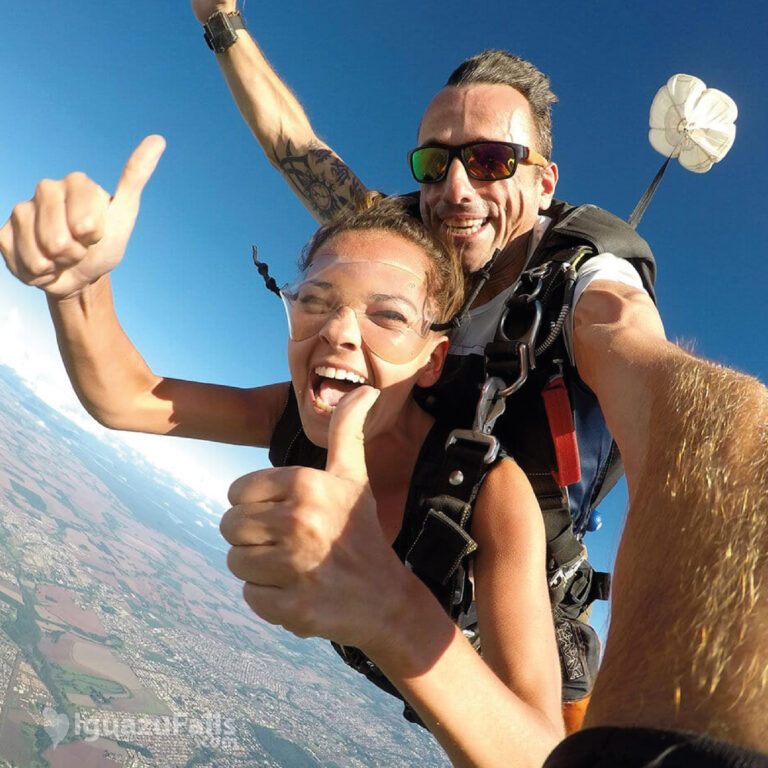
An amazing adventure program to enjoy Iguazu Falls with some extreme activities
Transfer to Puerto Iguazu or Foz do Iguaçu. Check in and spend the afternoon relaxing.
If staying in Puerto Iguazu, visit the Three Borders Landmark near sunset. Enjoy a local dinner and prepare your tickets for the following morning.
Leave early for Iguazu National Park. Explore the main circuits and Devil’s Throat, subject to current conditions.
Allow a full day and wear quick-drying clothing. Return to the hotel for a relaxed evening.
Cross the border with your passport and visit the Brazilian park. Walk the panoramic trail and spend additional time on one of the nature routes if available.
Optional additions include the Bird Park or a cycling experience.
Transfer to IGR or IGU airport. Allow additional time if the airport is located across the international border from your hotel.
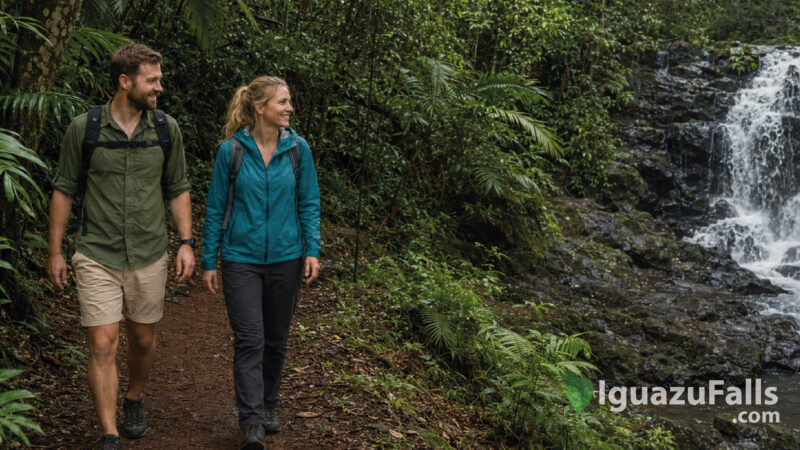
Before travelling, remember these essential points:
For German travellers, Iguazu Falls combines many qualities that make a long-distance journey worthwhile: extraordinary landscapes, protected ecosystems, wildlife observation, accessible walking routes and meaningful cultural encounters.
The destination rewards good preparation, but it also invites visitors to accept an element of unpredictability. Rain may arrive suddenly, a coati may interrupt the walk, the river may be unusually powerful and the border may take longer than expected.
That unpredictability is part of Iguazu’s character.
Gute Reise und viel Freude an den Iguazú-Wasserfällen!
Have a wonderful journey and enjoy Iguazu Falls!
Experience the wonder of Iguazu Falls on a private 2 day tour from Buenos Aires. Easily reserve accommodations and optional activities. Book now!
From Price: USD150
Experience the awe of Iguazu Falls on a 3-day tour from Buenos Aires. Book now for an unforgettable adventure!
From Price: USD190
