Iguazu Falls for Educational Groups

Educational Tours in Iguazu Falls

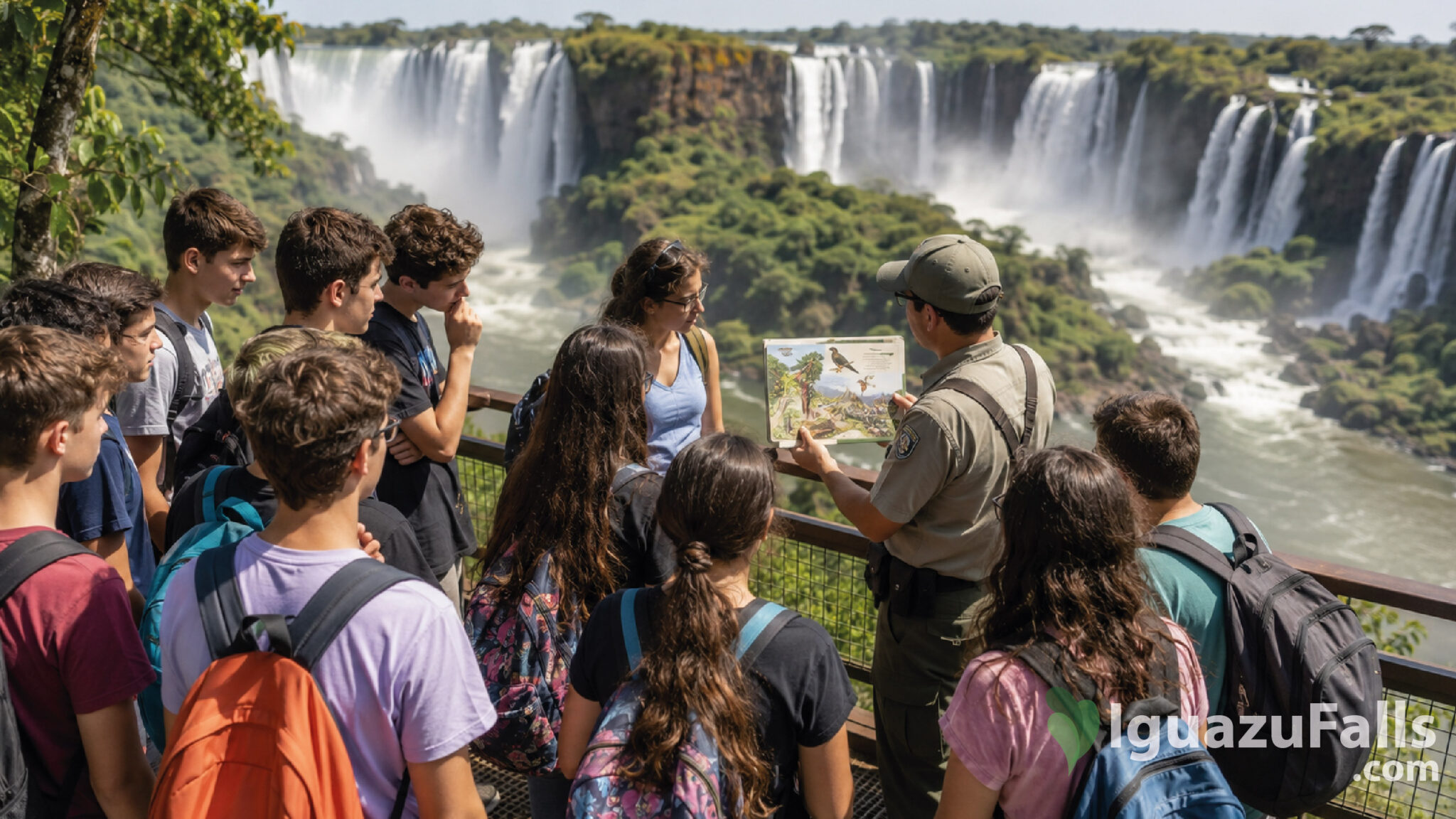
Iguazu Falls is one of South America’s most valuable outdoor classrooms. A school or university group can study geology, biodiversity, hydrology, conservation, Indigenous culture, sustainable tourism and international geography within one destination.

The visit becomes truly educational when learning objectives are established before arrival. Simply taking students to the viewpoints produces memorable photographs; a structured program turns the same journey into field-based learning.

Why Iguazu Is Ideal for Educational Travel

The destination brings multiple subjects together:

  • Geography
  • Geology
  • Biology
  • Environmental science
  • Climate studies
  • Tourism management
  • History
  • Indigenous cultures
  • Spanish and Portuguese
  • International relations
  • Photography
  • Visual arts

The Argentine and Brazilian parks protect one connected ecosystem but use different visitor infrastructure and management systems. This creates opportunities for comparative learning.

Suggested Learning Objectives

By the end of the program, students may be able to:
  • Explain how basalt and erosion formed the falls.
  • Distinguish Atlantic Forest from Amazon rainforest.
  • Identify selected native species.
  • Describe the importance of a transboundary protected area.
  • Evaluate tourism’s environmental impact.
  • Understand why river flow changes.
  • Compare conservation policies in two countries.
  • Recognize the cultural importance of the Guaraní people.
  • Discuss sustainable visitor management.
  • Collect and interpret field observations.

Educational Tours in Iguazu Falls

Geography and Geology

The waterfall front extends for approximately 2.7 kilometers and descends over basalt formed by ancient volcanic activity.

Students can observe:

  • Multiple river channels
  • Forest-covered islands
  • Resistant basalt ledges
  • Two-step cascades
  • Erosion
  • A narrow downstream canyon
  • Differences between high and low water

A geology assignment might ask students to sketch a waterfall profile and identify how rock structure controls the movement of water.

Biodiversity and Atlantic Forest

Iguazu is not part of the Amazon. It belongs to the Atlantic Forest, one of the continent’s most diverse and threatened ecosystems.

UNESCO reports more than 2,000 plant species, around 400 bird species and as many as 80 mammal species within the broader protected ecosystem.

Students may encounter:

  • Coatis
  • Capuchin monkeys
  • Toucans
  • Plush-crested jays
  • Butterflies
  • Swifts
  • Lizards
  • Orchids
  • Bromeliads
  • Native palms

Wildlife observation must remain nonintrusive. Feeding animals is prohibited and undermines conservation.

Hydrology and Climate

The appearance of Iguazu changes with rainfall throughout its river basin.

Students can investigate:

  • Watersheds
  • Tributaries
  • Seasonal rainfall
  • River discharge
  • Flood risk
  • Water color
  • Sediment transport
  • Climate variability
  • Infrastructure resilience

An important lesson is that local weather does not immediately determine water volume. Rain upstream may affect the falls even when the park itself is sunny.

6-Night Tour: Buenos Aires & Iguazu Falls with Grand Hotels

Experience Argentina’s Icons with Comfort and Style

Indigenous Culture

Guaraní peoples inhabited the region long before modern national borders.

Educational programs can explore:

  • Guaraní language
  • The origin of the name Iguazu
  • Traditional forest knowledge
  • The legend of Naipí and Tarobá
  • Contemporary Indigenous communities
  • Cultural continuity
  • Land and environmental relationships

A community visit should be arranged through a responsible program that respects privacy, local authority and fair compensation.

Students should understand that Guaraní communities are contemporary societies—not staged remnants of the past.
Educational Tours in Iguazu Falls

Sustainable Tourism

Iguazu offers a practical case study in managing millions of interactions between visitors and a sensitive natural environment.

Topics may include:

  • Carrying capacity
  • Waste management
  • Internal public transportation
  • Accessible tourism
  • Trail design
  • Wildlife–human interaction
  • Water and energy use
  • Commercial concessions
  • Ranger responsibilities
  • International cooperation

Students can compare the Argentine Ecological Jungle Train with the Brazilian panoramic-bus system.

Birdwatching in Yacutinga Rainforest Lodge

Enjoy a unique 3-night birdwatching tour in rainforest lodge
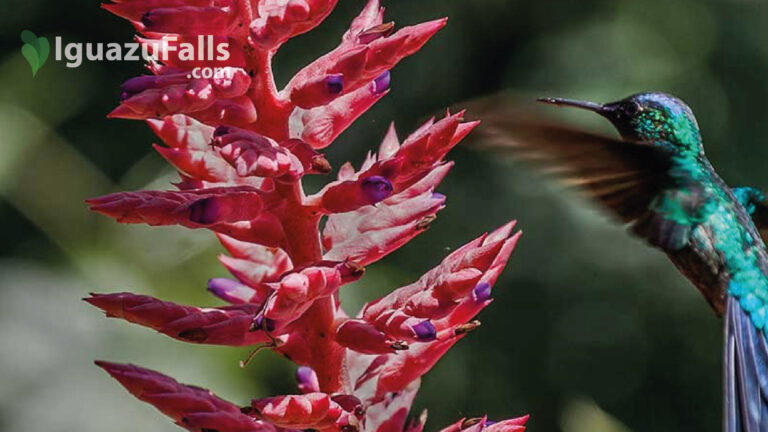
Birdwatching in Yacutinga Rainforest Lodge

Visiting the Argentine Side

The Argentine park normally requires a full day.

Its educational value comes from the variety of perspectives:

Upper Circuit

Useful for studying the upper river, islands and waterfall edge.

Lower Circuit

Provides a different understanding of elevation, canyon walls and forest structure but involves more stairs and physical effort.

Devil’s Throat

Demonstrates how multiple channels converge into a powerful canyon head.

Ecological Jungle Train

Offers a case study in moving large visitor numbers while limiting private vehicles.

The park’s official visitor information states that principal circuits and the train are accessible to people with reduced mobility. Wheelchairs, adapted restrooms, first aid and assistance transportation are also available, subject to conditions and availability.

Argentina, Brazil, & Paraguay Border: Triple Frontier

One single amazing destination, three different countries!
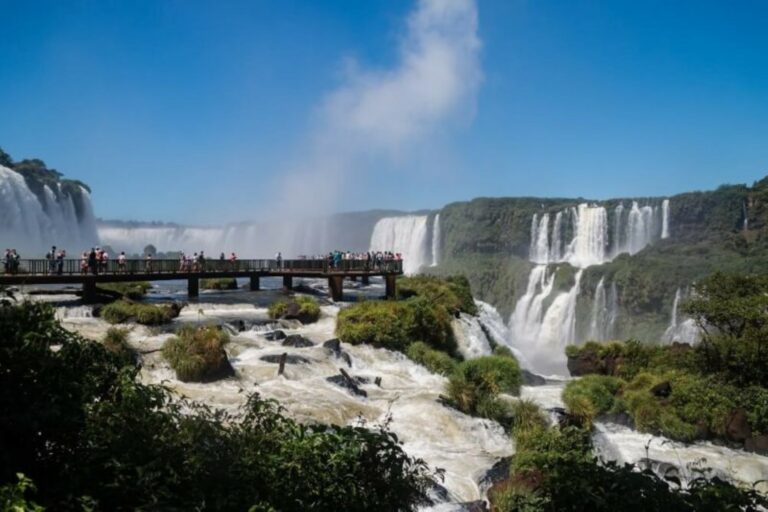
Argentina, Brazil, & Paraguay Border: Triple Frontier

Visiting the Brazilian Side

The Brazilian park is particularly effective for understanding the complete shape of the waterfall system.

Its principal trail provides:

  • Panoramic views
  • Observation of the Argentine waterfall front
  • A progressive approach toward Devil’s Throat
  • Elevators near the final viewpoints
  • Internal bus transportation

The visit can normally be completed in half a day, leaving time for a workshop or another educational attraction.

Educational Tours in Iguazu Falls

Additional Educational Attractions

Bird Park

Parque das Aves, near the Brazilian national park, can complement lessons about birds, conservation and wildlife rehabilitation.

Itaipu

The Itaipu hydroelectric complex provides a contrasting study of renewable energy, engineering, international cooperation and large-scale environmental impact.

Guaraní Community Visits

Properly organized visits can introduce students to contemporary culture, crafts, language and community-led tourism.

Biodiversity Walks

Specialist guides can focus on plants, insects, birds or forest ecology rather than providing only a general tour.

Activities Before the Trip

Teachers can assign:

  • A watershed map
  • Species research
  • A glossary in Spanish and Portuguese
  • A comparison of the two national parks
  • Research on the Guaraní world
  • A climate analysis
  • A sustainable-tourism proposal
  • A photographic ethics discussion

Pre-trip preparation reduces the temptation to treat the destination merely as entertainment.

Activities Inside the Parks

Students might complete:

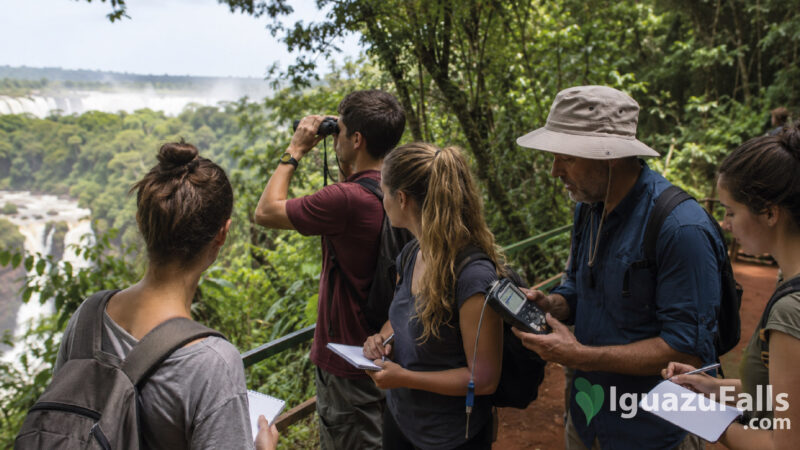
  • Field journals
  • Species checklists
  • Sound maps
  • Landscape sketches
  • Water-flow observations
  • Visitor-behavior surveys
  • Accessibility assessments
  • Interpretive-sign reviews
  • Tourism-impact notes

Activities must not obstruct trails or involve collecting plants, rocks, animals or water samples without authorization.

Buenos Aires, Bariloche, Iguazu Falls

Visit Three Beautiful Destinations in 9 Nights

Post-Trip Projects

Possible final assignments include:

  • Documentary video
  • Environmental podcast
  • Photo essay
  • Comparative park-management report
  • Exhibition
  • Debate about tourism capacity
  • Geological model
  • Bilingual visitor guide
  • Conservation campaign
  • Reflection journal

Age-Appropriate Planning

Primary School Groups

Prioritize:

  • Short routes
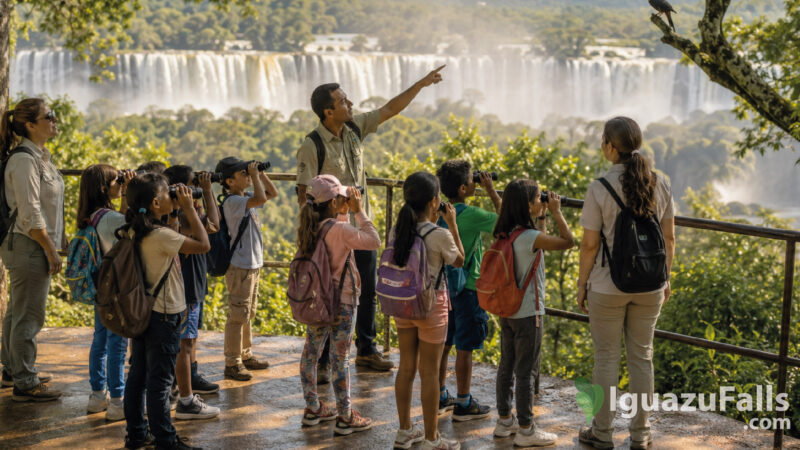
  • Wildlife observation
  • Water and forest themes
  • Frequent restroom breaks
  • Simple field activities
  • Strong supervision

Secondary School Groups

Add:

  • Geology
  • Conservation dilemmas
  • Cross-border geography
  • Indigenous cultural context
  • Data collection
  • Group presentations

University Groups

Develop:

  • Specialist fieldwork
  • Meetings with professionals
  • Research methods
  • Policy comparison
  • Tourism-management analysis
  • Biodiversity interpretation

Student Safety

The main risks are generally environmental and logistical rather than wildlife attacks.

Teachers should prepare for:

  • Heat
  • Humidity
  • Sudden rain
  • Slippery surfaces
  • Mosquitoes
  • Students becoming separated
  • Dehydration
  • Food allergies
  • Border delays
  • Adventure-activity restrictions

Essential Safety Rules

  • Wear closed, non-slip footwear.
  • Stay inside assigned subgroups.
  • Do not climb railings.
  • Never feed wildlife.
  • Carry water.
  • Use insect repellent.
  • Follow ranger instructions.
  • Avoid running on wet walkways.
  • Report illness immediately.
  • Remain with the designated adult.

Afternoon Iguazu Falls Tour with Sunset & Drinks – Brazil Side

Enhance your visit to Iguaçu National Park in Brazil and experience a breathtaking sunset at Iguazu Falls with a delightful drink in hand.

  • Nature
  • Traditional

From Price: USD139

Boat Rides and Adventure Activities

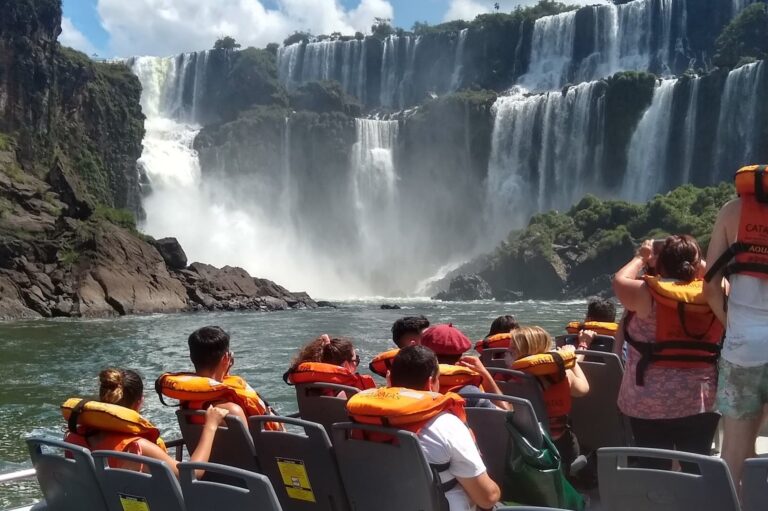
High-speed boat excursions involve rapids, abrupt movement and complete soaking. They may exclude participants based on age, medical conditions or ability to respond independently in an emergency.

For student groups:

  • Verify minimum age.
  • Obtain parental consent.
  • Review medical restrictions.
  • Make participation optional.
  • Provide a supervised alternative.
  • Keep passports and electronics dry.
  • Confirm swimming ability requirements.
  • Maintain accurate passenger lists.

An adventure excursion should not replace the educational core of the visit.

Documentation for Minors

Crossing between Argentina and Brazil can require more than a passport.

Depending on nationality and family circumstances, students may need:

  • Passport
  • Visa or electronic authorization
  • Parental travel authorization
  • Birth certificate
  • School letter
  • Group passenger list
  • Medical authorization
  • Custody documentation

Requirements should be checked with both countries and the airline well before departure.

Chaperone Organization

A successful educational group needs clearly defined responsibilities.

Assign adults to:

  • Student subgroups
  • Medication
  • Documentation
  • Head counts
  • Hotel floors
  • Airport movements
  • Dietary requirements
  • Emergency communication
  • Adventure activities

Every student should know their subgroup leader and emergency meeting point.

Birdwatching In Iguazu Falls

DISCOVER A WONDERFUL PLACE TO ENJOY BIRDWATCHING. BE READY WITH YOUR BINOCULARS.

Recommended Three-Night Program

Day 1: Arrival and Orientation

Introduce the ecosystem, group rules and learning objectives.

Day 2: Argentine National Park

Complete structured field activities across the enabled circuits.

Day 3: Brazilian Park and Educational Workshop

Visit the panoramic trail, then add the Bird Park, Itaipu or a conservation session.

Day 4: Final Reflection and Departure

Students share observations before leaving.

Accommodation for Educational Groups

Look for:

  • Twin and triple rooms
  • Secure floors
  • Coach access
  • Early breakfast
  • Meeting space
  • Packed-lunch capability
  • Swimming-pool supervision rules
  • 24-hour reception
  • Dietary flexibility
  • Separate staff rooms
  • Reliable Wi-Fi
  • Medical assistance procedures

Rooming lists and safeguarding policies should be finalized before arrival.

Frequently Asked Questions

Is Iguazu Appropriate for School Groups?

Yes. It is highly suitable when the program includes learning objectives, qualified guides, documentation and appropriate supervision.

Can Students Collect Leaves or Rocks?

No. Removing natural material from a national park is generally prohibited unless part of an authorized research project.

Is One Day Enough?

One day is enough for only one side. At least two park days are recommended for a complete comparative program.

Are the Parks Accessible?

Major areas are accessible, but route length and stairways vary. Individual requirements should be reviewed with the parks before travel.

Final Recommendations

The best educational programs connect the emotional power of the falls with structured investigation.

A strong itinerary should include:

  • Pre-trip preparation
  • Qualified environmental interpretation
  • Both national parks
  • Safe student subgroups
  • Respectful cultural learning
  • Post-trip assessment
  • Realistic walking distances
  • Optional rather than compulsory adventure activities

Iguazu can teach students that geography, ecology, culture and tourism do not exist separately. They meet in one dynamic landscape shared by multiple communities and countries.

★★★★★ (7 reviews - 5 ★)

2 Day Trip to Iguazu Falls From Buenos Aires

Experience the wonder of Iguazu Falls on a private 2 day tour from Buenos Aires. Easily reserve accommodations and optional activities. Book now!

  • Traditional

From Price: USD150

★★★★★ (6 reviews - 5 ★)

3 Day Tour to Iguazu Falls From Buenos Aires

Experience the awe of Iguazu Falls on a 3-day tour from Buenos Aires. Book now for an unforgettable adventure!

  • Traditional

From Price: USD190

Picture of Ramiro Rodriguez

Ramiro Rodriguez

25 years working in the travel industry, as Sales & Marketing Manager at RipioTurismo. Marketing Manager at Nuevas Ideas Travel Consulting Group. Writer and travel lover.

Table of Contents