
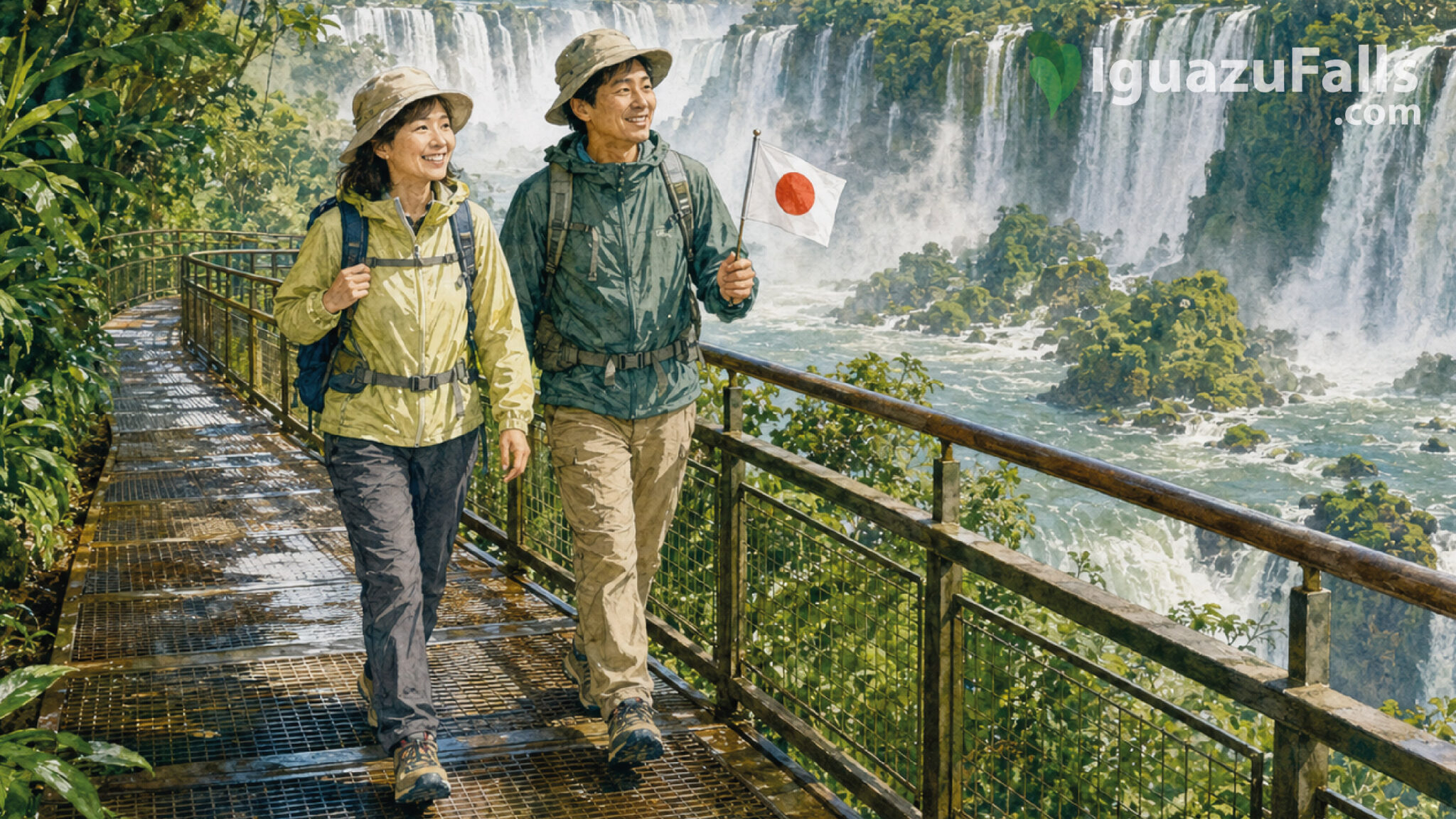
For travelers coming from Japan, Iguazu requires more preparation than a typical journey within Asia. The distance is considerable, the time difference is exactly twelve hours, Spanish and Portuguese are the principal languages, and the electrical systems differ significantly from Japan’s. However, with careful planning—旅の準備 tabi no junbi—the experience is remarkably accessible and absolutely worth the long journey.
This guide covers both the Argentine and Brazilian sides, transportation, immigration, weather, health, money, food, electricity, packing, cultural differences, language assistance, itineraries, accessibility, and practical advice specifically relevant to Japanese visitors.
Iguazu is not a single waterfall. It is a vast system of cascades extending for almost three kilometres along the Iguazu River. Depending on rainfall and river conditions, visitors may see roughly 275 individual drops surrounded by dense subtropical forest.
The experience is divided between two national parks:
Both are UNESCO World Heritage sites. The Argentine park protects more than 67,000 hectares of the Paraná Forest, while the Brazilian park provides some of the most impressive panoramic views of the entire waterfall system. Argentina’s National Parks Administration and the official Brazilian park website provide current visitor information.
A useful way to understand the difference is:
| Argentine side | Brazilian side |
|---|---|
| Immersive and extensive | Panoramic and visually dramatic |
| Numerous walkways and circuits | One principal waterfall trail |
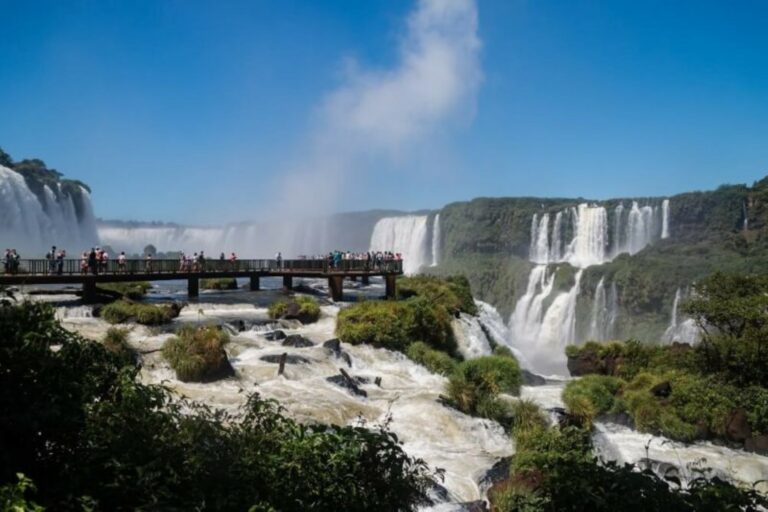
| Visitors walk above, below, and between cascades | Visitors look across the river toward the main waterfall system |
| Usually requires a full day | Usually requires half a day, or longer with additional activities |
| Best for exploring in detail | Best for understanding the overall scale |
The best recommendation—おすすめ osusume—is to visit both sides.
One single amazing destination, three different countries!
| Subject | Argentine side | Brazilian side |
|---|---|---|
| Gateway city | Puerto Iguazú | Foz do Iguaçu |
| Airport | IGR | IGU |
| Language | Spanish | Portuguese |
| Currency | Argentine peso, ARS | Brazilian real, BRL |
| Electrical voltage | 220 V, 50 Hz | 127 or 220 V, 60 Hz |
| Main plug | Type I; Type C may also appear | Type N; Type C may also appear |
| Recommended visit | One full day | Half to one full day |
| Main highlight | Devil’s Throat and multiple circuits | Panoramic Waterfalls Trail |
| Japan time difference | Japan is 12 hours ahead | Japan is 12 hours ahead |
Both cities use UTC−3 throughout the year. Therefore, when it is 9:00 a.m. at Iguazu, it is 9:00 p.m. in Japan.
Japanese passport holders currently do not need a tourist visa for visits of up to 90 days. The Argentine Embassy in Japan states that holders of Japanese passports may enter without a visa for tourism and certain unpaid activities for up to 90 days, with the possibility of extension under Argentine regulations. Argentine Embassy in Japan
Japanese ordinary-passport holders are currently eligible for visa-free short tourist visits to Brazil, normally for up to 90 days. Because immigration arrangements can change, confirm the conditions applicable to your passport immediately before departure through an official Brazilian consular source. Brazilian Ministry of Foreign Affairs
Even if you are visiting the Brazilian park for only a few hours, you are entering another country. Bring your original passport—not only a photocopy—and complete immigration formalities in both directions.
You may also be asked for:
Border waiting times vary. Weekends, holidays, school vacations, and periods of heavy tourism can cause delays. A private transfer or organized tour can simplify the process, especially for travelers who do not speak Spanish or Portuguese.
If you plan to visit Ciudad del Este in Paraguay, remember that this is a third country with separate immigration rules. Iguazu Falls itself is not located in Paraguay.
There are no nonstop flights between Japan and Iguazu, so most journeys involve at least two connections. If your itinerary passes through the United States, Japanese travelers using the Visa Waiver Program generally require an approved ESTA even when merely transiting. Check every transit country’s rules before purchasing a ticket. United States Visa Waiver Program
DISCOVER A WONDERFUL PLACE TO ENJOY BIRDWATCHING. BE READY WITH YOUR BINOCULARS.

Most journeys begin at Narita, Haneda, Kansai, or another major Japanese airport and continue through one of several international hubs.
Common general routing patterns include:
Schedules and available routes change frequently. When possible, buy the international and domestic sectors on a single ticket. This provides greater protection if a delayed flight causes a missed connection.
Travelers entering through Argentina normally connect to Puerto Iguazú’s airport, code IGR.
Buenos Aires has two important airports:
Many international flights arrive at EZE, while domestic flights to Iguazu may leave from AEP. Transferring between these airports can take considerable time because of traffic. Never assume that a two- or three-hour connection is sufficient when an airport change is involved.
Travelers entering through Brazil usually connect to Foz do Iguaçu International Airport, code IGU. São Paulo’s principal international gateway is Guarulhos, GRU, although some domestic services may use Congonhas, CGH.
Check the airport code carefully when booking.
The twelve-hour time difference creates an almost complete reversal of the Japanese day-and-night cycle. Avoid scheduling a demanding park visit immediately after arrival.
A better plan is:

Experience the wonder of Iguazu Falls on a private 2 day tour from Buenos Aires. Easily reserve accommodations and optional activities. Book now!
From Price: USD150
Two nights is technically possible, but three or four nights provides a much better experience.
A recommended four-day plan:
Check into Puerto Iguazú or Foz do Iguaçu. Take a gentle walk, purchase supplies, organize local currency, and rest.
Spend a full day exploring the circuits and Devil’s Throat. Wear quick-drying clothing and arrive early.
Walk the main panoramic trail. Add the bird park, a boat excursion, or another forest activity if time and energy permit.
Use the morning for a nature activity, local cultural attraction, shopping, or an additional viewpoint. This extra time also protects the itinerary against bad weather, flight disruption, or temporary trail closures.
Travelers who enjoy wildlife, photography, birdwatching, or slower travel should consider four or five nights.

Explore the Brazilian side of Iguazu Falls and visit Parque das Aves in a single full-day experience.
From Price: USD95
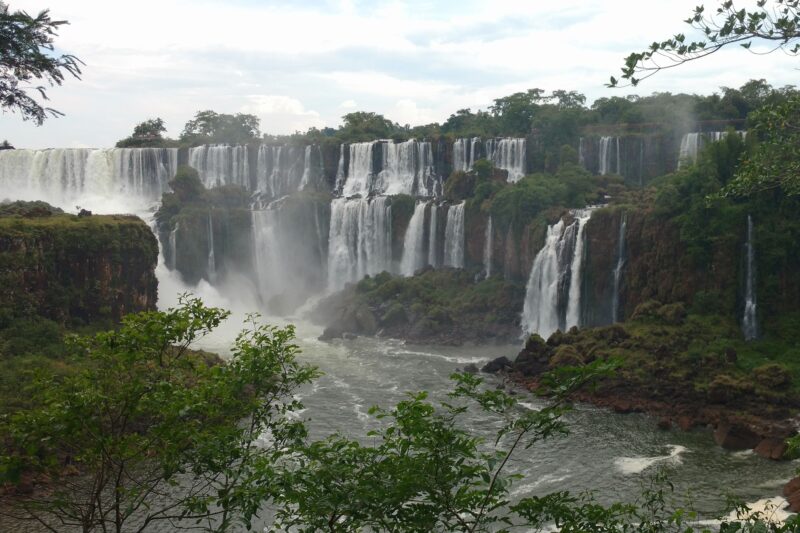
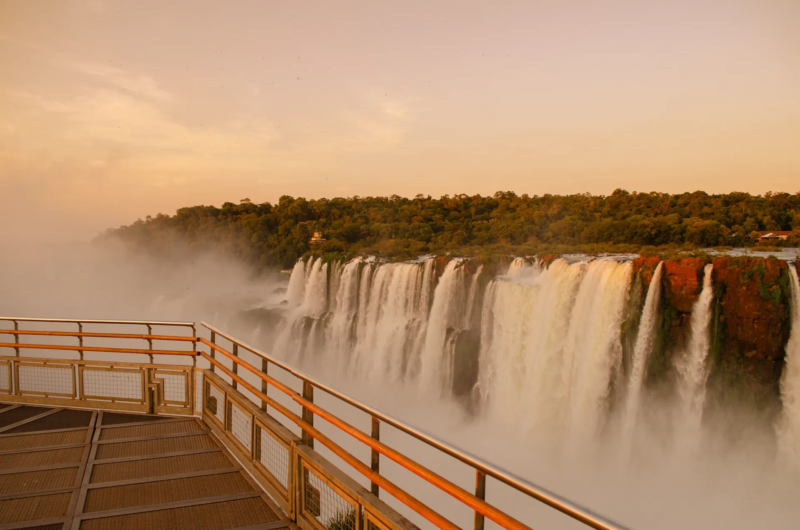
The Argentine side is the more extensive experience. It places visitors inside the waterfall landscape, with walkways running through forest, above river channels, and close to numerous cascades.
The Devil’s Throat is the largest and most powerful section of Iguazu Falls. Visitors normally reach the area using the park’s ecological train followed by an elevated walkway across the river.
The final viewpoint is intensely sensory. The water volume creates enormous clouds of mist, the sound can make conversation difficult, and the viewpoint may become completely wet.
Access can occasionally be interrupted by high water, flood damage, repairs, or adverse conditions. Verify the official park updates shortly before visiting.
The Upper Circuit provides elevated views from the top of several cascades. It is especially good for:
The Lower Circuit offers more intimate perspectives from below or beside several waterfalls. There are gradients, stairs, wet surfaces, and areas where the spray is stronger.
The train connects important sectors within the park. It is not a sightseeing train in the Japanese luxury-train sense; it is primarily a transportation system inside the protected area. At busy times, boarding may involve a wait.
Reserve a complete day, preferably from opening time until late afternoon. The official park asks visitors to respect the entry time selected with their ticket. Purchase tickets through the link provided by Argentina’s National Parks Administration.
The Brazilian side offers the classic panoramic perspective that appears in many photographs. From Brazil, visitors look toward the long wall of waterfalls located largely across the river.
The principal trail is approximately 1.5 kilometres long. Park buses take visitors from the entrance area to the beginning of the trail. The route passes a series of panoramic viewpoints and finishes near a walkway facing the Devil’s Throat.
Although the trail is shorter than the combined circuits in Argentina, do not rush it. The perspective changes constantly, and morning light, mist, birds, and cloud conditions can transform the view.
The Brazilian park also offers longer forest routes and special experiences, whose availability, operating times, and additional costs can vary. Buy admission and check current notices through the official Iguaçu National Park tourism website.
The Parque das Aves, located close to the Brazilian national park entrance, is a popular complementary attraction. It focuses on birds of the Atlantic Forest and includes immersive aviaries. Allow approximately two to three hours if you wish to visit comfortably.
The principal waterfall visit may take three to five hours. Allow a full day if combining it with the bird park, a longer trail, a special sunrise or sunset program, or a boat excursion.
Experience Argentina’s Icons with Comfort and Style

Puerto Iguazú is smaller and often feels more relaxed. It is convenient for the Argentine park and offers restaurants, guesthouses, forest lodges, and hotels at different price levels.
It may suit travelers who prefer:
Foz do Iguaçu is considerably larger and has more extensive urban services, restaurants, shopping, and hotel options.
It may suit travelers who prefer:
Usually not. Changing accommodation consumes time and adds luggage complications. Choose one city as your base and make a day trip across the border.
A hotel experienced with international guests can organize transfers and help communicate with drivers. If English or Japanese-language assistance is important, confirm it directly before booking rather than assuming it will be available.

Iguazu can be visited throughout the year. There is no completely dry season, and heavy rain can occur at any time.
Expect hot, humid weather, strong sun, tropical rain, and busy holiday periods. Water flow can be impressive, but heat and humidity may be physically demanding.
Temperatures are often more comfortable, although rain remains possible. Late April and early May can work well for Japanese Golden Week travelers, but flights may be expensive because Golden Week is a major outbound-travel period.
Days are often mild, but cold fronts can produce unexpectedly cool mornings and evenings. Japanese travelers visiting during Obon should bring a light warm layer as well as rain protection.
Conditions become warmer and more humid. This can be an excellent period for observing butterflies, birds, flowers, and forest activity.
High water creates powerful falls and spectacular mist but can force temporary closure of exposed walkways. Lower water may reveal more rock formations and individual cascades. Neither condition is inherently “bad”; each creates a different experience.
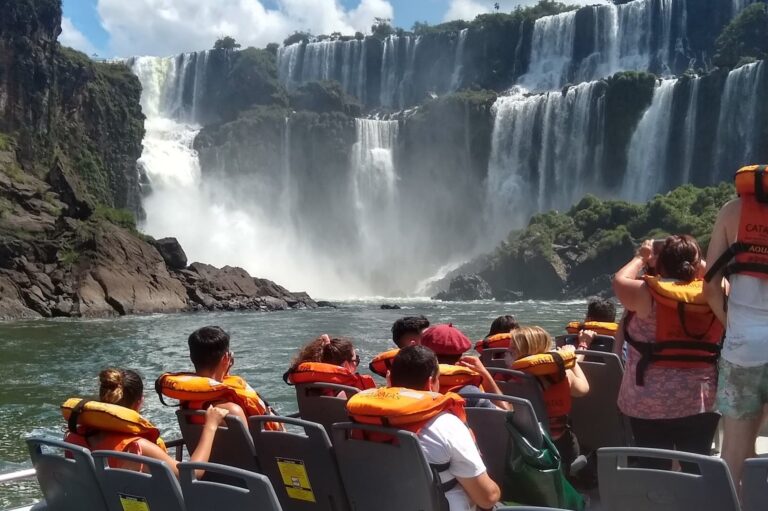
Experience the awe of Iguazu Falls on a 3-day tour from Buenos Aires. Book now for an unforgettable adventure!
From Price: USD150
Consult a travel medicine clinic ideally four to six weeks before departure. Japanese travelers should discuss the entire itinerary, not merely Iguazu, because recommendations may change if the trip also includes the Amazon, Pantanal, rural regions, or other South American countries.
International health authorities recommend yellow fever vaccination for many travelers visiting Misiones Province in Argentina and for travelers going to Iguaçu Falls in Brazil. Argentina and Brazil do not generally require the certificate from travelers arriving directly from Japan, but medical recommendations and entry requirements are different questions. Discuss vaccination suitability with a qualified doctor, especially for older travelers, pregnant travelers, young children, or people with immune conditions. CDC Argentina guidance and CDC Brazil guidance
Dengue, chikungunya, and Zika can occur in the region. Mosquito protection is important in towns as well as inside the forest.
Use:
The mosquitoes that transmit dengue can bite during the daytime, so repellent is not only an evening precaution.
The CDC states that there is no malaria transmission at Iguaçu Falls. However, recommendations may differ if your wider itinerary includes other parts of Brazil.
Comprehensive overseas travel insurance—海外旅行保険 kaigai ryokō hoken—is strongly recommended. Confirm coverage for:
Carry prescription medicines in their original packaging together with a copy of the prescription. A bilingual medical note can be useful for important medication.
Enjoy a unique 3-night birdwatching tour in rainforest lodge
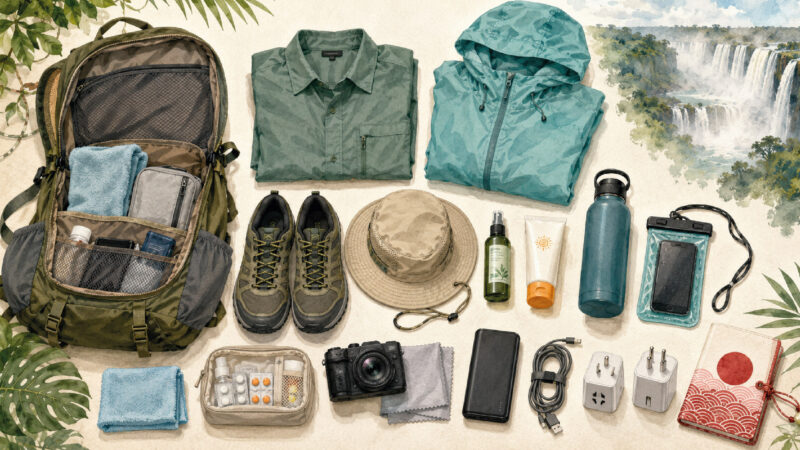
Iguazu is warm, wet, humid, and often slippery. The ideal clothing is practical rather than formal.
A compact Japanese folding umbrella is useful in town, but a poncho is generally better on crowded or windy park walkways.
Do not depend on disposable fashion raincoats of poor quality. Strong waterfall spray and wind can tear them easily.
If taking a boat near the falls, expect to become completely soaked. Bring:
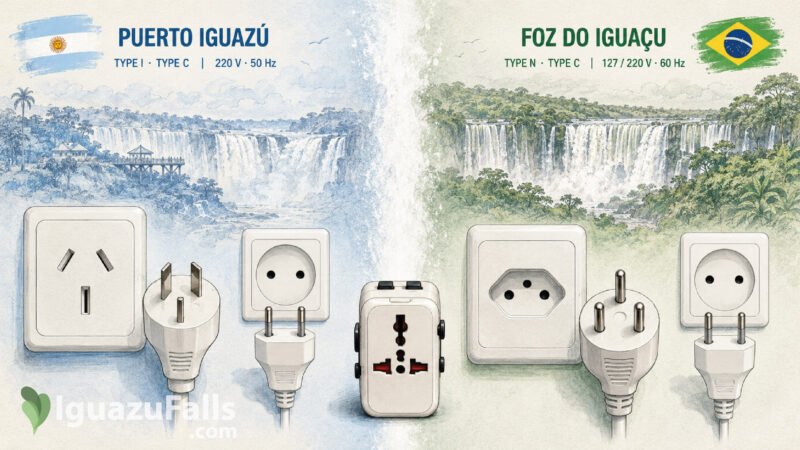
Japan uses 100 volts with Type A plugs, while Iguazu uses different plug shapes and potentially much higher voltage.
Puerto Iguazú generally uses:
Foz do Iguaçu generally uses:
A plug adapter changes only the shape of the plug. It does not change voltage.
Before connecting a device, read the charger label:
Input: 100–240 V, 50/60 Hz, an adapter is normally sufficient.100 V, do not connect it directly to a 127 V or 220 V outlet.Most modern smartphone, camera, tablet, and laptop chargers are dual-voltage, but always inspect the label. For a journey covering both countries, a high-quality universal adapter with Type I and Type N compatibility is the most convenient option.
An amazing adventure program to enjoy Iguazu Falls with some extreme activities
The local currency is the Argentine peso. Inflation and exchange conditions can change rapidly, so fixed prices printed months in advance may become unreliable.
The local currency is the Brazilian real.
Visa and Mastercard are widely accepted at hotels, established restaurants, and official attractions. JCB acceptance is less universal than in Japan, so carry a Visa or Mastercard backup.
Good practice includes:
Brazil’s Pix payment system and some Argentine QR systems may require a local bank account or compatible application. Do not assume that a Japanese QR-payment service will work.
In Argentina, approximately 10% is customary in restaurants when service is not included. In Brazil, a service charge of around 10% is frequently added to the bill; check before adding another tip.
Tipping is more common than in Japan, but it remains less formal than in the United States.
Spanish is spoken in Puerto Iguazú, while Portuguese is spoken in Foz do Iguaçu. Guaraní also has deep cultural importance throughout the border region.
English may be available at international hotels and major attractions, but it is not guaranteed among drivers, small restaurants, shops, or immigration personnel.
Download offline translation packages for both Spanish and Portuguese. WhatsApp is far more widely used locally than LINE, so install and configure it before leaving Japan.
| English | Spanish | Japanese reading |
|---|---|---|
| Hello | Hola | オラ |
| Thank you | Gracias | グラシアス |
| Please | Por favor | ポル・ファボール |
| Where is the restroom? | ¿Dónde está el baño? | ドンデ・エスタ・エル・バニョ? |
| Without meat | Sin carne | シン・カルネ |
| I am allergic to… | Tengo alergia a… | テンゴ・アレルヒア・ア… |
| How much is it? | ¿Cuánto cuesta? | クアント・クエスタ? |
| I need help | Necesito ayuda | ネセシト・アユーダ |
| English | Portuguese | Japanese reading |
|---|---|---|
| Good morning | Bom dia | ボン・ジーア |
| Thank you | Obrigado / Obrigada | オブリガード/オブリガーダ |
| Please | Por favor | ポル・ファヴォール |
| Where is the restroom? | Onde fica o banheiro? | オンジ・フィカ・ウ・バニェイロ? |
| Without meat | Sem carne | セン・カルニ |
| I am allergic to… | Tenho alergia a… | テーニョ・アレルジア・ア… |
| How much is it? | Quanto custa? | クアント・クスタ? |
| I need help | Preciso de ajuda | プレシゾ・ジ・アジューダ |
For serious allergies, carry a printed card written by a fluent speaker. Automatic translation is helpful but should not be the only protection in a medical situation.
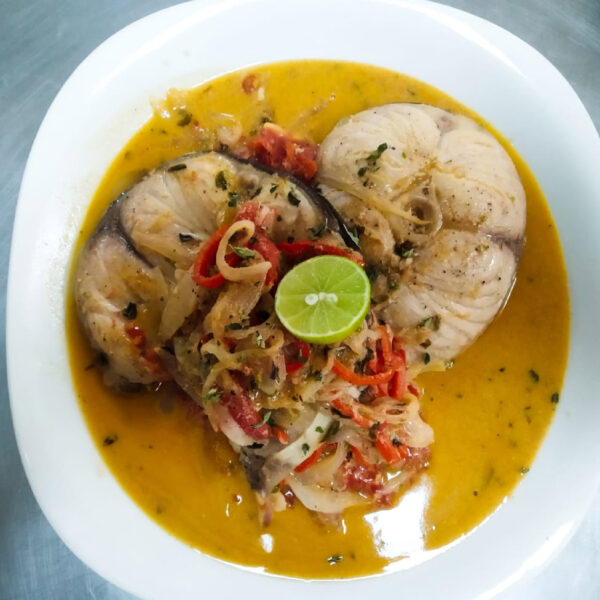
Typical options include:
Argentine dinner is often later than in Japan. Some restaurants may not become busy until after 8:30 or 9:00 p.m.
Typical foods include:
Japanese travelers may find Brazilian daily meals familiar in one respect: rice is extremely common. However, it is normally served as part of a plate with beans, meat, and side dishes rather than in the Japanese style.
Vegetarian travelers should be precise. “No meat” may not always be understood to exclude chicken broth, ham, fish, or lard.
Useful phrases:
Drink bottled or properly filtered water if uncertain about local tap-water conditions, and remain well hydrated during park visits.
DISCOVER A WONDERFUL PLACE TO ENJOY BIRDWATCHING. BE READY WITH YOUR BINOCULARS.
Iguazu is a major international destination, but normal precautions remain necessary.
Coatis frequently approach visitors because some have learned to associate people with food. They may appear friendly, but they can bite, scratch, open bags, and steal food.
Never feed them, touch them, or pose close beside them. Keep food inside a closed bag and supervise children. The Brazilian park’s official rules require visitors to maintain distance and not feed wildlife.
Also avoid touching monkeys, birds, reptiles, insects, or other wild animals.
Mist can make surfaces slippery even on a sunny day. Walk rather than run, use handrails where available, and keep both hands free when conditions are wet.
Follow all closures and ranger instructions. A barrier or closed walkway may indicate unstable water conditions, structural inspection, wildlife activity, or weather danger.

A historical visit about the Jesuit missions of the province of Misiones! Enjoy this full day excursion to San Ignacio Ruins and Wanda Mines.
From Price: USD100
Iguazu is spectacular but technically challenging to photograph because of mist, moving water, bright skies, deep forest shade, and water droplets.
Useful equipment includes:
For smooth water effects, use a slower shutter speed only from a stable location where tripods are permitted. In crowded areas, handheld photography is more considerate and practical.
Protect the camera before reaching the wettest viewpoint. Water spray can become intense without warning.
For smartphone photography:
Drone use is restricted and generally unsuitable inside protected national parks without specific authorization.
Many principal visitor areas use paved paths, elevated walkways, buses, or trains. Nevertheless, accessibility can change because of maintenance, high water, lift availability, gradients, and temporary closures.
Travelers with limited mobility should contact both parks before visiting and ask about:
Older visitors should allow more time, take hydration breaks, and avoid trying to complete every circuit rapidly. A private guide can reduce uncertainty and adjust the pace.
Families should keep young children close on elevated walkways and around wildlife. A lightweight stroller may be useful in some sectors, but wet surfaces, crowds, gradients, and steps can limit where it can be used.
Iguazu protects one of the most important surviving areas of the Atlantic Forest. Visitors share the environment with toucans, butterflies, coatis, monkeys, reptiles, insects, and many less visible species.
Practice responsible travel—責任ある旅行 sekinin aru ryokō:
The forest is not simply a decorative background for the waterfalls; it is essential to the ecological health of the entire watershed.
Before leaving Japan, confirm the following:
Park hours, ticket prices, trail access, entry rules, and health recommendations can change. Reconfirm everything shortly before departure through the official Argentine park, Brazilian park, consular, airline, and health-authority websites.
For a Japanese traveler, Iguazu Falls is not a casual weekend destination. It requires a long flight, careful connections, adaptation to a twelve-hour time difference, two currencies, two languages, two electrical systems, and potentially two international border crossings.
Yet this complexity is also part of what makes the journey exceptional.
On the Argentine side, you enter the landscape and experience the waterfalls from above, below, and within the forest. On the Brazilian side, you finally understand the scale of the entire system. Mist rises into the sky, tropical birds cross the river, butterflies gather near the paths, and the sound of the Devil’s Throat can be felt as much as heard.
The Japanese expression 一期一会—ichigo ichie, “one time, one meeting”—is particularly appropriate here. Water levels, weather, sunlight, wildlife, and mist are never exactly the same twice. Every visit to Iguazu is a unique encounter with one of South America’s greatest natural landscapes.
Experience the wonder of Iguazu Falls on a private 2 day tour from Buenos Aires. Easily reserve accommodations and optional activities. Book now!
From Price: USD150
Experience the awe of Iguazu Falls on a 3-day tour from Buenos Aires. Book now for an unforgettable adventure!
From Price: USD150
