
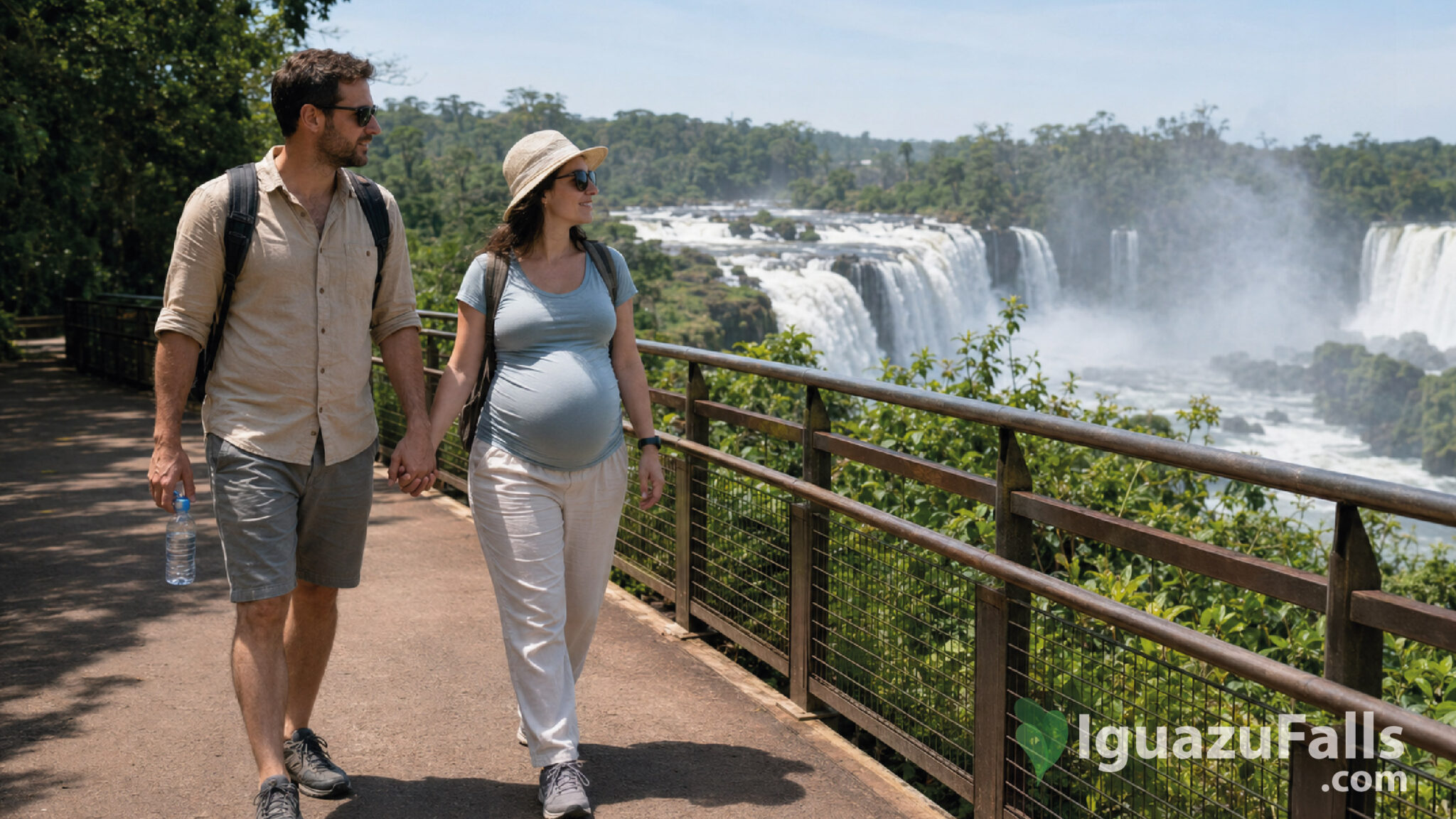
Visiting Iguazu Falls during pregnancy is generally possible for women with an uncomplicated pregnancy and medical clearance. The destination does not involve high altitude or technical hiking, and many of its principal viewpoints are reached through paved paths, ramps, trains, buses and elevators.
However, Iguazu is a subtropical destination. Heat, humidity, long walking distances, wet surfaces and mosquitoes require additional planning during pregnancy. A comfortable visit should prioritize gentle itineraries, frequent breaks and easy access to transportation rather than trying to complete every trail in a single day.
This guide provides general travel information and does not replace advice from an obstetrician or other qualified healthcare professional.
For most women experiencing a healthy pregnancy, a carefully planned visit to Iguazu Falls can be safe and enjoyable. The final decision should nevertheless be made with the traveler’s prenatal healthcare provider.
Medical advice is particularly important for women with:
The American College of Obstetricians and Gynecologists recommends discussing travel with a healthcare professional and considering access to medical care at the destination. For many women with uncomplicated pregnancies, the middle months may be the most comfortable period for travel because early nausea has often improved and third-trimester mobility limitations have not yet become pronounced. Every pregnancy, however, is different. ACOG’s pregnancy travel guidance should always be interpreted together with personalized medical advice.
One single amazing destination, three different countries!
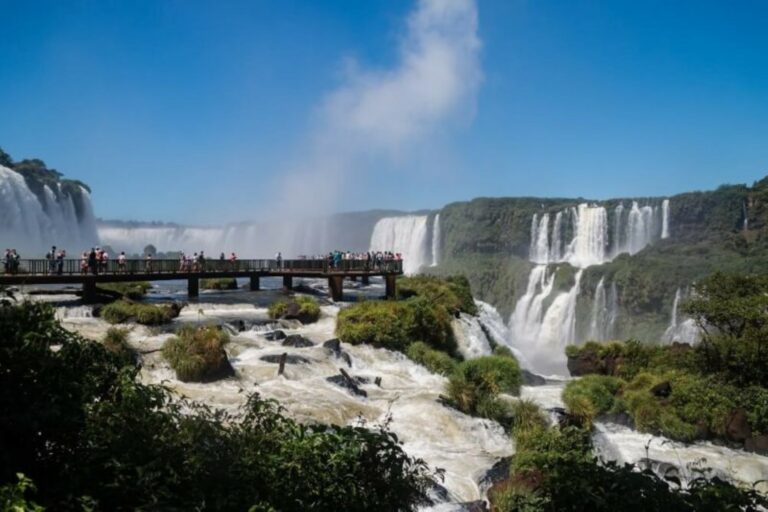
Iguazu Falls can be visited from Argentina and Brazil. Both national parks are possible during pregnancy, but they offer different experiences.
The Brazilian side is usually the easiest option for travelers who need to minimize walking time.
Its principal route provides panoramic views across the falls and can normally be completed in half a day. Internal park buses transport visitors from the entrance to the waterfall area, while elevators facilitate access between some of the principal observation levels.
The trail still includes sections with slopes and stairs. Visitors who want to avoid these can remain near the upper viewpoints and use the elevator where available.
The Brazilian side may be preferable when:
The Argentine side offers a much closer encounter with the waterfalls, but it is a larger park with several separate circuits. A complete visit can involve hours of walking, waiting for trains and standing on exposed walkways.
Fortunately, the Ecological Jungle Train connects the main visitor areas, and several important routes have ramps and relatively level walkways. The park recommends comfortable footwear, drinking water and insect repellent because the waterfall area remains a natural subtropical environment. Iguazú Argentina’s official visitor guidance should be checked shortly before the visit for operational changes.
Pregnant travelers should not feel obligated to complete every circuit. Dividing the Argentine side into a relaxed itinerary is usually more comfortable than treating it as a full-day endurance activity.
Experience the awe of Iguazu Falls on a 3-day tour from Buenos Aires. Book now for an unforgettable adventure!
From Price: USD190
The Upper Circuit on the Argentine side is generally one of the most suitable options. It provides impressive views from above the waterfalls and is predominantly composed of elevated walkways.
Although it is easier than routes involving many stairs, it still requires a considerable amount of walking. Rest before starting, carry water and proceed slowly.
The Devil’s Throat is reached by taking the park train and then following a long, mostly level walkway over the river.
The absence of major elevation changes makes the route technically manageable for many pregnant visitors. However, its total walking distance, sun exposure, crowds and limited shade along parts of the walkway should be considered.
Useful precautions include:
If the traveler develops pelvic discomfort, dizziness or unusual fatigue, it is better to skip this circuit.
The Lower Circuit is typically more demanding because it includes elevation changes, slopes and stairs. Surfaces can also become wet from rain and waterfall spray.
Women with reduced mobility, balance problems, pelvic pain or significant fatigue may prefer to avoid the complete circuit or visit only its easiest accessible sections.
The principal Brazilian trail offers panoramic viewpoints along a relatively compact route. Some sections involve stairs and uneven gradients, but it is possible to shorten the experience and concentrate on the most accessible viewpoints.
Ask park staff which sections can be reached with the least walking on the day of the visit, as elevators or individual areas may occasionally be unavailable.
A pregnant traveler should ideally visit the two parks on separate days:
Allow approximately half a day, using internal park transportation and limiting unnecessary stairs.
Choose one or two priority circuits instead of attempting every available trail. For example:
An additional free day is valuable in case extreme heat, heavy rain or pregnancy symptoms make it necessary to postpone an excursion.
Iguazu has a humid subtropical climate. Summer temperatures can be intense, while high humidity makes physical activity feel more demanding.
Pregnancy increases sensitivity to heat and dehydration. Even a straightforward walkway may feel strenuous during a hot afternoon.
Do not wait until becoming thirsty to drink. Water should be consumed regularly throughout the excursion, especially after walking in exposed areas.
One single amazing destination, three different countries!
Mosquito protection is particularly important in Iguazu’s subtropical forest. Mosquito-borne illnesses can occur in northeastern Argentina and southern Brazil, and epidemiological conditions may change.
The CDC states that registered repellents containing ingredients such as DEET or picaridin are considered safe and effective for pregnant and breastfeeding women when used according to their labels. Travelers should confirm the most appropriate product and concentration with their healthcare provider. CDC mosquito-prevention guidance also recommends loose-fitting long sleeves and trousers.
Medical advice should be obtained before receiving destination-specific vaccinations. Some vaccines and preventive treatments require special assessment during pregnancy.
The Iguazu region is associated with potential yellow fever exposure, but vaccination decisions during pregnancy require individual medical evaluation.
Pregnant travelers should not simply receive a vaccine at the last minute without consulting a travel-medicine specialist or obstetrician. The recommendation may depend on the current transmission risk, the exact itinerary, previous vaccination history and whether the journey can be postponed.
Arrange the consultation several weeks before departure whenever possible.

Enhance your visit to Iguaçu National Park in Brazil and experience a breathtaking sunset at Iguazu Falls with a delightful drink in hand.
From Price: USD139
Wet walkways are one of the most practical concerns at Iguazu Falls. Rain, waterfall spray and humidity can make surfaces slippery.
Pregnancy may also affect balance as the body’s center of gravity changes.
Choose:
Flip-flops, smooth-soled sandals and unstable platform shoes should be avoided inside the parks.
Always use handrails, walk slowly and allow faster visitors to pass.
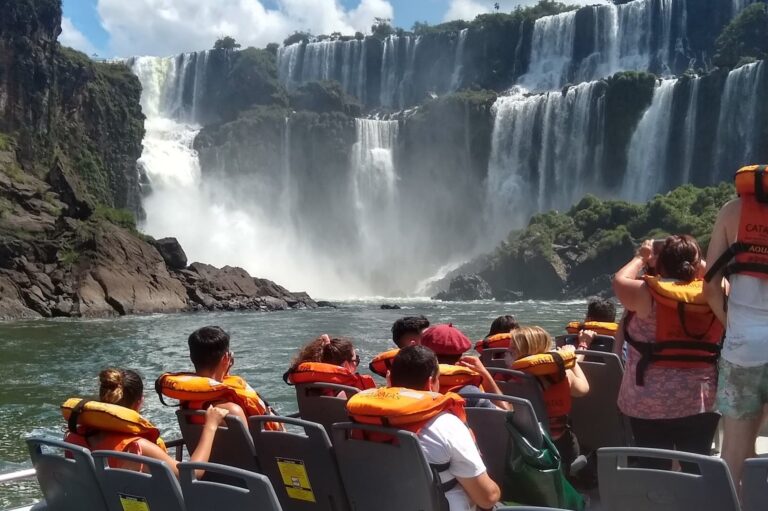
The boat excursions operating near the waterfalls involve speed, abrupt movement, heavy spray and significant physical impact. Some operators expressly restrict pregnant passengers.
Even if an operator does not request proof of pregnancy, this activity should generally be excluded unless the traveler’s physician and the operator both confirm that participation is appropriate. A pregnancy-friendly itinerary does not need a boat ride to provide an exceptional experience of the falls.
Extended forest trails can involve uneven ground, mud, roots, heat and limited access to restrooms or rapid assistance. They are less suitable for travelers with balance issues or limited physical endurance.
A standard sightseeing flight may not involve the same physical impact as a boat ride, but pregnant travelers should consult their physician and the helicopter operator. Boarding access, noise, vibration, flight restrictions and the stage of pregnancy must be considered.
Rappelling, rafting, climbing and similar high-impact activities should be removed from the itinerary during pregnancy.
Pregnant travelers should be especially careful about food hygiene.
Prefer:
Avoid:
Carry a small snack approved by the traveler’s healthcare provider. Crackers, fruit or a simple cereal bar can help when nausea appears or meals are delayed.
Visit Three Beautiful Destinations in 9 Nights

Restrooms are available in the main visitor areas, stations and restaurant zones, but they are not positioned at every viewpoint.
Pregnant travelers should use facilities whenever they are available, especially before:
Waiting until a restroom is urgently needed can create unnecessary discomfort.
Travelers visiting both sides must pass through immigration controls. The crossing is sometimes quick, but delays can occur during weekends, holidays and periods of heavy traffic.
Carry:
Use a private or organized transfer when possible. It provides better control over departure times, air conditioning and rest stops than an improvised journey.
Enjoy visiting the falls with two biking activities

Many airlines permit flying during an uncomplicated pregnancy, but rules vary according to gestational age, flight type and airline.
ACOG notes that many airlines allow travel until approximately 36 weeks, although international carriers may impose earlier limits. Pregnant passengers should check the exact airline policy rather than relying on a general rule. ACOG’s air-travel recommendations also emphasize individual medical assessment.
Before flying:
The most convenient hotel is not necessarily the most luxurious one. During pregnancy, location and practical services become especially important.
Look for:
Staying inside one of the national parks can reduce transportation time, but city hotels may provide easier access to pharmacies, restaurants and medical facilities.
Puerto Iguazú is the closest city to the Argentine park, while Foz do Iguaçu has a larger urban infrastructure on the Brazilian side.
An amazing adventure program to enjoy Iguazu Falls with some extreme activities
Travel insurance should explicitly include pregnancy-related medical assistance. Many policies exclude routine prenatal care, complications after a certain gestational week or any condition associated with a high-risk pregnancy.
Before purchasing coverage, ask:
Keep the assistance number accessible offline.
It is also advisable to identify the nearest suitable medical facility before arriving. Reception staff and tour operators can assist in an emergency, but travelers should not depend solely on having internet access at that moment.
A practical pregnancy packing list includes:
Do not begin unfamiliar medication simply because it is available locally. Ask the prenatal healthcare provider in advance which products may be used for nausea, headache, allergies, diarrhea or fever.
Stop the excursion and seek medical assistance if any of the following occurs:
Do not continue sightseeing in an attempt to “wait and see” if symptoms are severe or unusual.
Transfer directly to the hotel, drink water and avoid scheduling a major excursion after the flight.
Visit early in the morning. Use internal buses and elevators, pause at each major viewpoint and return to the hotel for lunch or an afternoon rest.
Arrive when the park opens, use the Ecological Jungle Train and complete the Upper Circuit at a slow pace. Have a long rest before deciding whether to add another attraction.
Visit Devil’s Throat only if the traveler feels well and weather conditions are comfortable. Otherwise, use the day to rest, enjoy the hotel or visit a less demanding attraction.
Allow extra time for airport procedures and avoid carrying luggage.
Many pregnant women can walk around the principal visitor areas if their pregnancy is uncomplicated and their doctor approves the trip. Distances should be reduced according to personal comfort, weather and gestational stage.
The Brazilian park has elevator access near the principal waterfall complex. The Argentine side relies more heavily on ramps, level walkways and the Ecological Jungle Train. Elevators and other facilities can occasionally be unavailable, so current conditions should be confirmed before visiting.
The route is mostly level but involves a long round-trip walk, outdoor exposure and possible crowds. It may be appropriate for some travelers and too demanding for others.
Boat operators may prohibit pregnant passengers, and the excursion involves speed, impact and abrupt movements. It is generally best to leave boat rides out of a pregnancy itinerary.
It can be possible with medical approval, but shorter walks, flexible plans and access to healthcare become increasingly important. Airline restrictions and the possibility of early labor must also be considered.
Three or four nights provide a comfortable pace. This makes it possible to visit each national park on a different day and preserve time for rest or weather-related changes.
Enhance your visit to Iguaçu National Park in Brazil and experience a breathtaking sunset at Iguazu Falls with a delightful drink in hand.
From Price: USD139
Iguazu Falls can be a rewarding destination during pregnancy, provided that the itinerary is designed around the expectant mother rather than around the number of attractions completed.
The most important precautions are:
With good preparation and a flexible schedule, an expectant mother can experience the extraordinary beauty of Iguazu Falls without turning the visit into an unnecessarily strenuous excursion.
Experience the awe of Iguazu Falls on a 3-day tour from Buenos Aires. Book now for an unforgettable adventure!
From Price: USD190

Experience the wonder of Iguazu Falls on a private 2 day tour from Buenos Aires. Easily reserve accommodations and optional activities. Book now!
From Price: USD150
